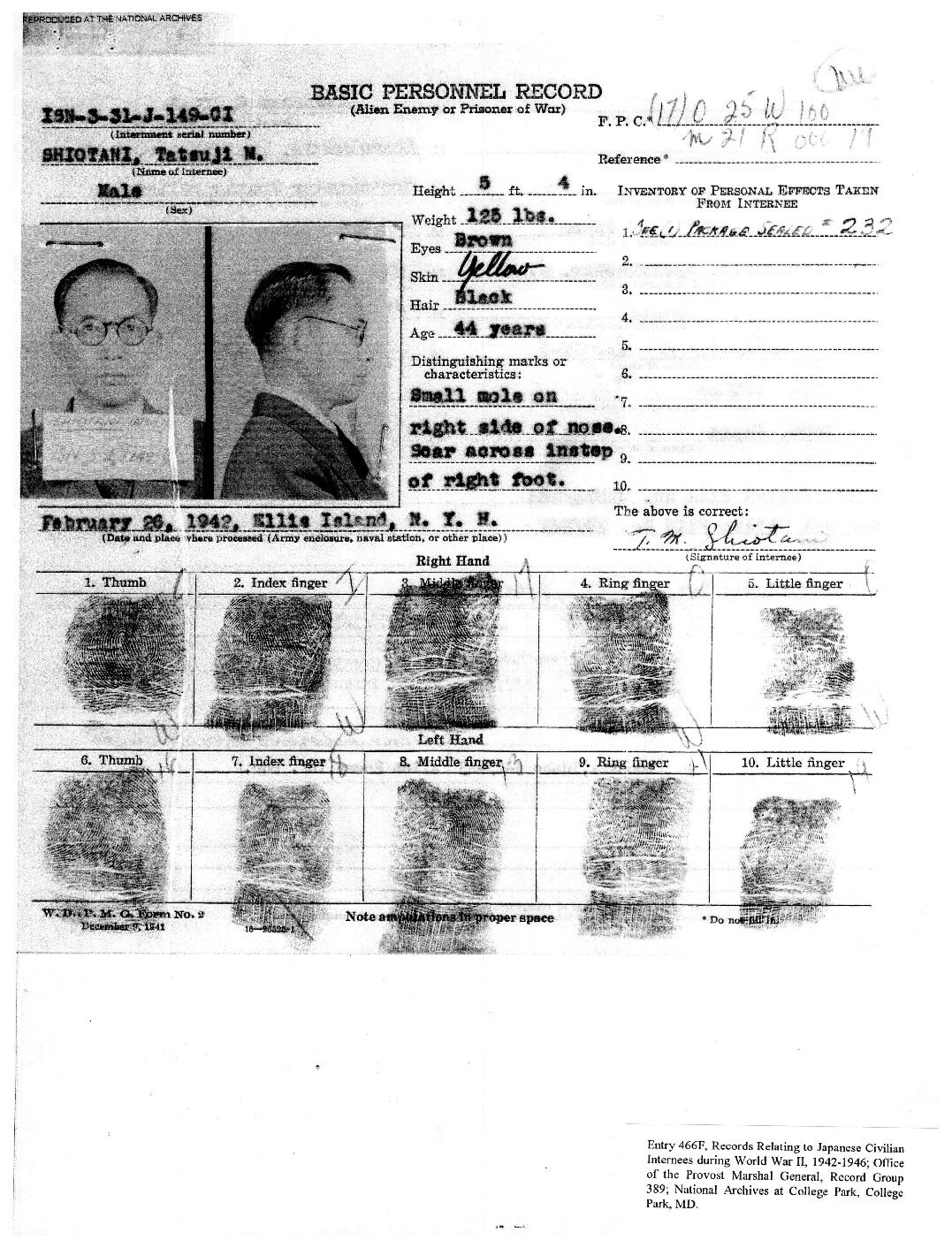
Tatsuji M. Shiotani was an Issei New Yorker whose life reflects the restricted employment opportunities faced by Japanese immigrants, the wartime internment of Japanese nationals on the East Coast, and the later movement for redress. Born on March 31, 1897, in Hyogo Prefecture, he immigrated to New York in 1924.
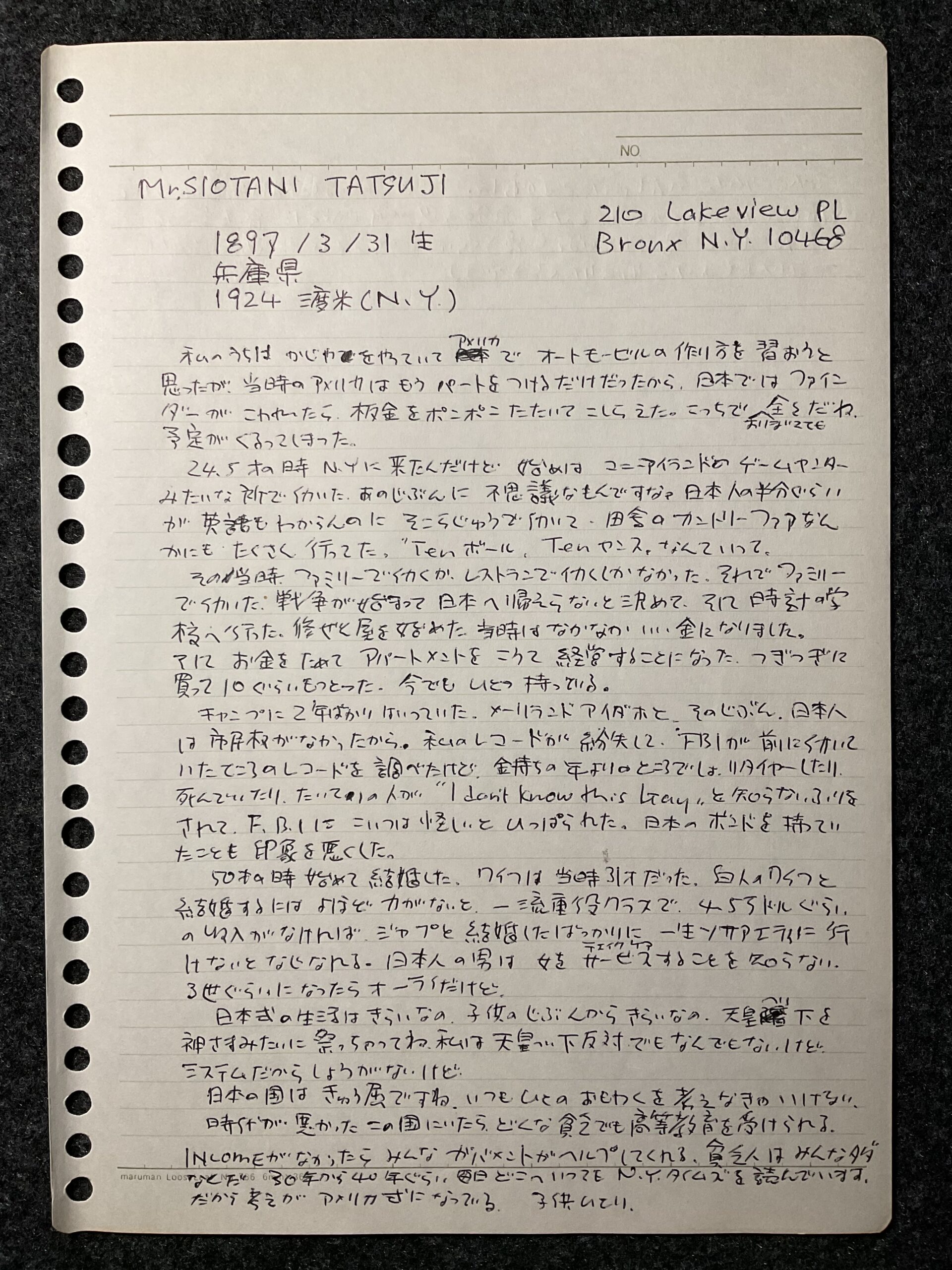
Shiotani grew up in a family that operated a blacksmith shop and came to the United States hoping to learn how automobiles were manufactured. After arriving, however, he discovered that American automobile production already depended largely on standardized, factory-made parts. This differed from the metalworking methods he had known in Japan, where automobile bodies were shaped by hand, and his original plans changed.
He initially worked at an amusement center at Coney Island. At a time when Japanese immigrants with limited English were often restricted to domestic service or restaurant work, Shiotani also found employment with private families. He later established a repair business, saved money, and began investing in apartment buildings. According to his interview notes, he eventually acquired approximately ten properties and continued to own several of them later in life.
Shiotani’s life changed abruptly after the attack on Pearl Harbor. He was arrested in Lincolndale, Westchester County, on December 8, 1941, by the Westchester County Police. As an Issei immigrant who had been barred by law from becoming a naturalized citizen, he was classified by the government as an “enemy alien.” He was processed at Ellis Island in February 1942 and subsequently transferred through Camp Upton in New York, Fort George G. Meade in Maryland, and the Kooskia Internment Camp in Idaho. His interview indicates that he remained confined for approximately two and a half years. He also remembered repeated FBI investigations and believed that his possession of Japanese government bonds had increased the authorities’ suspicion of him.
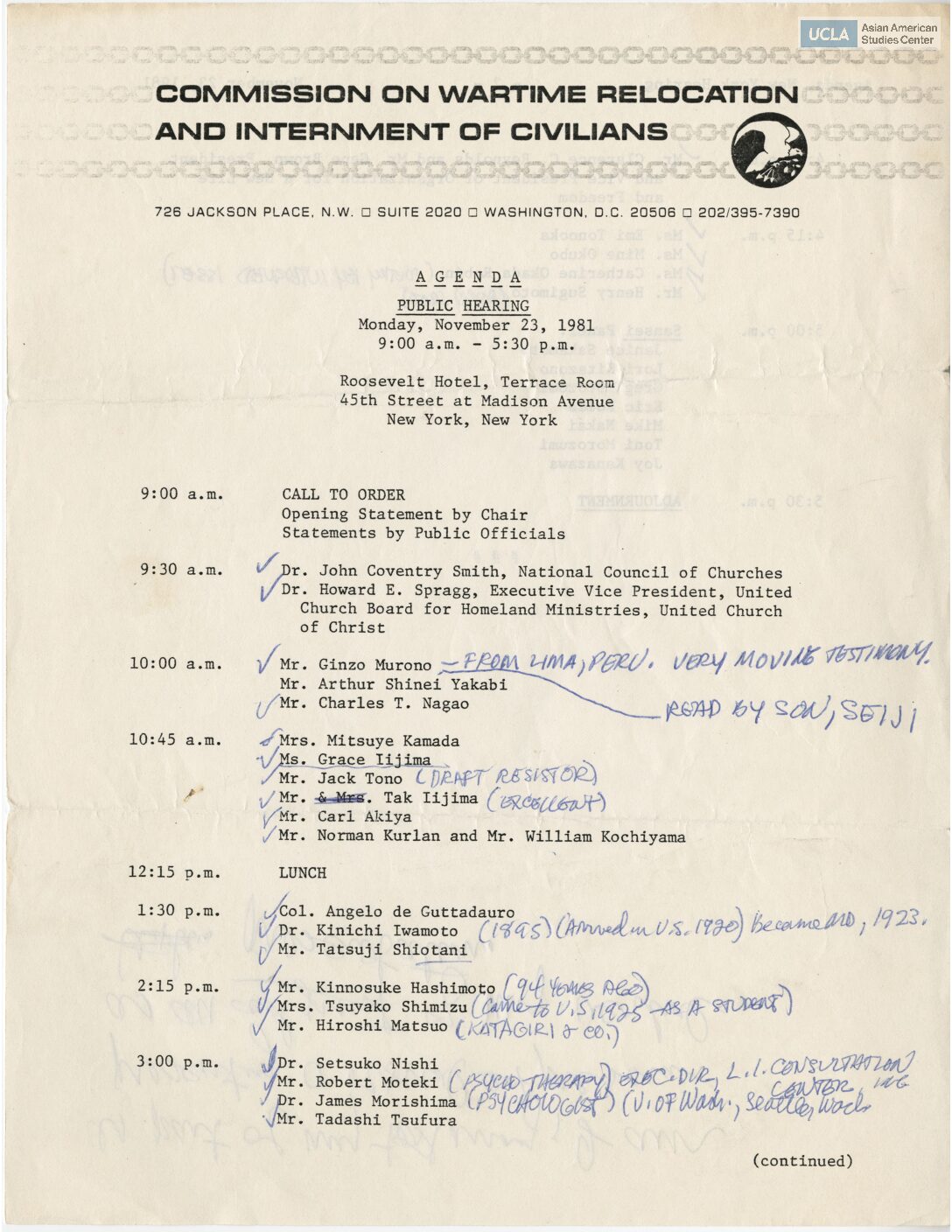
Nearly forty years later, Shiotani appeared before the Commission on Wartime Relocation and Internment of Civilians at its New York hearing on November 23, 1981. By placing his wartime experiences before the federal commission, he joined other Issei, Nisei, and Sansei witnesses whose testimony helped establish the public record that supported an official apology and reparations for surviving detainees.