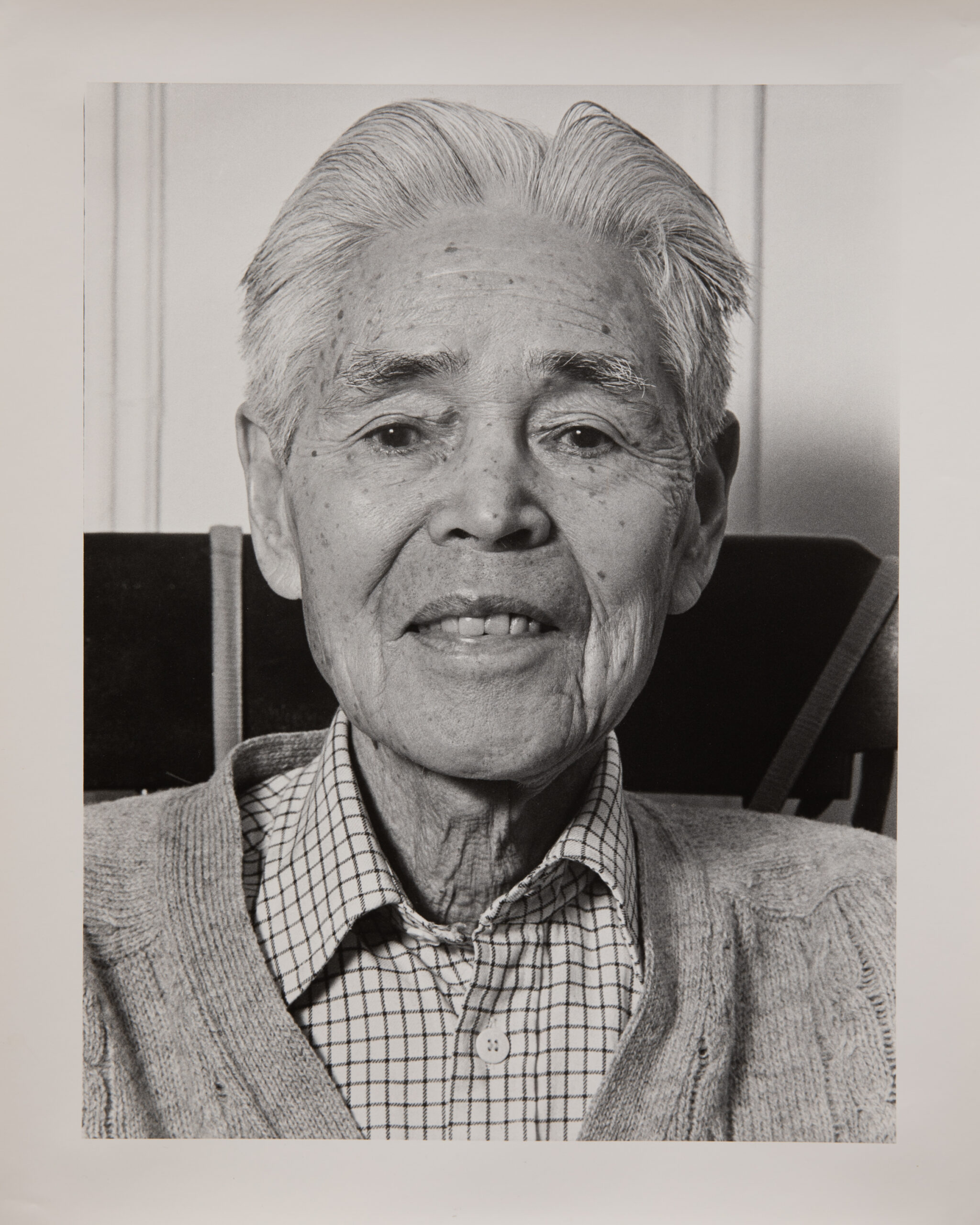
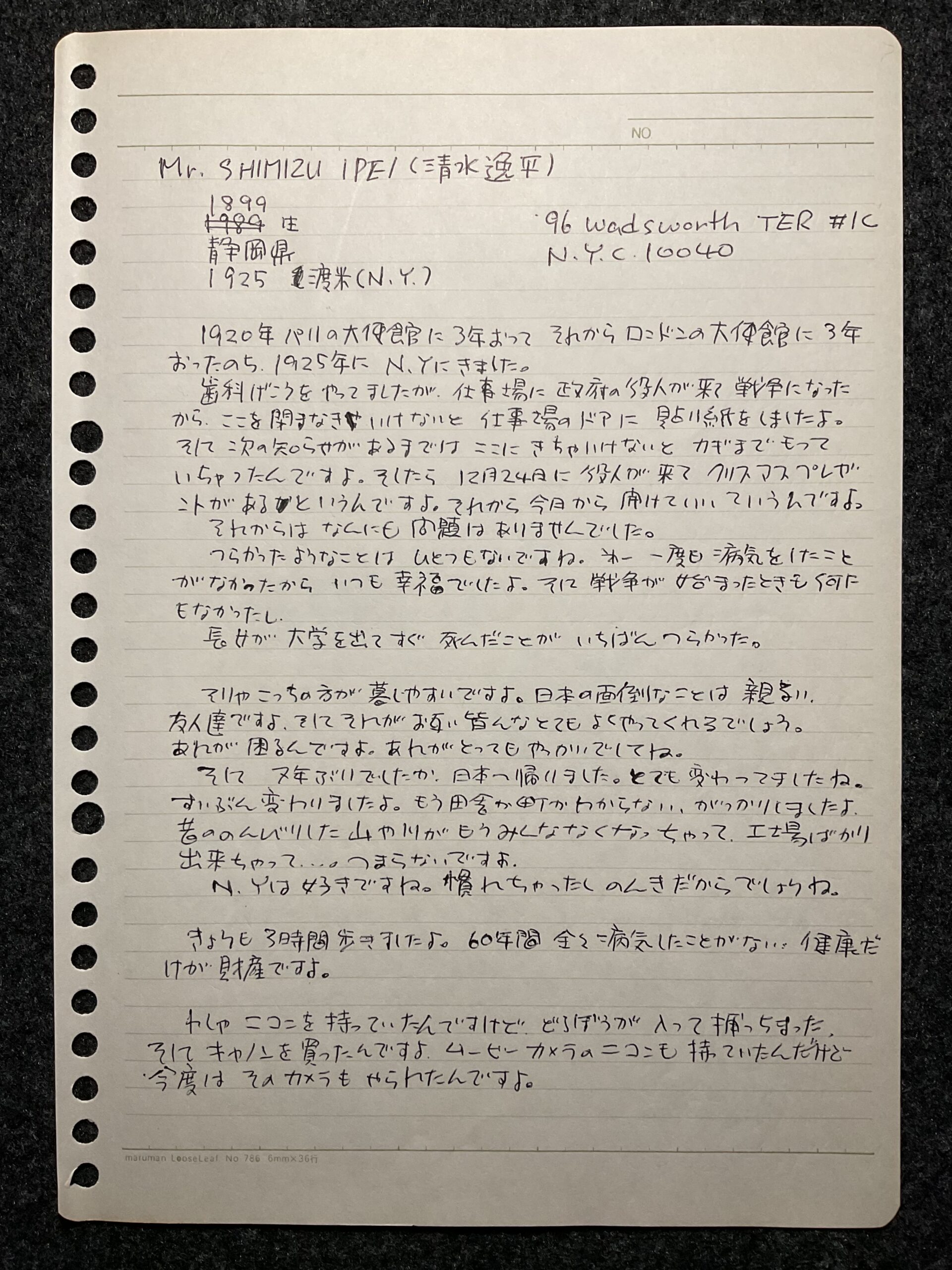
Ippei Shimizu was an Issei New Yorker whose life reflects the international paths taken by some Japanese immigrants before settling in the United States, as well as the sudden restrictions they faced during World War II. Born in Shizuoka Prefecture in 1899, he worked at Japanese diplomatic offices in Paris and London before immigrating to New York in 1925.
In New York, Shimizu established a career as a dental technician. After the United States entered World War II, government officials came to his workplace and ordered it closed. They posted a notice on the door forbidding him from entering until further notice and took possession of the key. On December 24, however, an official returned and described the news as a “Christmas present”: Shimizu was permitted to reopen his workplace. According to his recollections, he experienced no further difficulties related to the closure.
Looking back on his life, Shimizu described himself as fortunate, largely because of his lifelong good health. The most painful event he experienced was not related to immigration or the war, but the death of his eldest daughter shortly after she graduated from college.
Shimizu found life in New York more comfortable and less socially demanding than life in Japan. When he returned to Japan after an absence of seven years, he was disappointed by the rapid industrial development he encountered. The quiet mountains and rivers he remembered had been replaced by factories, and the boundaries between countryside and city seemed to have disappeared.
By contrast, Shimizu had grown deeply attached to New York. He appreciated what he considered its relaxed way of life and remained physically active in old age, sometimes walking for several hours a day. He regarded his health as his greatest possession.
Shimizu was also an enthusiastic photographer. He recalled owning a Nikon camera, later replacing it with a Canon after the Nikon was stolen. He also owned two movie cameras, which were eventually stolen as well. His humorous account of these losses conveys the resilience and easygoing outlook that shaped his memories of more than six decades in New York.