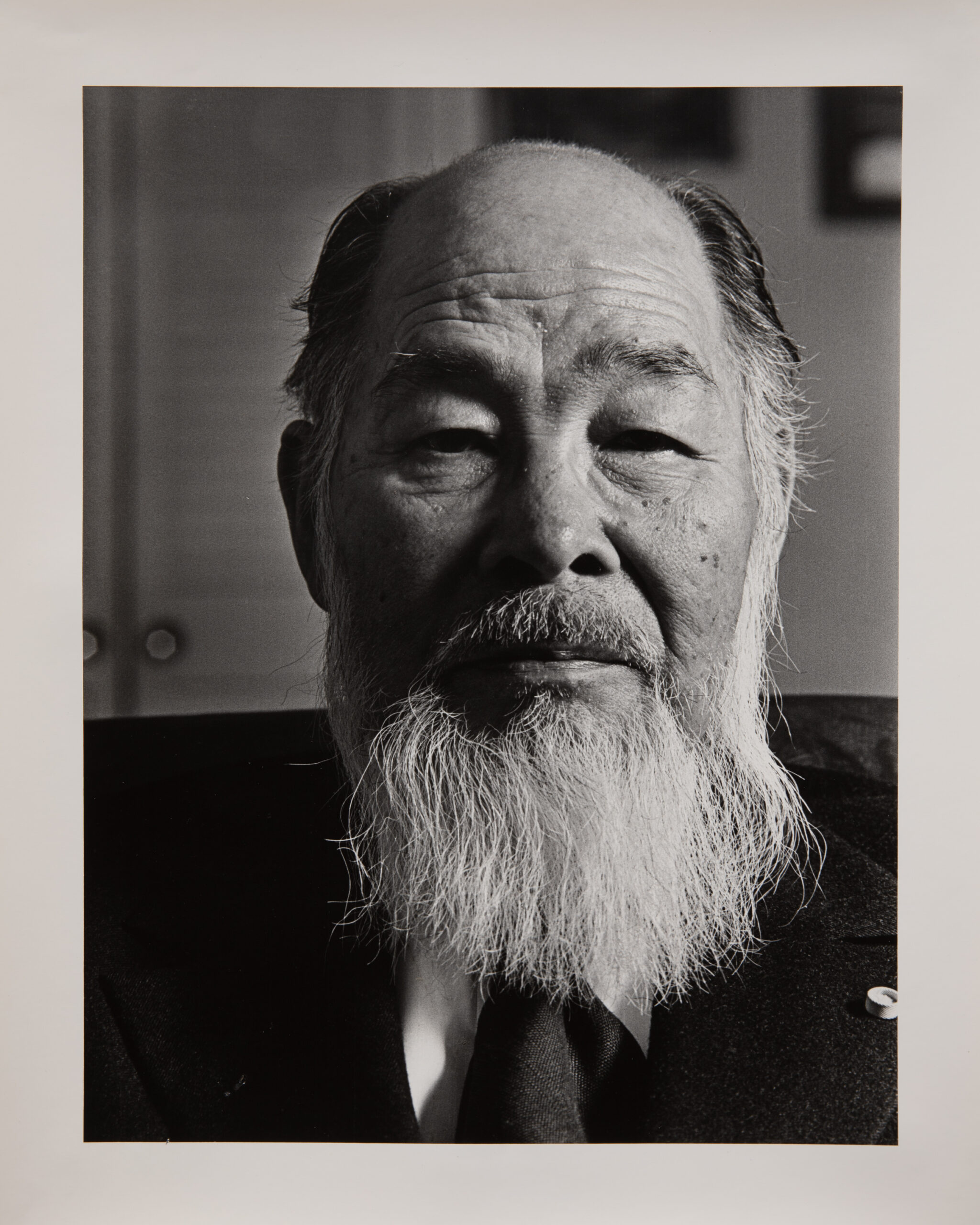
Naohiro Sasaki was an Issei community leader whose life bridged immigrant labor, mutual aid, cemetery preservation, and postwar reconstruction in the Japanese and Japanese American community of New York.
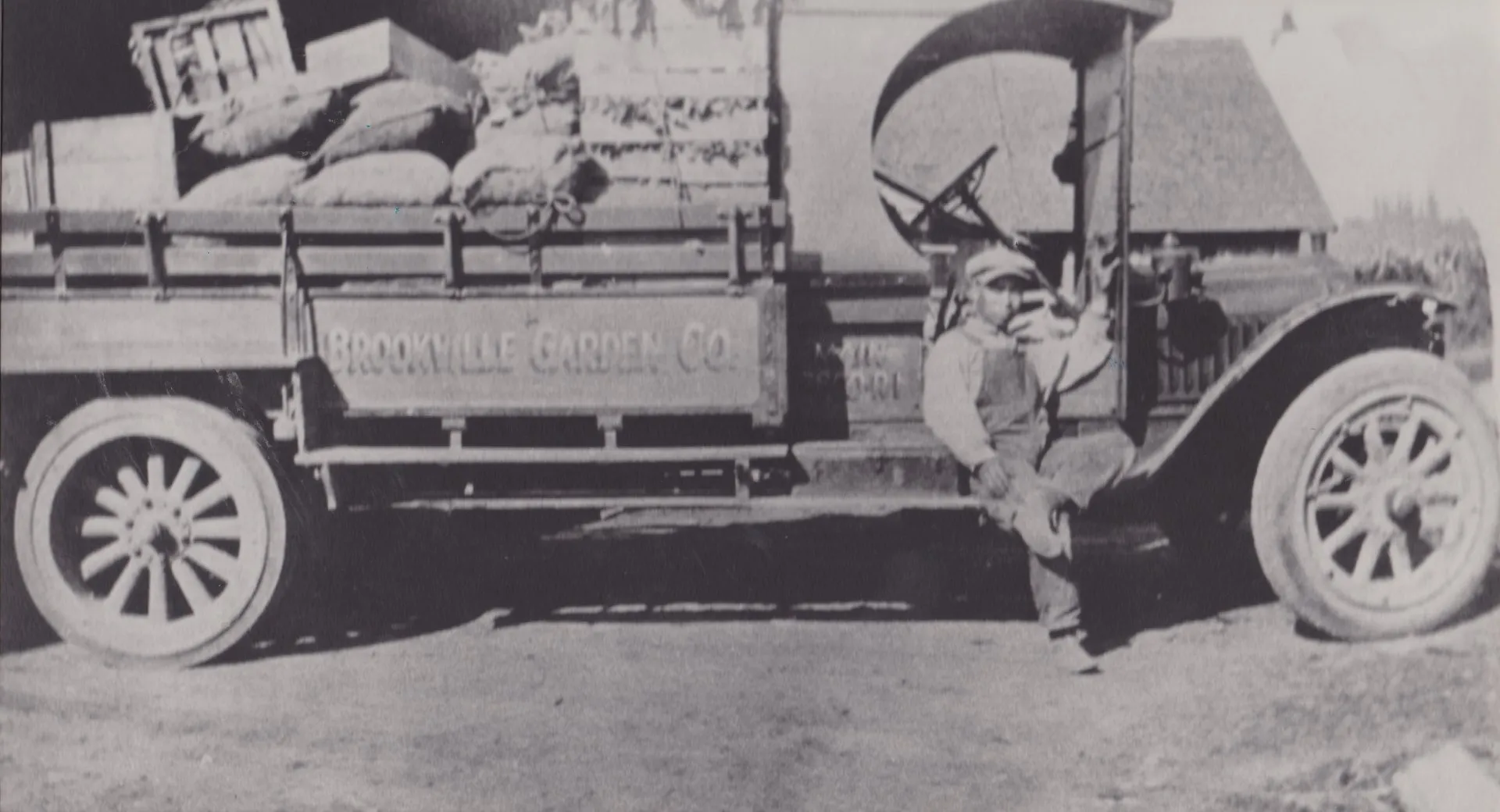
Born in Japan, Sasaki came to the United States in 1924 after traveling the world as a merchant seaman. He first lived in New York State, where he reportedly worked preparing meals at the governor’s mansion in Albany. By 1938, he had moved to Norwalk, Connecticut. In 1940, Sasaki and his wife, Eiko Sasaki, opened The Owl Restaurant in Norwalk, which they operated for many years. This 1928 photograph shows Sasaki driving a Brookville Gardens delivery truck, offering a rare glimpse of his early working life in the New York area before he became widely known as a postwar community organizer.
Sasaki’s work followed the older mutual-aid tradition established by Dr. Toyohiko Takami, who founded the prewar Japanese Mutual Aid Society, or Nihonjin Kyosaikai / 日本人共済会, in 1907. Takami’s Kyosaikai supported Japanese immigrants through welfare assistance, community care, and the establishment of the Japanese cemetery at Mt. Olivet Cemetery.
After World War II, Sasaki carried this spirit of mutual aid into a new era through the Japanese American Welfare Society, also known as the New York Kyoseikai. The Society served Japanese and Japanese American residents in the New York area during a period of profound transition, when the community was rebuilding after wartime disruption and also responding to the devastation in Japan. It was active in Japan relief efforts connected to LARA and provided local welfare support, including hospital visits, funeral assistance, membership support, and care for elderly or isolated community members.
The Society’s 1950 meeting notices and minutes identify Sasaki as president. In these records, he regularly called meetings to order and presided over the Board of Directors. The minutes also show the Society’s practical, hands-on work: visiting patients in hospitals, arranging funeral support, assisting welfare cases, organizing benefit movie nights for Japan relief, and addressing cemetery-related matters. The Society’s office was located at 171 West 94th Street in New York City.
Although the Japanese cemetery at Mt. Olivet was originally established through Takami’s prewar Japanese Mutual Aid Society, Sasaki’s postwar Welfare Society continued to address cemetery-related needs as part of its broader community welfare work. Sasaki is also remembered for helping establish a Japanese cemetery section at Cypress Hills Cemetery, ensuring that Japanese and Japanese American community members in New York would have a dignified resting place and that burial care remained part of the community’s mutual-aid responsibility.
In this way, Sasaki’s leadership represents an important bridge between the earlier Issei mutual-aid tradition and the postwar rebuilding of Japanese community institutions in New York. His work connected the practical needs of daily life, illness, death, remembrance, and community survival.
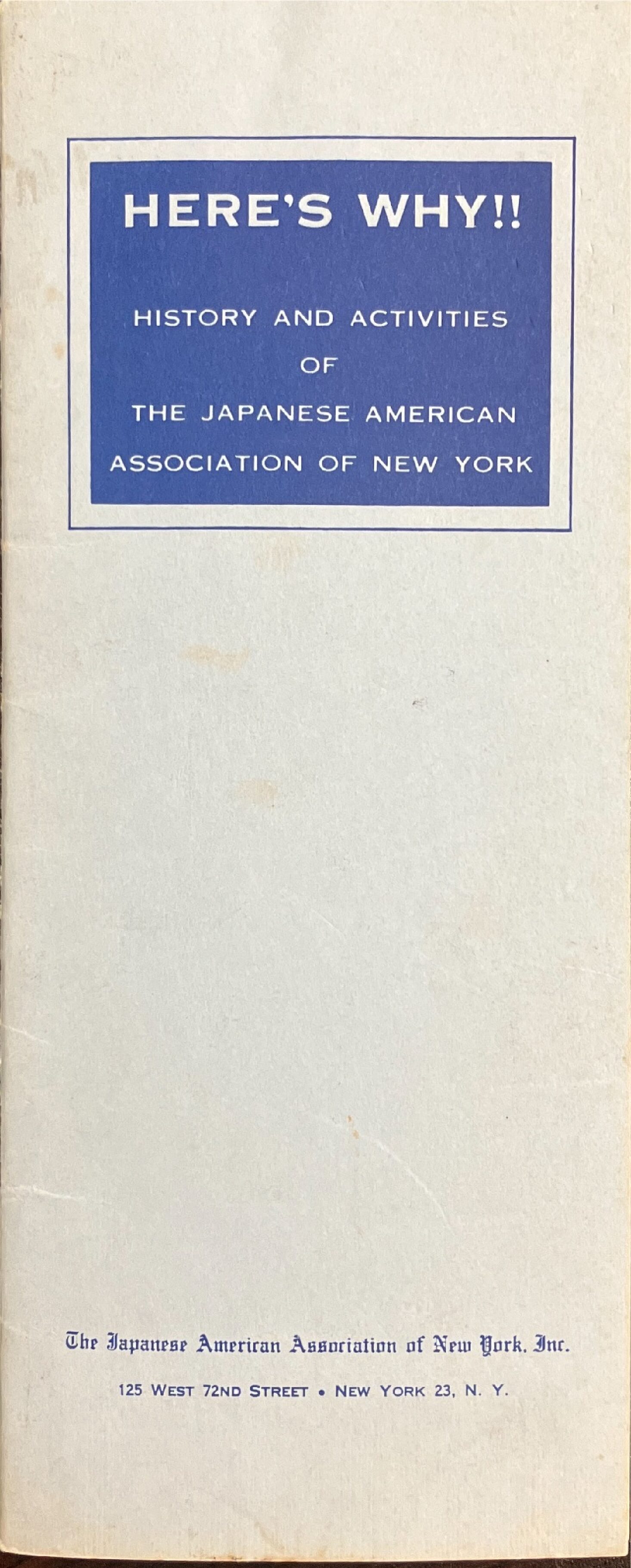
In 1952, the Japanese American Welfare Society merged with the reconstituted Japanese Association of New York. After this merger, the organization became known as the Japanese American Association of New York, Inc. Sasaki’s work therefore stands at an important turning point in the history of JAA, linking prewar mutual aid, postwar welfare, cemetery care, and the institutional continuity of the Japanese and Japanese American community in New York.