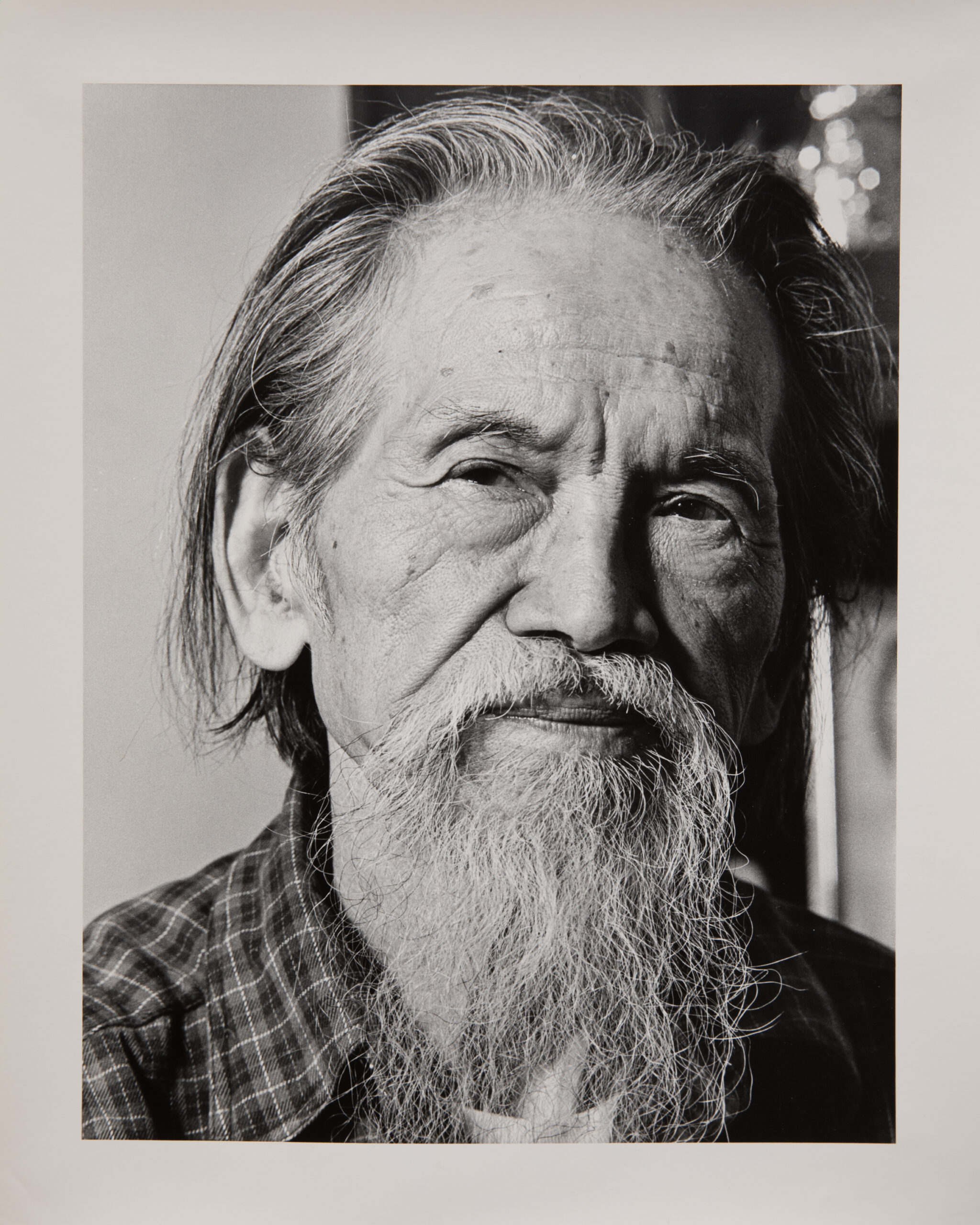
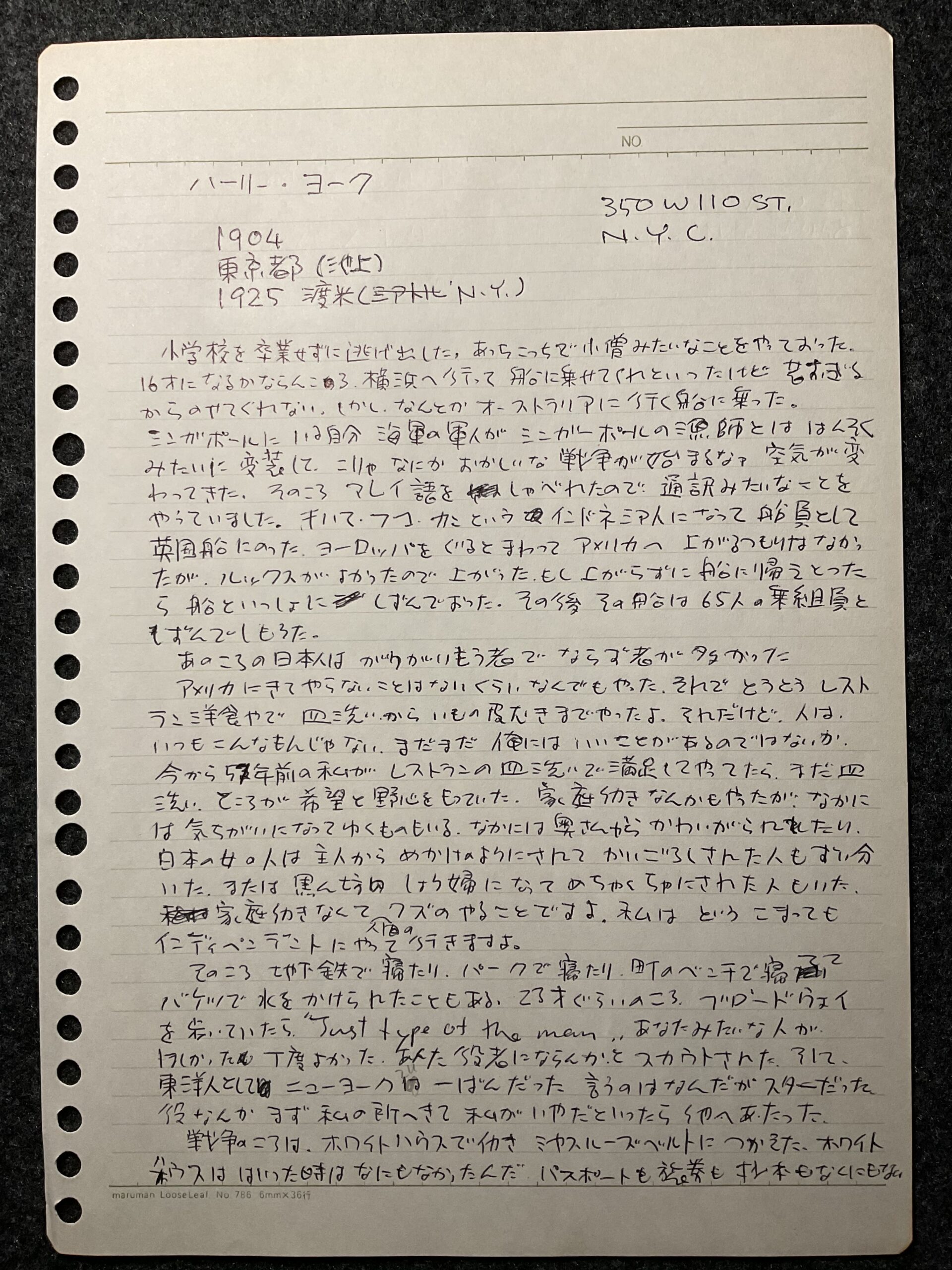
Harry York was born in Mita, Tokyo, in 1904 and came to the United States in 1925, apparently entering through Seattle before eventually settling in New York. His interview describes an adventurous and often precarious early life. He left school before graduating, made his way to Yokohama, and persuaded his way onto ships traveling overseas. His journeys took him to Australia, Singapore, Europe, and eventually the United States. He recalled learning Malay, working as an interpreter, and joining the crew of a British ship under an Indonesian identity. According to York, after he disembarked in America, the ship later sank with its sixty-five crew members.
York’s first years in New York were marked by poverty and unstable employment. He washed dishes, peeled potatoes, performed domestic work, and sometimes slept in subway stations, parks, or on public benches. Despite these hardships, he remembered possessing a strong sense of hope and ambition. Reflecting on his restaurant work, he observed that if he had been satisfied with washing dishes, he would still have been washing dishes.
Around the age of twenty-three, York was approached while walking along Broadway by someone searching for a performer of his appearance. The encounter launched his career as an actor and entertainer. York described himself as one of the most sought-after Asian performers in New York, recalling that casting agents would approach him before looking elsewhere. He also remembered attending an MGM screen test with approximately five hundred applicants. Although he arrived late and poorly dressed, he was reportedly told, “You got a job. Everybody go home.”
During World War II, York recalled working at the White House and serving Eleanor Roosevelt, who treated him with great kindness. When he was selected for military service, he claimed that Roosevelt intervened to prevent him from being sent into combat. York subsequently returned to entertainment and traveled around the country performing for American troops. He believed that this work gave him an unusual degree of freedom to travel throughout the United States during the war.
York retired from acting in 1953 and pursued other ways of making a living. Looking back, he treated his theatrical career as only one part of a much larger life. His interview reveals a resourceful, independent, and highly self-confident Issei immigrant whose experiences stretched from ships and restaurant kitchens to the entertainment world and wartime Washington. His portrait preserves the story of a man who repeatedly reinvented himself while refusing to accept the limitations imposed upon him.
This profile is based closely on York’s handwritten interview. Several extraordinary episodes are presented as his own recollections rather than as independently verified facts.