
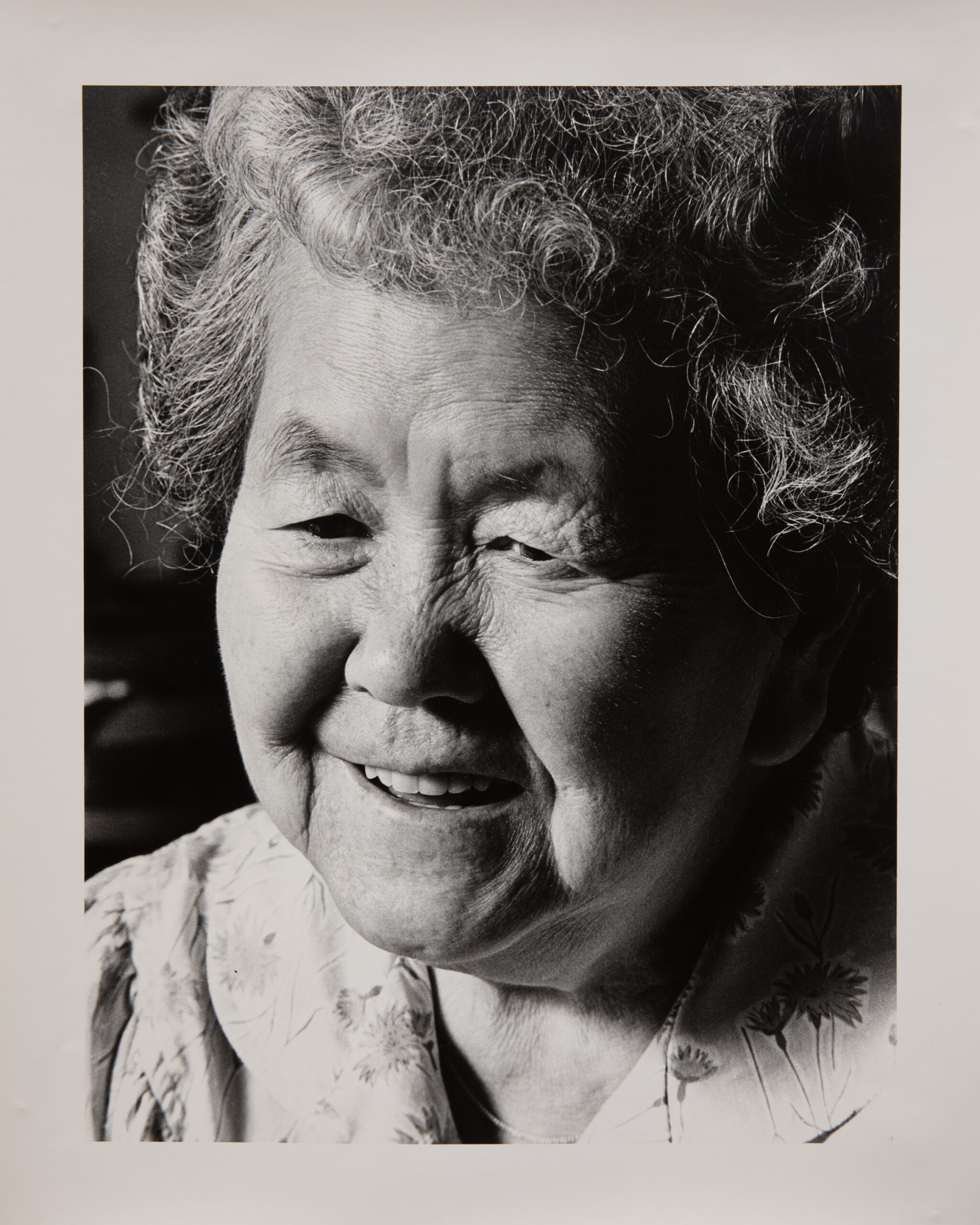
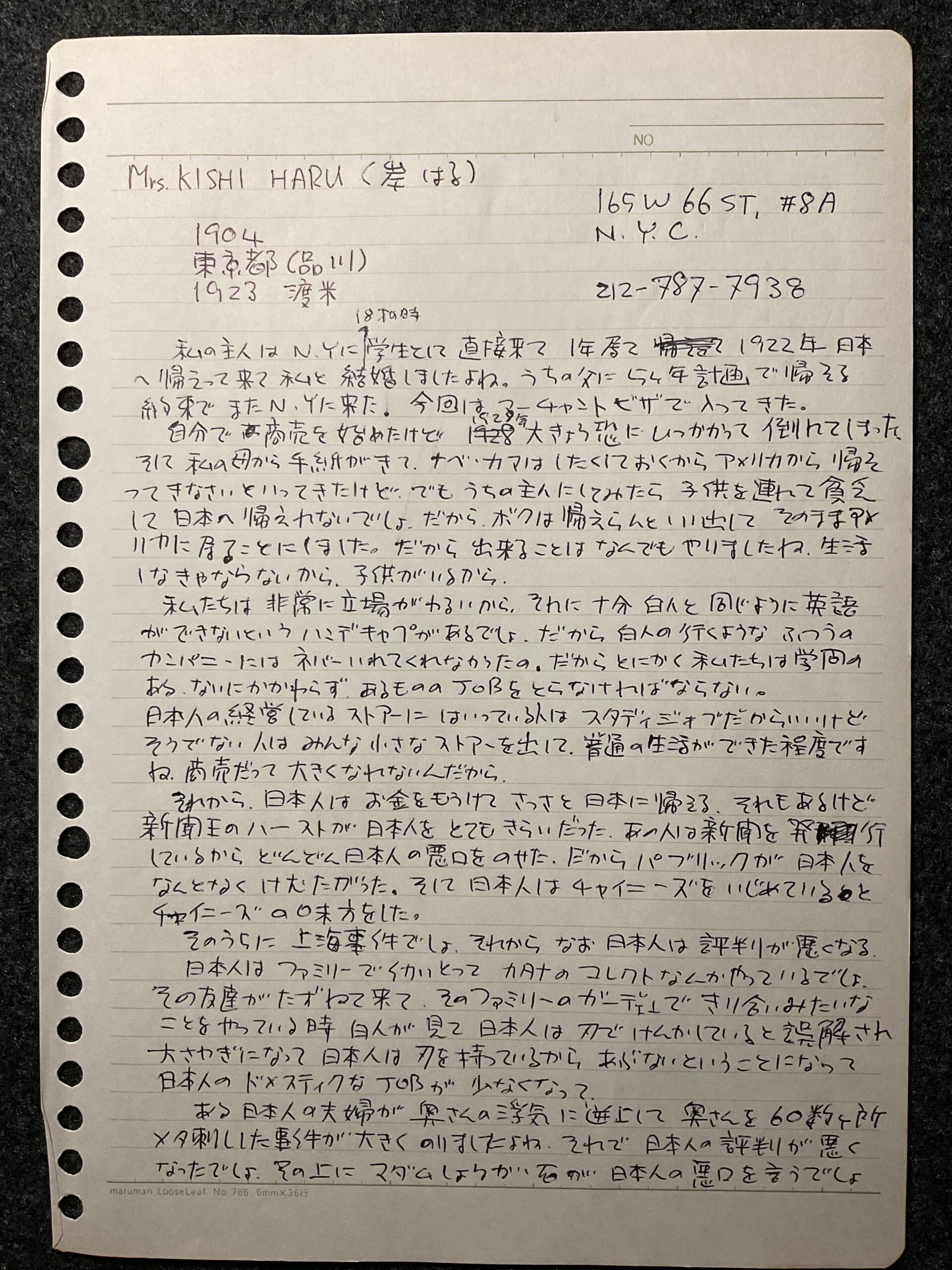
Haru Kishi was an Issei New Yorker whose life reflects the economic hardship, racial discrimination, family labor, and complex questions of belonging experienced by Japanese immigrants in twentieth-century New York. Born in 1904 in Shinagawa, Tokyo, she married at eighteen and came to New York in 1923 to join her husband.
Kishi’s husband had previously spent a year in New York as a student before returning to Japan in 1922 to marry her. He then returned to New York, reportedly entering as a merchant seaman, with the intention of remaining for five years before going back to Japan. After establishing his own business, however, he suffered serious losses during the Great Depression. Although Kishi’s mother encouraged the family to return to Japan, her husband felt that they could not go back with children and without financial security. The family therefore remained in the United States and accepted whatever work was available.
Kishi recalled that Japanese immigrants faced severe limitations in employment. Because many did not speak English fluently and were excluded from jobs in American companies, they often worked as cooks, butlers, domestic servants, or employees of Japanese-owned businesses. Others opened small stores and restaurants that provided enough income to support their families but rarely grew into larger enterprises. According to Kishi, the Japanese community in New York was smaller and less unified than communities on the West Coast, leaving some immigrants isolated during periods of unemployment and poverty.
She also remembered the hostile public atmosphere created by anti-Japanese newspaper coverage, international conflicts in Asia, and sensational reports involving Japanese residents. Such stories contributed to public suspicion and sometimes caused Japanese immigrants to lose domestic-service positions. Kishi distinguished this experience from anti-Japanese discrimination in California, noting that New York’s scattered Japanese population had fewer community networks through which people could support one another.
Kishi and her family were associated with Miyako Restaurant in New York. During World War II, the owner of the restaurant’s building refused to blame them personally for the conflict between Japan and the United States. He protected the family and allowed the restaurant to remain open. Kishi remembered this support as an important act of fairness during a period when Japanese immigrants were often regarded with hostility.
After the war, changing attitudes toward Japanese Americans and recognition of the military service of Nisei soldiers contributed to gradual improvements in their treatment. Kishi later became eligible for American citizenship, which had been legally unavailable to Japanese immigrants before the passage of the Immigration and Nationality Act of 1952.
When Kishi returned to Japan in 1962, she discovered that the country she remembered no longer existed. Streets, buildings, bridges, and even her former elementary school had disappeared or changed. Friends and relatives seemed distant, and she felt increasingly out of place. Although born and raised in Japan, she concluded that after decades in America she could no longer settle comfortably in her former homeland.
Kishi’s reflections reveal a strong and independent personality. She valued the greater openness she associated with American life while remaining deeply attached to the Japanese language, food, and community. For her, one of life’s greatest pleasures was gathering with other Japanese people, speaking Japanese, and sharing familiar food. By the time of her interview, she had five children, eleven grandchildren, and one great-grandchild. Her story captures the experience of an immigrant who endured hardship and exclusion while gradually creating a permanent home in New York.