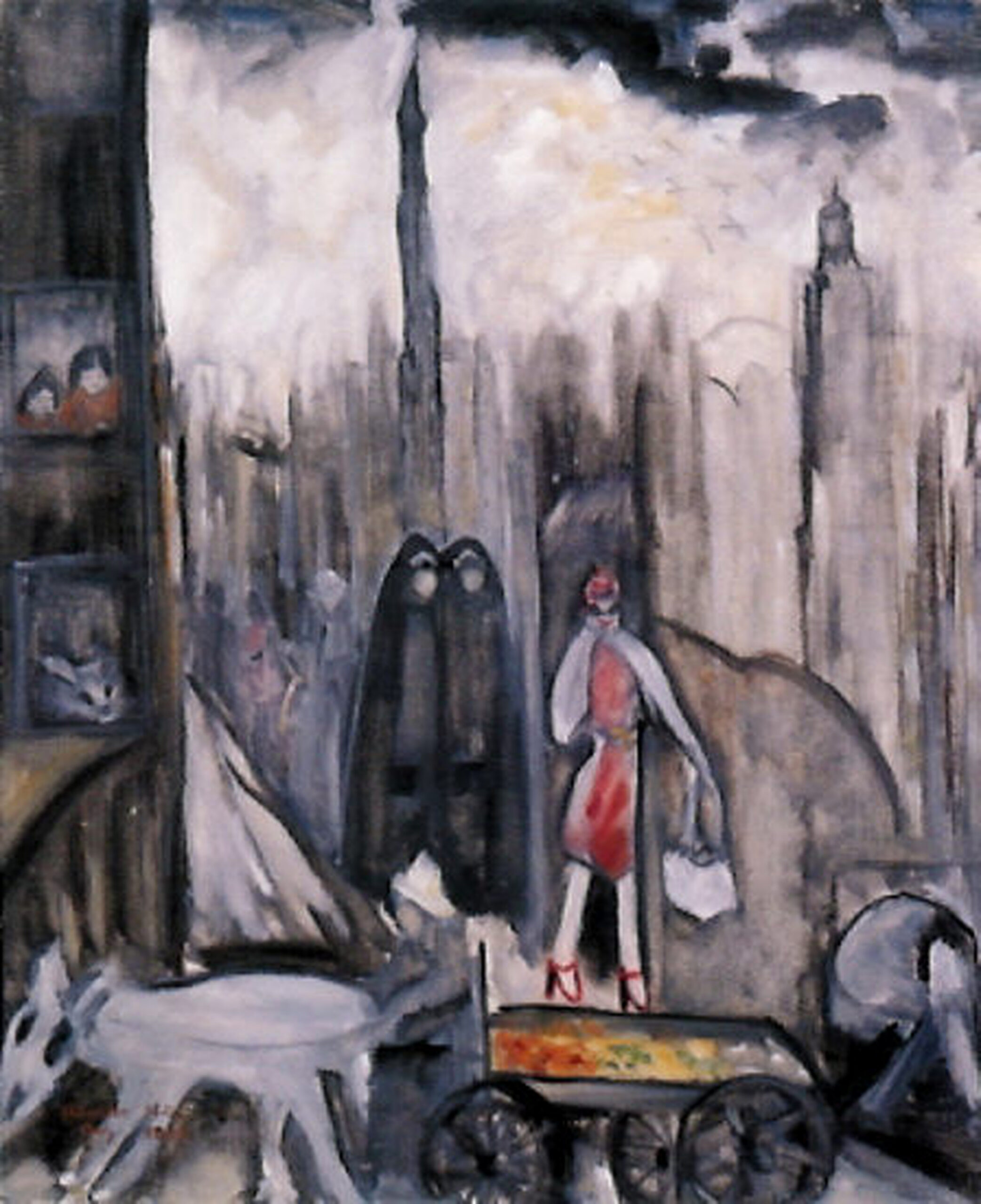
THE FLOATING WORLD OF NEW YORK

Japanese Art, Community, and Politics
in the First Half of the Twentieth Century

Two Meanings of “Japanese Art”

In March 1917, Yamanaka Galleries presented paintings, drawings, and photographs by young Japanese artists living in New York. This was unusual. Yamanaka & Company was best known for selling historical Japanese objects to collectors and museums.

The exhibition brought two meanings of “Japanese art” into the same institution. One referred to objects from Japan’s past. The other referred to art being made by Japanese people living in the modern city.


Collecting and the Japanese Art Market

For many American collectors, Japanese art meant painted screens, ceramics, lacquer, woodblock prints, sculpture, armor, and decorative objects. Dealers selected these works, described them, established their value, and helped determine how American buyers understood them. Yamanaka & Company was one of the most influential of these dealers. Its New York branch worked closely with collectors and institutions such as the Metropolitan Museum of Art. The movement of these objects also raises questions about their ownership histories. How did works leave temples and private collections, and how did wealth and imperial power shape the international art market?1


Japonisme and Japan’s Changing Global Position

Western interest in Japanese art had begun long before the twentieth century. After Japan opened to international trade, Japanese prints and decorative arts circulated widely in Europe and the United States. Artists and designers studied their asymmetrical compositions, flattened spaces, patterns, and unusual viewpoints. This fascination became known as Japonisme.

Japan’s victory over Russia in the Russo-Japanese War of 1904–05 gave this interest a new political meaning. Japan was increasingly recognized as a modern military and imperial power. Its victory brought international prestige, but it also created American anxiety about competition in the Pacific. Japanese leaders, businesspeople, and artists used art and architecture to present the country as refined, modern, and deserving of equal international standing.2


Makino Katsuji and Shōfūden

Two artists who traveled to the United States in 1906 show how this cultural exchange worked in practice. Makino Katsuji arrived as an established painter, designer, and teacher. In New York, he taught watercolor painting and contributed to architectural interiors associated with the city’s Japanese community.

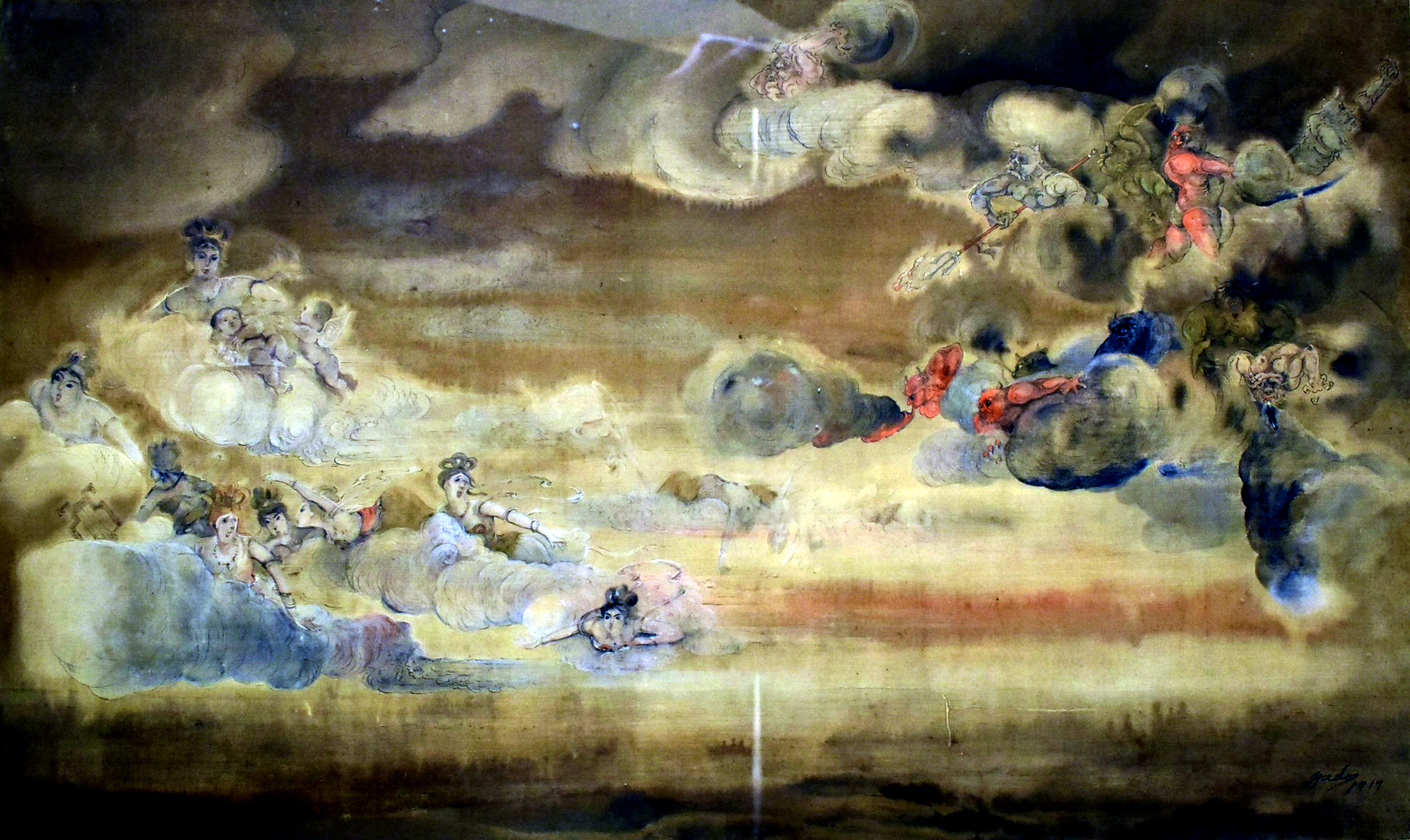
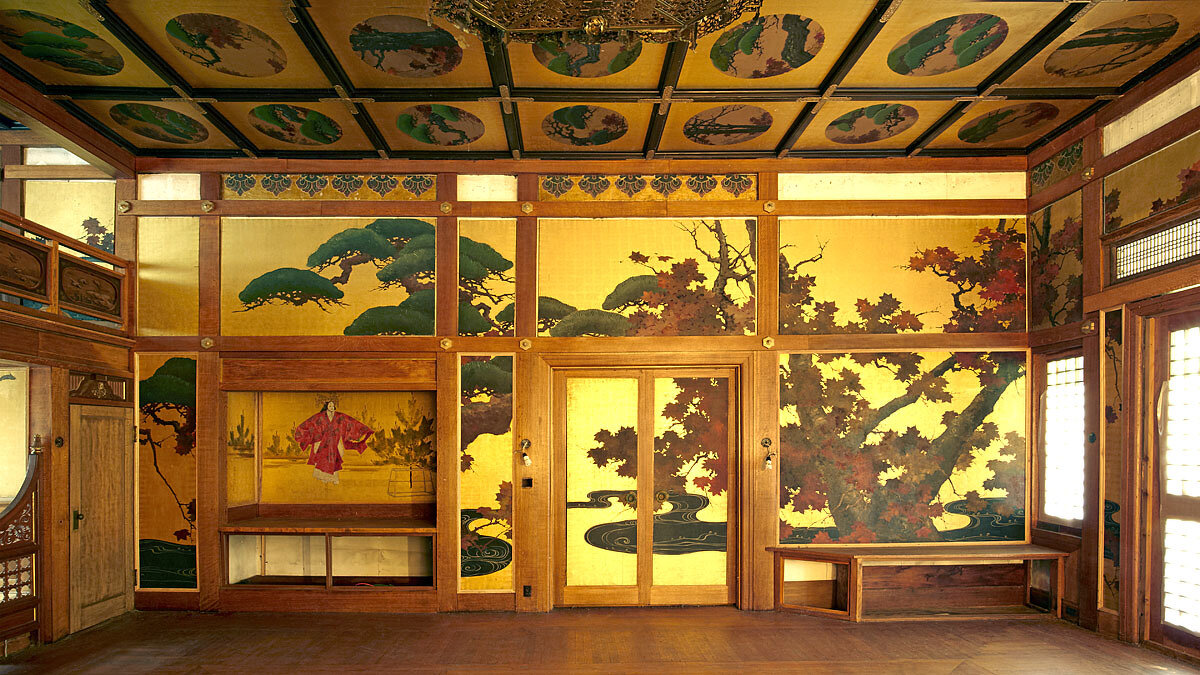
Makino’s work for Shōfūden demonstrates how Japanese artistic traditions were adapted within an American setting. Shōfūden was originally constructed for the 1904 St. Louis World’s Fair and was later moved to the Forestburgh, New York, estate of Jōkichi Takamine. Makino subsequently designed and painted parts of its interior. Surviving elements, now partially reconstructed and displayed in Takaoka, Japan, include ceiling panels decorated with pine and maple imagery and a gold-leaf-ground wall painting depicting a scene from the Noh play Hagoromo. Makino combined Japanese subjects and decorative conventions with oil-painting materials and techniques. The resulting interior was neither simply a reproduction of traditional Japanese painting nor an imitation of Western art. It was a new form of Japanese interior decoration created within an American environment.3


Shimotori Yukihiko and Commercial Art

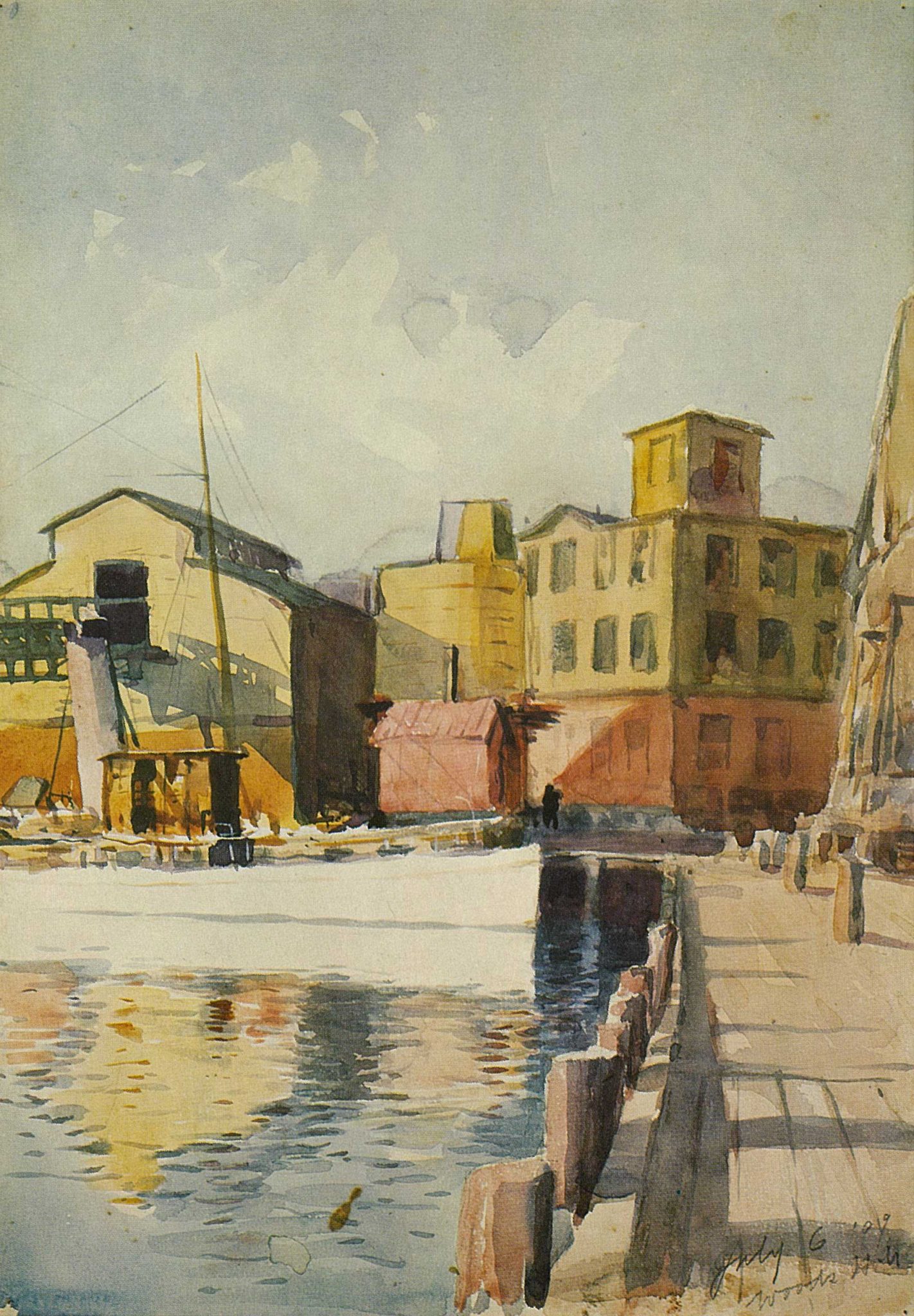
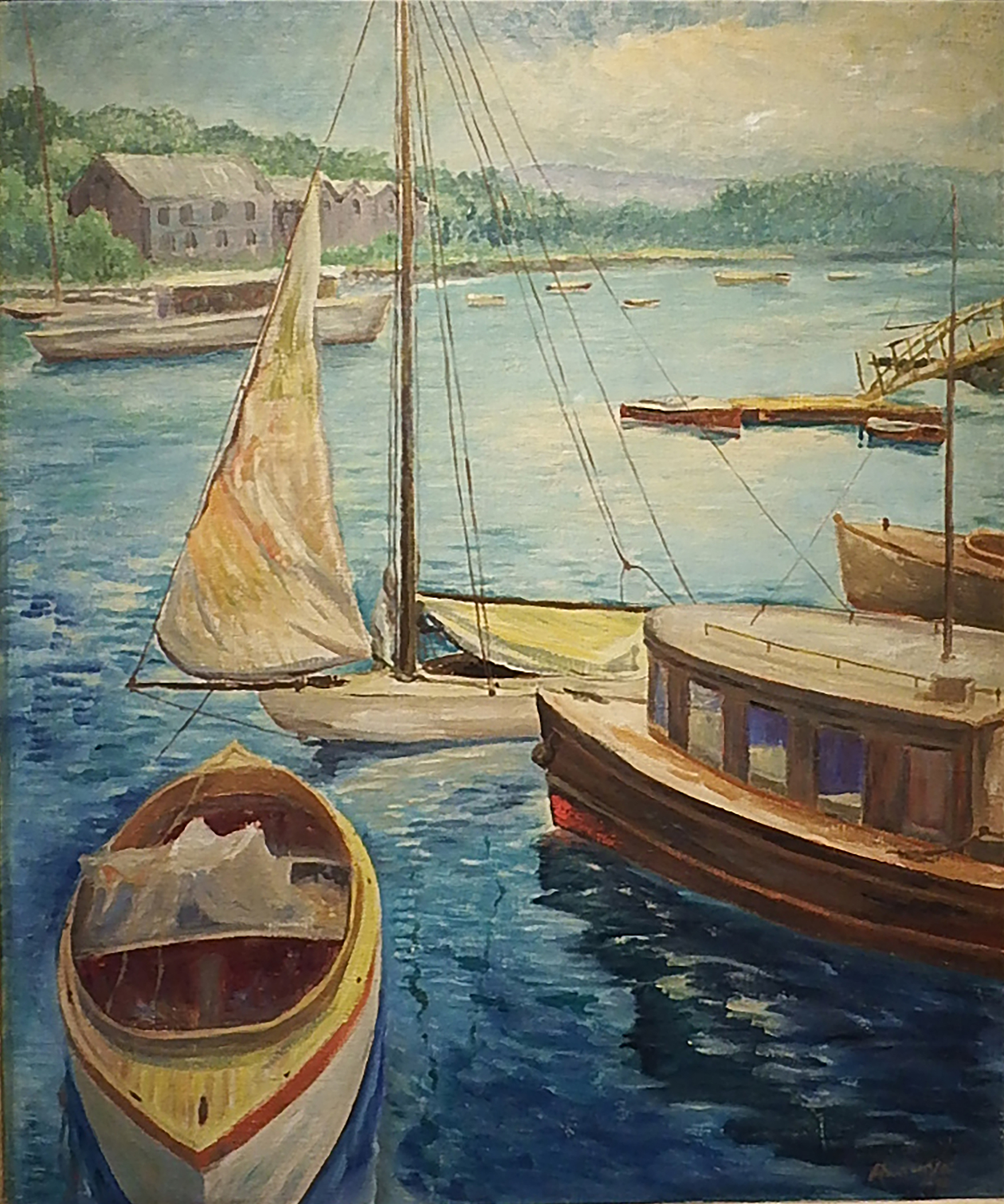
Shimotori Yukihiko accompanied Makino to New York after graduating from the Kyoto Higher School of Arts and Crafts. He studied oil painting and design, exhibited watercolors, and painted American landscapes and coastal subjects. He later worked at the American Museum of Natural History, where he applied drawing, observation, and color to models of marine animals. His experiences with museum education, advertising, and industrial design influenced his later career as a teacher and advocate for commercial art in Japan.

Makino and Shimotori show that Japanese artists did not work only in private studios. They moved among painting, architecture, scientific display, education, and commercial design. Their careers challenge the separation between “fine art” and art made for practical use.


Entering the New York Art World

The 1917 exhibition at Yamanaka Galleries made another change visible. Living Japanese artists were seeking recognition not simply as representatives of Japanese tradition, but as individuals participating in the New York art world.⁴

That art world was changing rapidly. The 1913 Armory Show had confronted American audiences with new forms of European and American modernism. In 1917, Marcel Duchamp’s Fountain, an ordinary manufactured urinal submitted as art, challenged the authority of institutions to decide what could be exhibited.

Japanese artists entered this changing art world through different routes. Seimatsu Hamaji, who had come to the United States from Wakayama in 1901 and later moved to New York after studying in Boston, worked in design while continuing to pursue painting. He exhibited with the New York Japanese Art Association in 1917 and 1918 and developed connections with artists including Yasuo Kuniyoshi, Toshi Shimizu, and Eitaro Ishigaki. Among his New York works was Fifth Avenue, probably exhibited in 1918, reflecting his engagement with the modern city.⁵

Hamaji was one of several Japanese-born artists finding different paths into New York’s art world. Their work did not form a single school or style, nor did it conform to a single idea of what “Japanese art” should look like. Open exhibitions offered an alternative to older academies, although a place on the wall did not guarantee attention, sales, or lasting recognition.⁶


Kotato Gado: Japanese Subjects and Modern New York

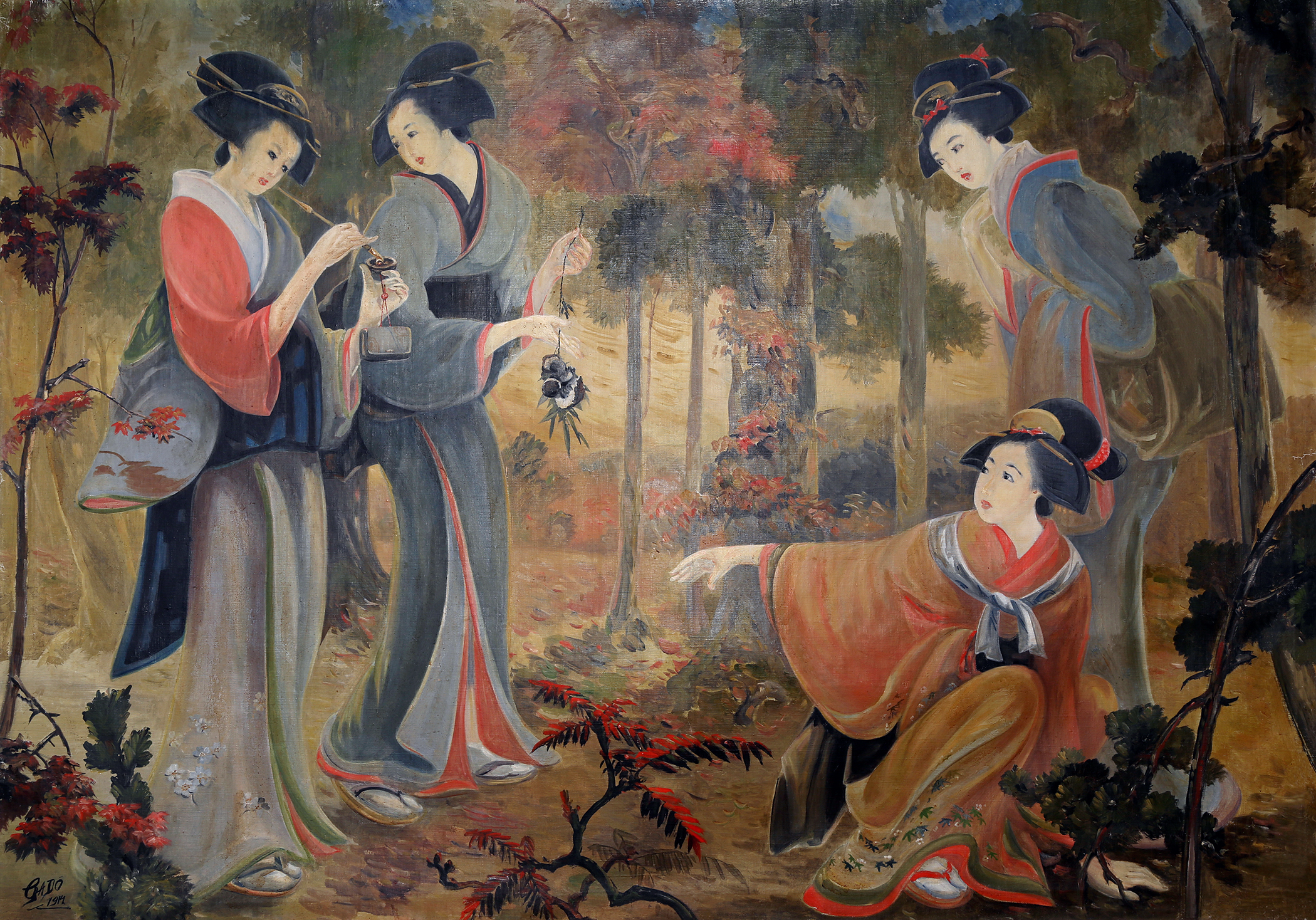
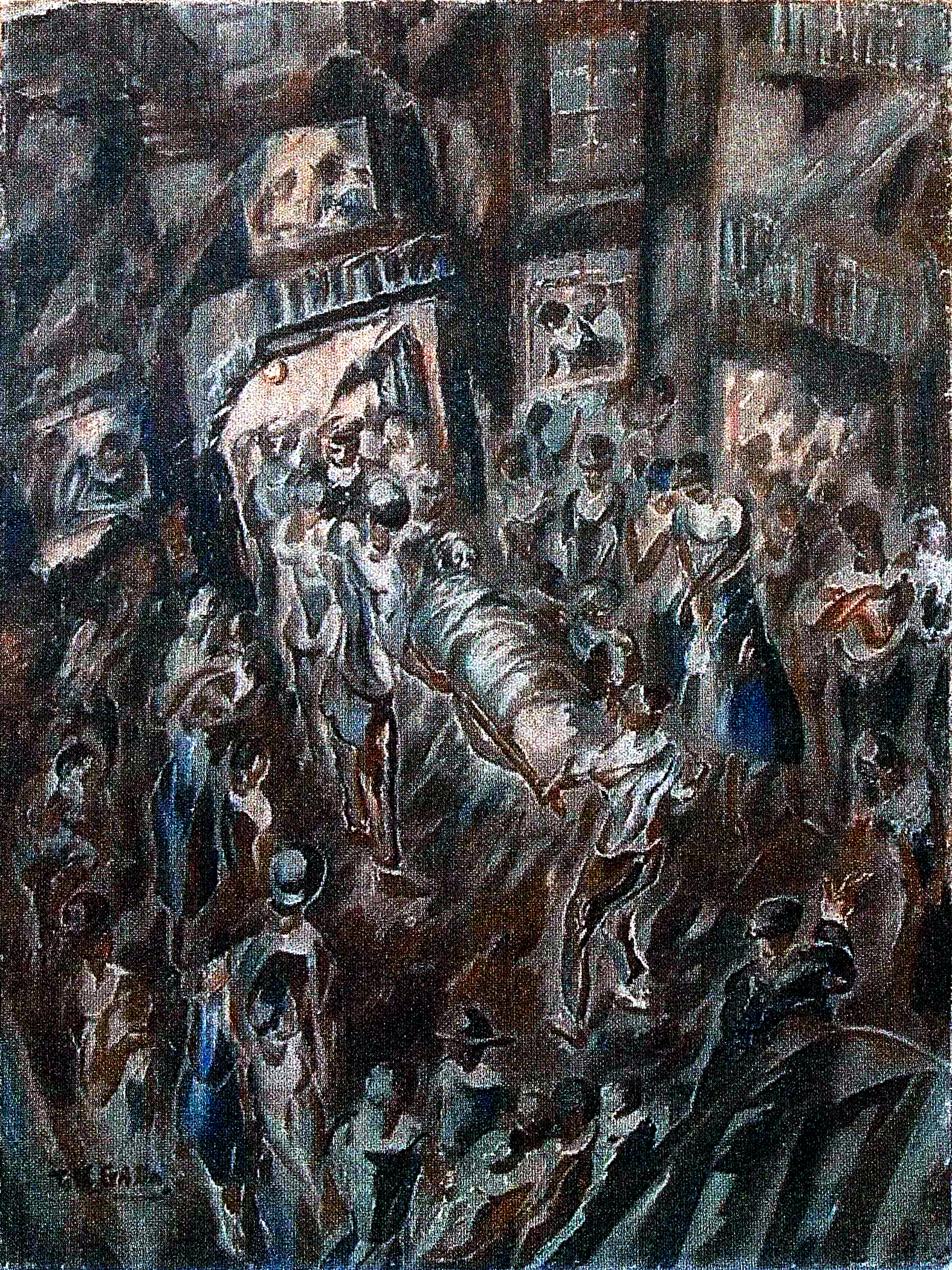
Gado’s career also crossed the boundary between commercial design and fine art. Soon after arriving in the United States, he contributed paintings to Shōfūden. He later earned his living designing decoration for export ceramics at Morimura Brothers while continuing to paint and exhibit independently.

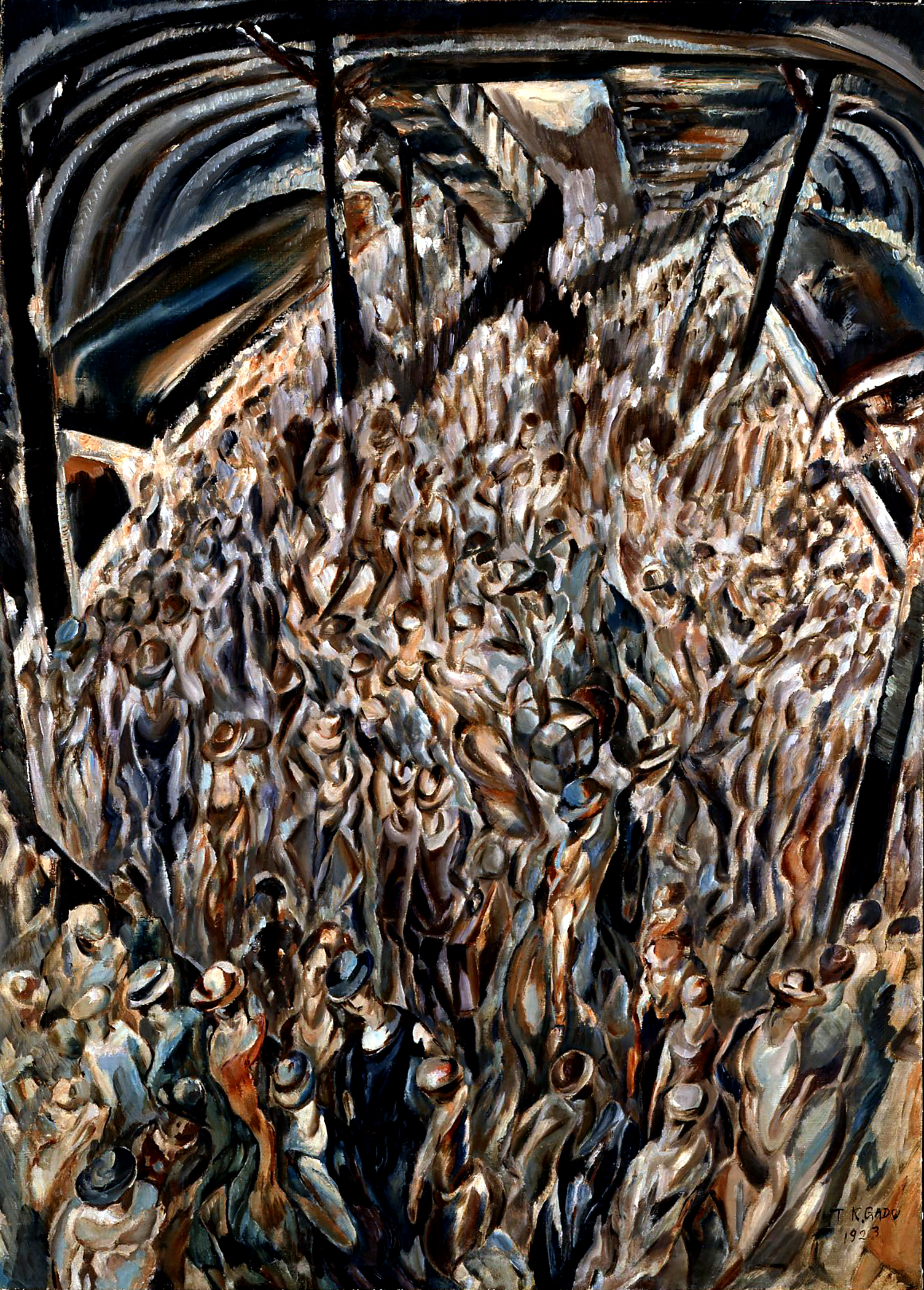
His subjects ranged from Japanese stories and figures in kimono to traffic, family interiors, and the crowded New York subway. In Cloud and Mushroom Gathering, Japanese imagery became part of a modern painting practice. In Rush Hour in Subway, Gado transformed the congestion and movement of New York into a tightly organized urban composition. Becoming modern did not require him to abandon Japanese subjects or cultural memory.7


No Single School or Style

“Japanese artists” therefore does not describe one school or style. It describes people whose lives were shaped in different ways by migration, artistic exchange, and the meanings assigned to Japan in the United States.

New York could collect Japanese objects, borrow Japanese visual ideas, and celebrate Japanese culture while continuing to treat people of Japanese ancestry as racial outsiders.

1. Ramona Handel-Bajema, Art Across Borders: Japanese Artists in the United States before World War II (Portland, OR: MerwinAsia, 2021); “Discovering Japanese Art: American Collectors and the Met,” Metropolitan Museum of Art, 2015, https://www.metmuseum.org/exhibitions/listings/2015/discovering-japanese-art; “Yamanaka & Co.: Early Pioneer of the Global Asian Art Trade,” Smithsonian National Museum of Asian Art, 2021, https://asia-archive.si.edu/research/scholarly-programs/hidden-networks/yamanaka-co-early-pioneer-of-the-global-asian-art-trade/.

2. “Discovering Japanese Art,” Metropolitan Museum of Art; “Treaty of Portsmouth and the Russo-Japanese War, 1904–1905,” Office of the Historian, U.S. Department of State, https://history.state.gov/milestones/1899-1913/portsmouth-treaty; Jon Thares Davidann, Cultural Diplomacy in U.S.-Japanese Relations, 1919–1941 (New York: Palgrave Macmillan, 2007).

3. “Makino Katsuji (1864–1942),” Digital Museum of the History of Japanese in New York, https://www.historyofjapaneseinny.org/artifacts/makino-katsuji-from-kyoto-to-new-york/; “Shōfūden,” Digital Museum of the History of Japanese in New York, https://www.historyofjapaneseinny.org/artifacts/shofuden/; “Shimotori Yukihiko (1884–1982),” Digital Museum of the History of Japanese in New York, https://www.historyofjapaneseinny.org/artifacts/yukihiko-shimotori/; “Shimotori Yukihiko,” Tokyo National Research Institute for Cultural Properties, https://www.tobunken.go.jp/materials/bukko/10132.html; Tsumiki Wada, “Shimotori Yukihiko as a Design Researcher: Discourses on Design in the 1920s and 1930s,” Design Theory 82 (2023).

4. Annual Exhibition of the Japanese Art Association: Paintings, Drawings and Photographs, etc. by the Young Japanese Artists in New York, Yamanaka Galleries, New York, March 12–24, 1917, Box 4, Folder 51, Miscellaneous Art Exhibition Catalog Collection, 1813–1953, Archives of American Art, Smithsonian Institution. See also Tom Wolf, “The Tip of the Iceberg: Early Asian American Artists in New York,” in Asian American Art: A History, 1850–1970, ed. Gordon H. Chang, Mark Dean Johnson, and Paul J. Karlstrom (Stanford, CA: Stanford University Press, 2008); Ichiro Okumura, “Seisho Hamachi: New York, Paris, Tokyo, Wakayama,” The Museum of Modern Art, Wakayama News, no. 107.  (2021).

5. Ichiro Okumura, “Seisho Hamachi: New York, Paris, Tokyo, Wakayama,” The Museum of Modern Art, Wakayama News, no. 107.  (2021).

6. Catalogue of the Second Annual Exhibition of the Society of Independent Artists (New York, 1918); “Marcel Duchamp and the Fountain Scandal,” Philadelphia Museum of Art, https://www.philamuseum.org/exhibitions/marcel-duchamp-and-the-fountain-scandal.

7. Ramona Handel-Bajema, Art Across Borders: Japanese Artists in the United States, 1895–1955 (PhD diss., Columbia University, 2012); New York Shimpo, April 9, 1924; Catalogue of the Third Annual Exhibition of the Society of Independent Artists (New York, 1919).

Competing Versions of Modern Art

By the 1920s, Japanese artists were participating in a New York art world shaped by schools, galleries, independent exhibitions, commercial workshops, and immigrant neighborhoods. The question was no longer only whether they could enter an exhibition. It was how they would find a place within the city’s competing versions of modern art.

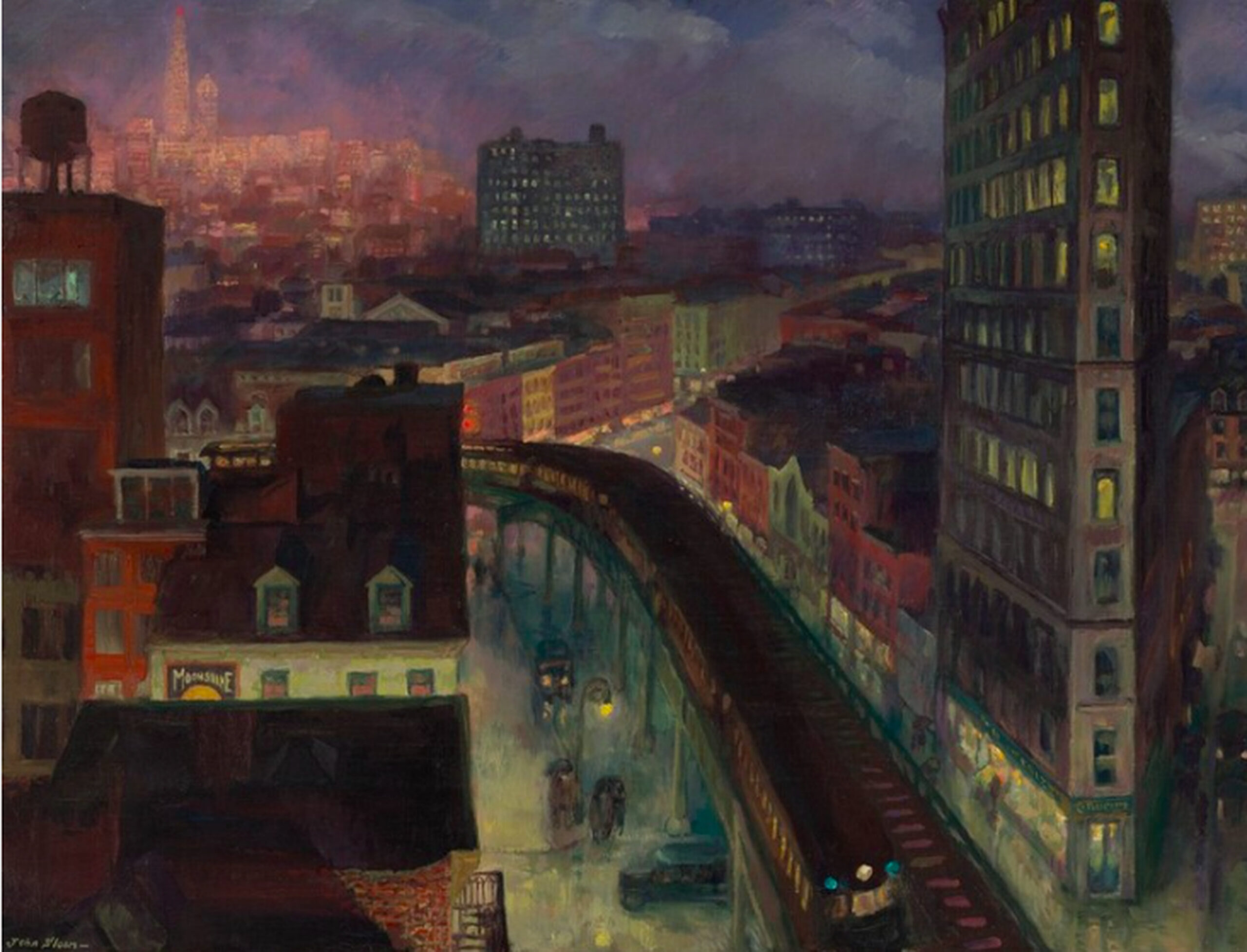
New York did not teach artists one way to be modern. John Sloan and other painters associated with urban realism treated restaurants, theaters, sidewalks, and working-class neighborhoods as serious subjects. Italian-born Joseph Stella transformed bridges and electric lights into images of industrial energy. Other artists explored abstraction, commercial illustration, photography, or new approaches to the figure. These artists did not form one unified movement. Their differences were part of what made New York modern. The Art Students League brought many approaches together. Organized by artists rather than by a university, it allowed students to choose individual instructors and classes. Its relatively flexible schedule made it accessible to immigrants and working artists who could not follow a conventional academic program.1

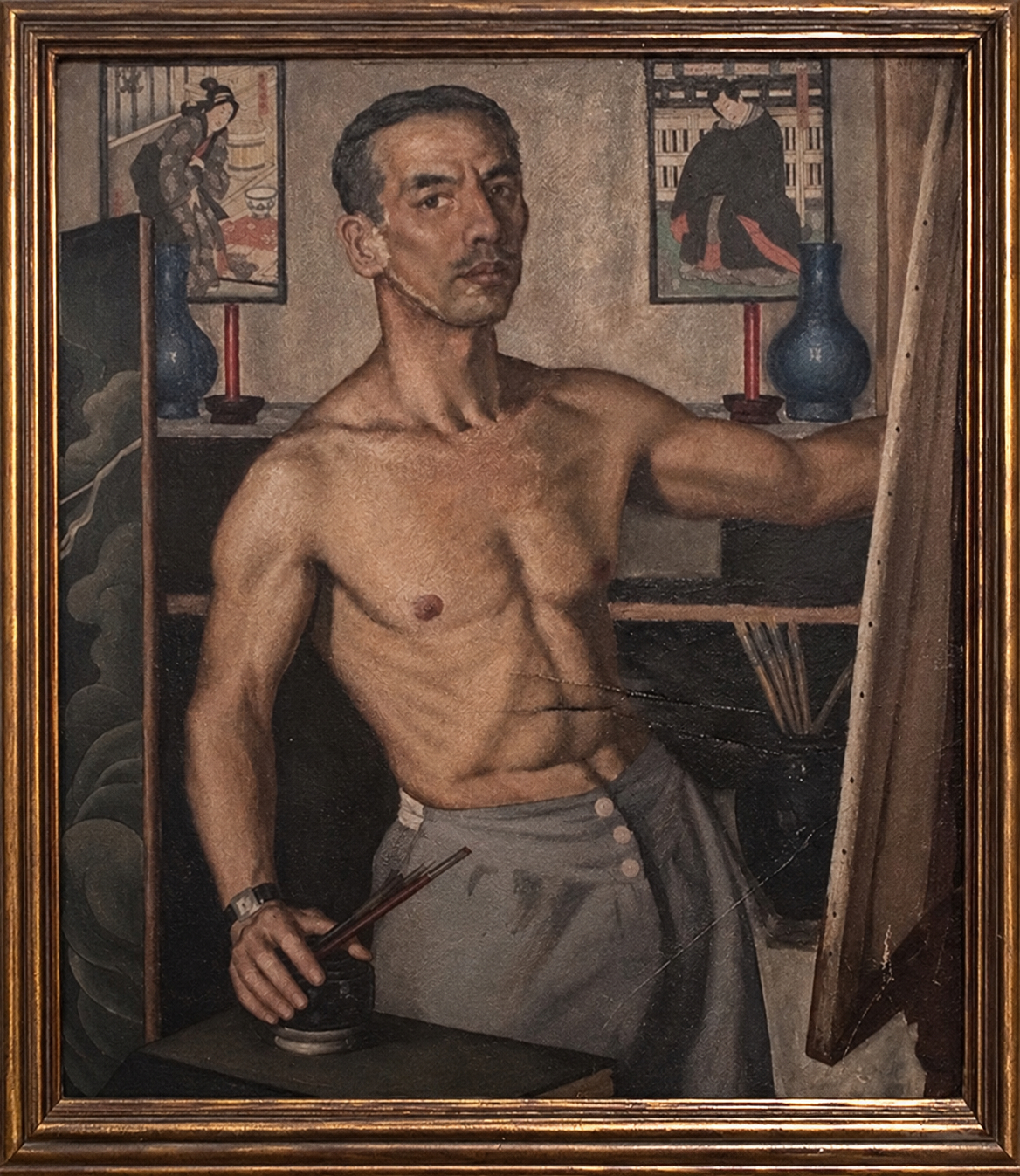
Artists in this New York community did not express their relationship to Japan in the same way. In Seimatsu Hamaji’s Red Hat (1928), Japanese prints form a conspicuous part of the interior, while Jisaburo Sugimori’s self-portrait similarly places the artist among ukiyo-e prints and Japanese ceramics. By contrast, representations of Yasuo Kuniyoshi’s New York studio do not rely on such overtly Japanese objects. These differences caution against treating “Japanese” identity as a single visual category.

Toshi Shimizu and the Modern City

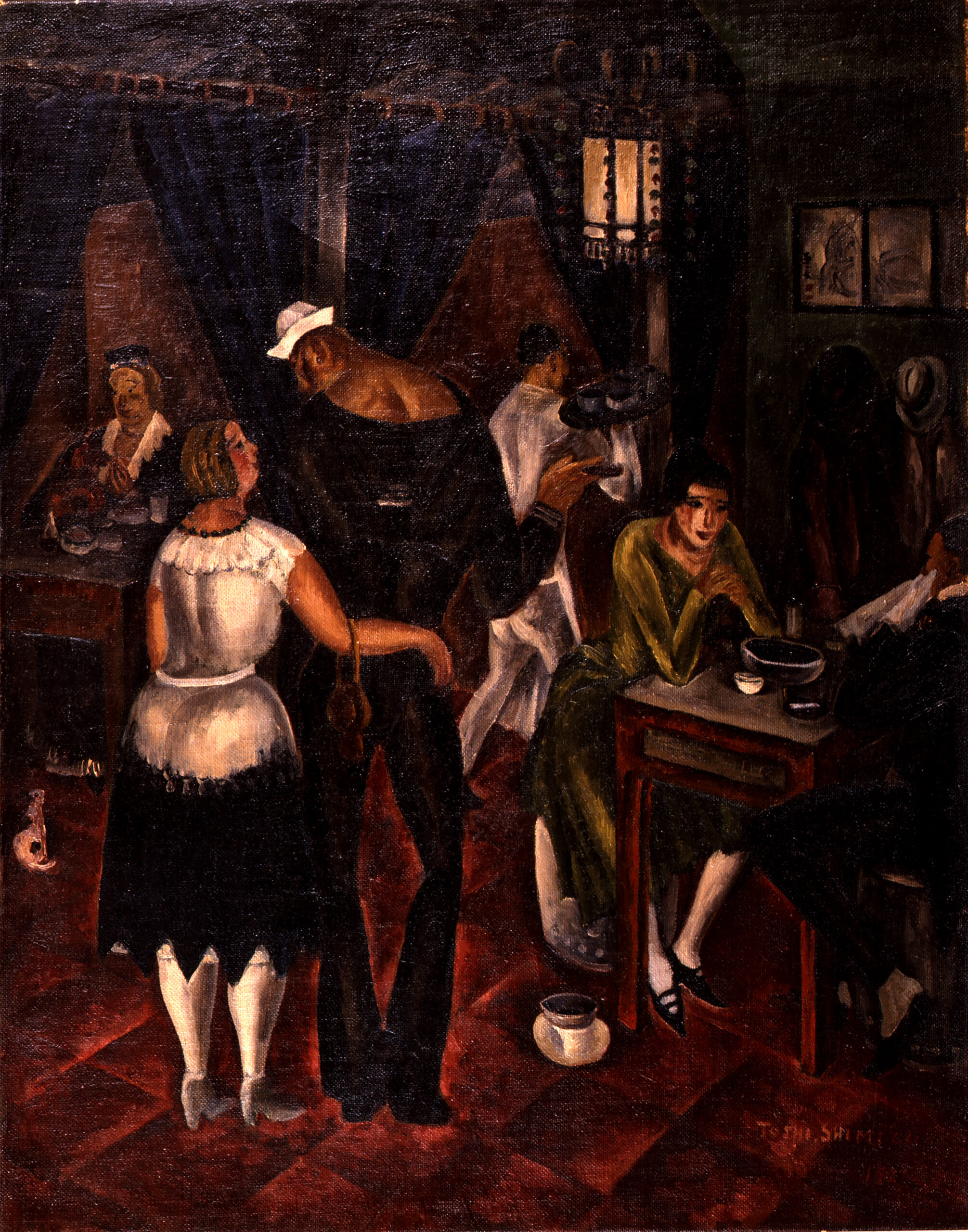
Toshi Shimizu moved to New York in 1917 and studied at the National Academy of Design and the Art Students League. His teachers included Kenneth Hayes Miller and John Sloan. Sloan was known for treating everyday urban experience as a subject for serious art, but Shimizu did not simply imitate him. He developed his own paintings of restaurants, nighttime streets, amusement spaces, and crowded interiors.

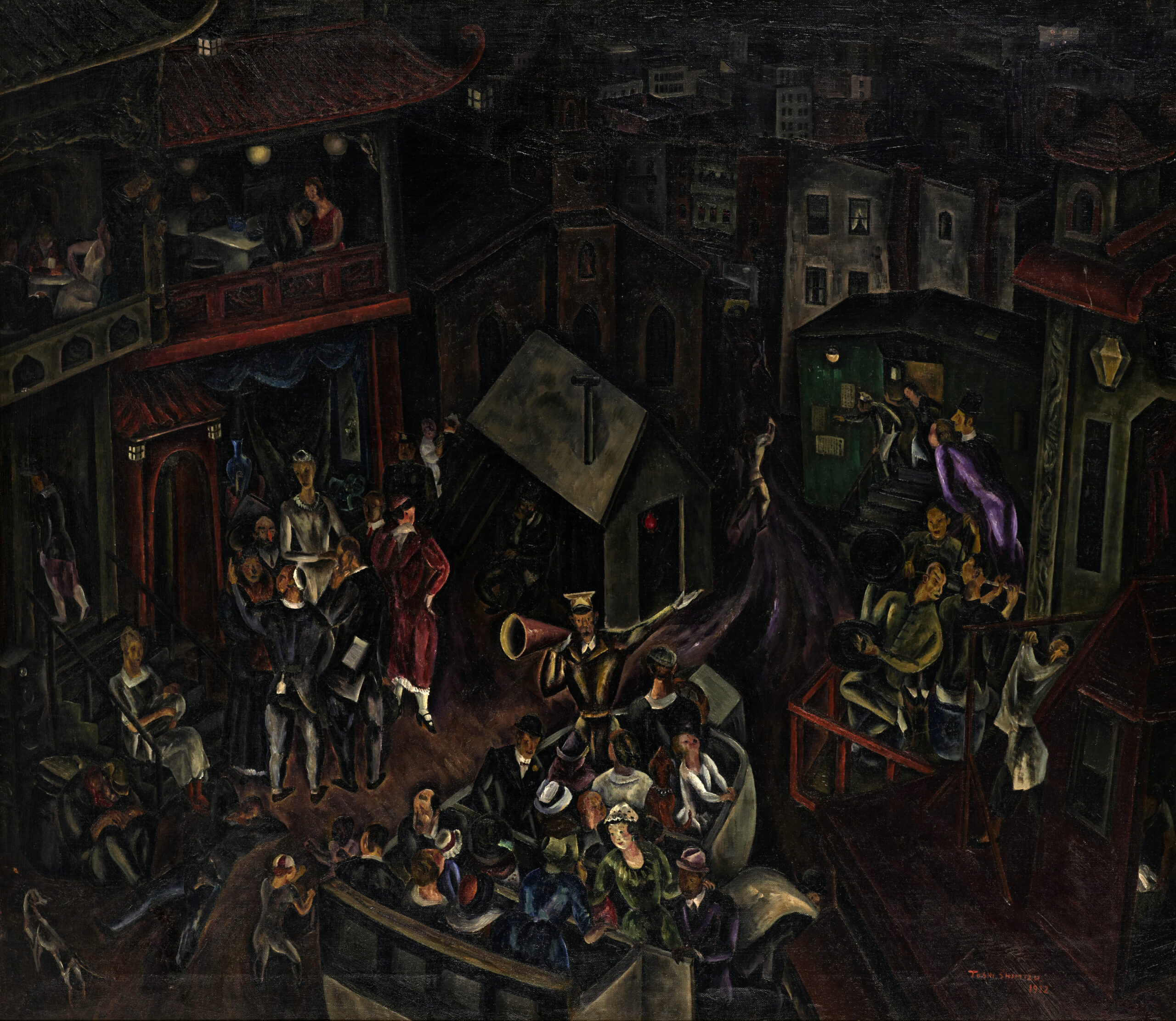
In In a Chop Suey Parlor, diners sit at tables while waiters move through the room. Leisure and labor occupy the same space. The painting shows that modern city life was created not only by skyscrapers and machines, but also by food, service work, artificial light, consumption, and encounters among strangers. Chinatown at Night, New York presents a more complicated urban scene. By the early twentieth century, sightseeing companies were selling tours of Chinatown to white visitors, often presenting the neighborhood as mysterious, dangerous, or exotic. 

In Shimizu’s painting, a tour bus passes through a street filled with restaurants, pedestrians, hanging lights, and several simultaneous incidents. The tourists look at Chinatown, while the painting invites us to look at the tourists.2 Shimizu was himself an Asian immigrant living under racial restrictions, but his position was not identical to that of Chinese New Yorkers. The painting brings together several viewpoints: tourists looking at Chinatown through stereotypes, Shimizu observing the street as a Japanese immigrant, and present-day viewers interpreting the scene from a later time. These differences make the work more than a lively picture of the city.


Yasuo Kuniyoshi and “Kuniyoshism”

Yasuo Kuniyoshi followed another route into New York modernism. He arrived in the United States in 1906 as a sixteen-year-old labor immigrant and did not initially intend to become an artist. After studying in Los Angeles, he moved to New York and entered the Art Students League in 1916. Kuniyoshi studied with Kenneth Hayes Miller, whose teaching drew upon European old masters as well as modern artists. 

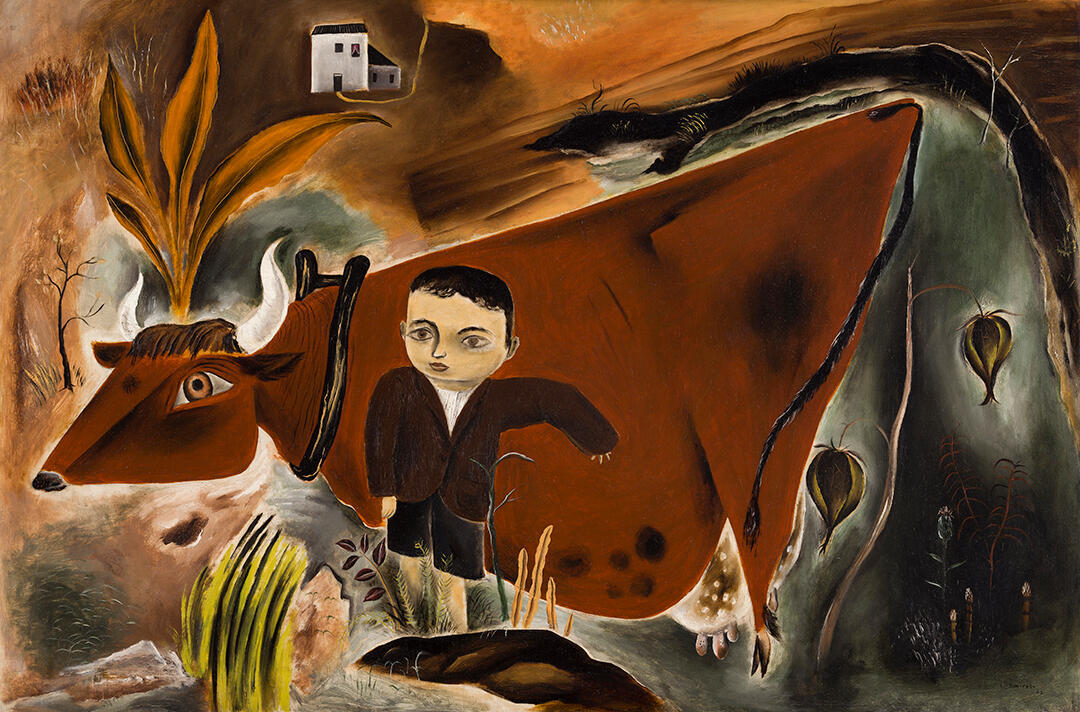
Yet Kuniyoshi’s paintings did not reproduce a single teacher or national tradition. His early works combined distorted bodies, animals, rural landscapes, memory, humor, and visual unease. Flattened spaces and unexpected shifts in scale made ordinary subjects appear strange. Critics frequently attempted to identify a distinctly Japanese quality in Kuniyoshi’s work, even though his artistic education and professional career had developed in the United States. Kuniyoshi resisted being reduced to either Japanese or American influence. He described his individual approach as “Kuniyoshism.”

The term expressed his refusal to let national identity become a complete explanation of his art.3 Kuniyoshi’s career also depended upon relationships. Teachers, patrons, galleries, fellow artists, and friends helped provide studio space, introductions, criticism, and opportunities to exhibit. Modern art was not produced by isolated individuals alone. It depended upon social and material networks.


Bumpei Usui and the Work Around Art

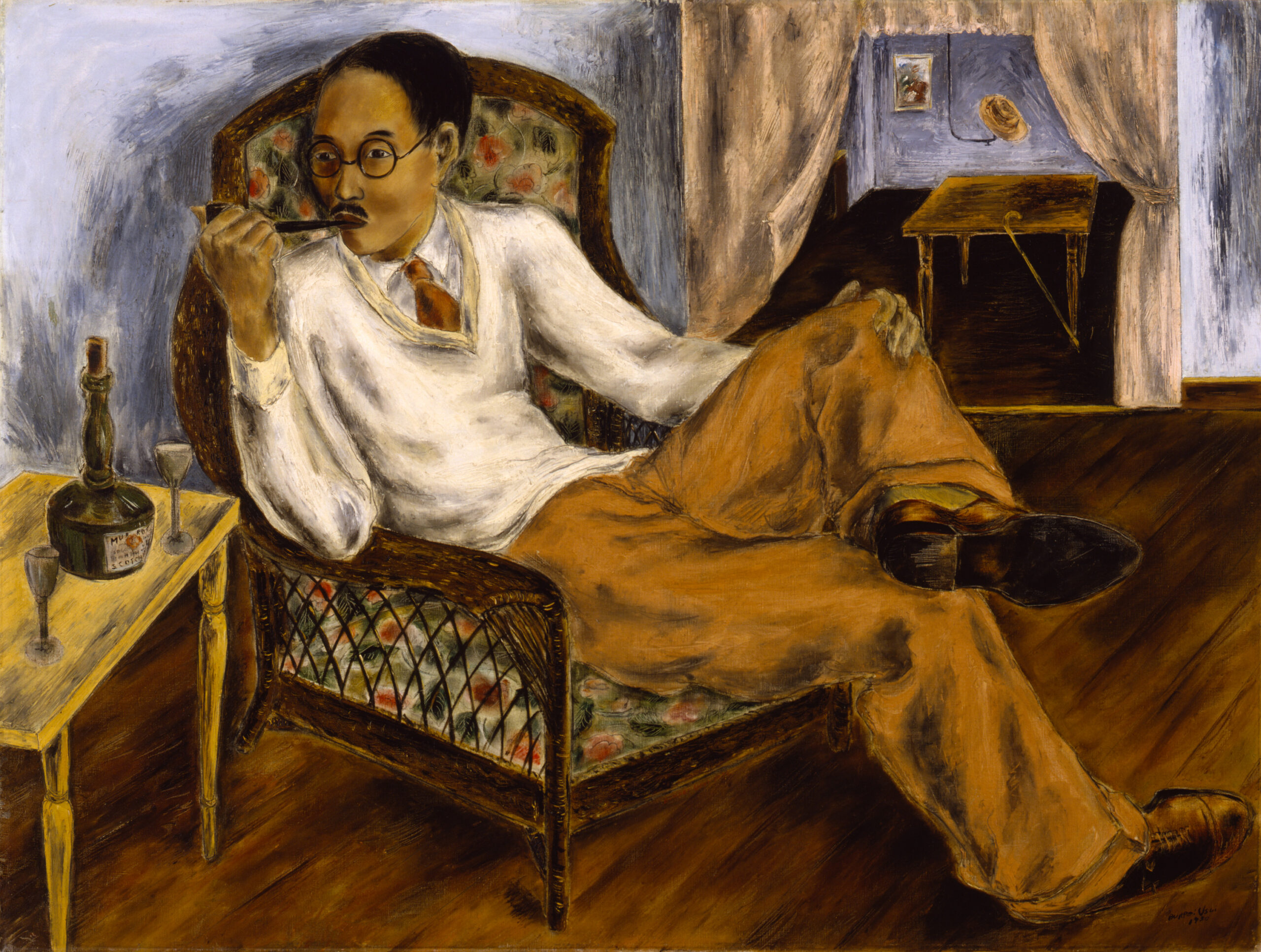
Bumpei Usui belonged to this world as both a painter and a frame maker. His framing business brought him into contact with artists including Kuniyoshi and Isamu Noguchi. Frames were not merely decoration. They affected how paintings appeared, how they entered galleries and homes, and how viewers understood their value. Usui’s Portrait of Yasuo Kuniyoshi in His Studio makes this artistic network visible. Kuniyoshi appears within a working interior rather than as an isolated public figure. 

The painting records a friendship while also showing the studio as a social environment shaped by pictures, furniture, conversation, and shared labor. Usui’s career expands the meaning of artistic participation. A Japanese immigrant artist might paint, construct frames, make furniture, manage a business, introduce artists to one another, and help prepare artworks for exhibition. The practical work surrounding paintings was part of modern art, not separate from it.4


Artistic Opportunity and Racial Exclusion

New York offered opportunities, but the nation was becoming more restrictive. The Immigration Act of 1924 limited immigration according to a person’s country of origin and excluded immigrants considered ineligible for citizenship. Because federal law placed Japanese immigrants in this category, the act effectively ended immigration from Japan.5 

This contradiction shaped the artistic life of the city. Artists could cross neighborhoods, study at open schools, join exhibitions, and form relationships across national backgrounds. At the same time, federal law declared that Japanese immigrants could neither enter freely nor become naturalized citizens. Their modernism did not result from choosing between Japan and America. It emerged from living and working in a city where artistic ideas, people, labor, and money circulated widely, even as racial law attempted to determine who could belong.

1. “Legacy of the League,” Art Students League of New York, https://www.artstudentsleague.org/legacy-of-the-league. The League was organized around independent classes led by individual instructors rather than a standardized degree curriculum.

2. Chad Heap, Slumming: Sexual and Racial Encounters in American Nightlife, 1885–1940 (Chicago: University of Chicago Press, 2009); Tochigi Prefectural Museum of Fine Arts, Shimizu Toshi: Works from the Collection of Tochigi Prefectural Museum of Fine Arts (exhibition catalogue, 2007); See also Tom Wolf, “The Tip of the Iceberg: Early Asian American Artists in New York,” in Asian American Art: A History, 1850–1970, ed. Gordon H. Chang, Mark Dean Johnson, and Paul J. Karlstrom (Stanford, CA: Stanford University Press, 2008), 83–109.

3. ShiPu Wang, Becoming American? The Art and Identity Crisis of Yasuo Kuniyoshi (Honolulu: University of Hawai‘i Press, 2011); Tom Wolf, The Artistic Journey of Yasuo Kuniyoshi (Washington, D.C.: Smithsonian American Art Museum, 2015); Midori Yamamura, “The Artistic Journey of Yasuo Kuniyoshi,” Asian Diasporic Visual Cultures and the Americas 3, no. 3 (2017): 359–62; Shun Itō, “Yasuo Kuniyoshi’s Life and Work in New York,” lecture presented by the Digital Museum of the History of Japanese in New York and the Nippon Club, February 10, 2025; “Yasuo Kuniyoshi (1889–1953),” Digital Museum of the History of Japanese in New York, https://www.historyofjapaneseinny.org/artifacts/yasuo-kuniyoshi/.

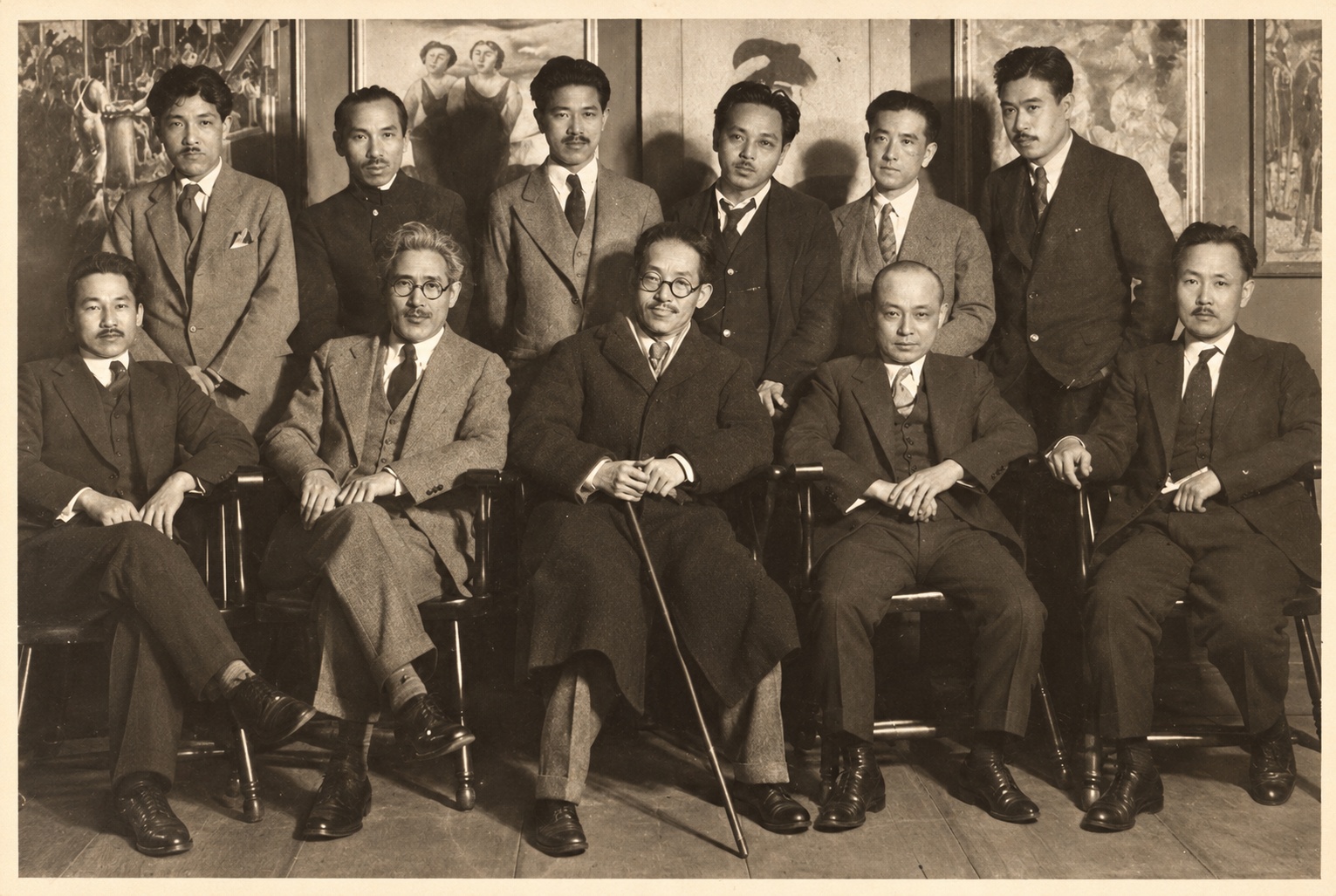
4. “Portrait of Yasuo Kuniyoshi in His Studio,” Smithsonian American Art Museum, https://americanart.si.edu/artwork/portrait-yasuo-kuniyoshi-his-studio-25505. For the 1927 group photograph, the identification of Jisaburo Sugimori (also known as George Tera) was provided by his granddaughter, Nancy Kitchen, from a copy of the photograph preserved by the Sugimori family. For the identifications of Yasuo Kuniyoshi, Seishō Hamachi, and Eitaro Ishigaki, see Ichiro Okumura, “Seimatsu Hamaji: New York, Paris, Tokyo, Wakayama,” The Museum of Modern Art, Wakayama News, no. 107 (2021) p. 4.

5. Mae M. Ngai, Impossible Subjects: Illegal Aliens and the Making of Modern America (Princeton, NJ: Princeton University Press, 2004); “The Immigration Act of 1924 (The Johnson-Reed Act),” Office of the Historian, U.S. Department of State, https://history.state.gov/milestones/1921-1936/immigration-act

Who Represented American Art?

Studying and exhibiting could help an artist enter New York’s art world. Recognition required something more. Museums, galleries, critics, and schools helped decide which artists would represent modern American art and which would remain identified mainly by nationality. This question became especially important during the Great Depression of the 1930s. Artists and critics debated what American art should show. Some favored abstraction and modern styles shared across national borders. Others turned toward recognizable scenes of cities, workers, industry, and everyday life. New York contained all these approaches at once.


Yasuo Kuniyoshi and American Modernism

Yasuo Kuniyoshi had become one of the most prominent artists in this changing world. In 1929, the Museum of Modern Art included him in Nineteen Living Americans, one of the museum’s earliest exhibitions devoted to American artists. In 1933, he joined the faculty of the Art Students League. These achievements placed him inside institutions that helped define American art.1 Yet critics continued to describe Kuniyoshi primarily as Japanese. Some looked for Japanese tradition in his simplified forms and unusual perspective. His work, however, had developed through American art schools, friendships, exhibitions, and years of living in New York and Woodstock.

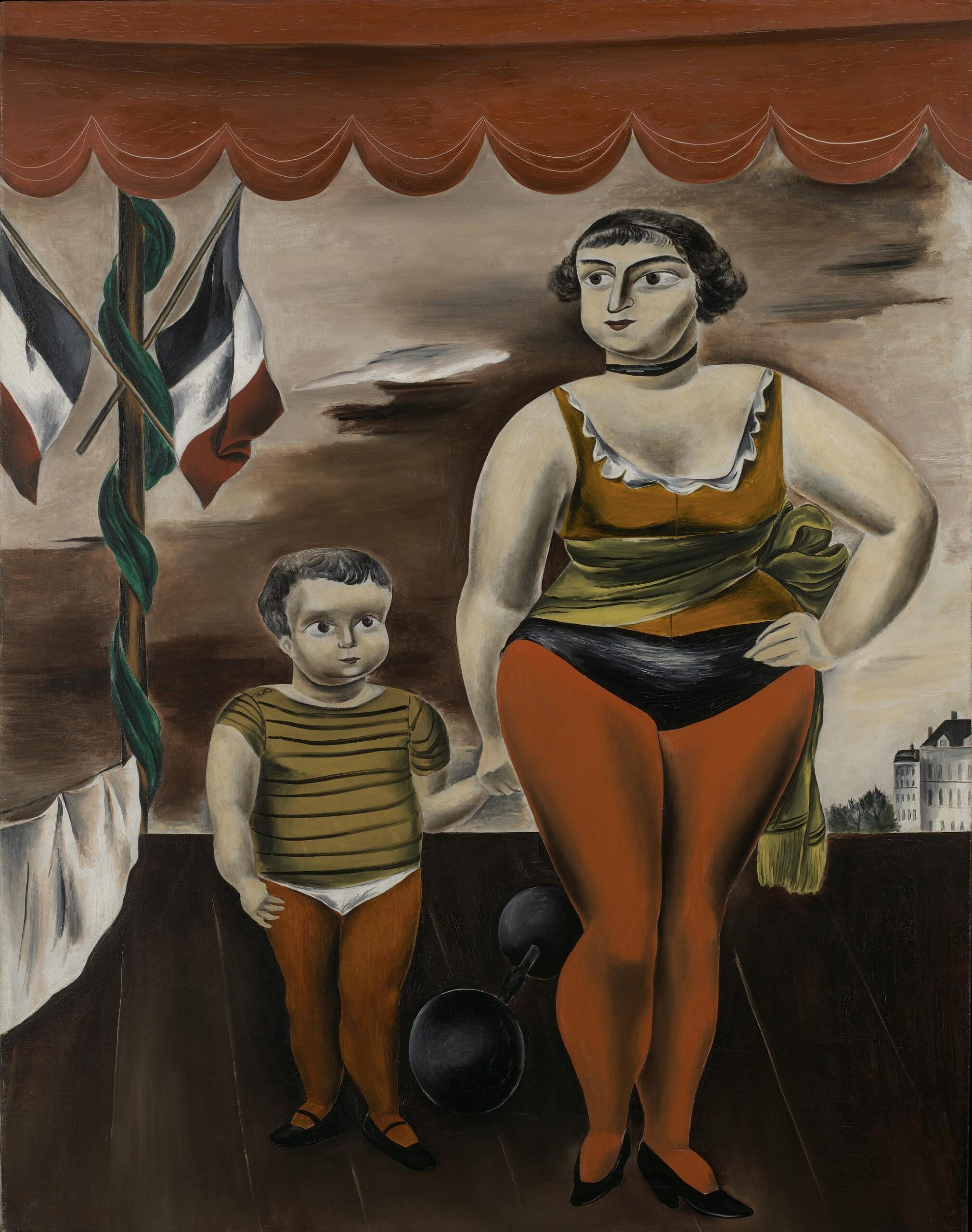
Kuniyoshi resisted choosing between fixed national categories. He once described his approach as “Kuniyoshism.” The playful term suggested that his art came from an individual history that could not be reduced to either Japan or the United States. Works such as Strong Woman and Child combine observation, imagination, humor, and unease. They belong to American modernism without following a single American style.


Thomas Hart Benton and the American Scene

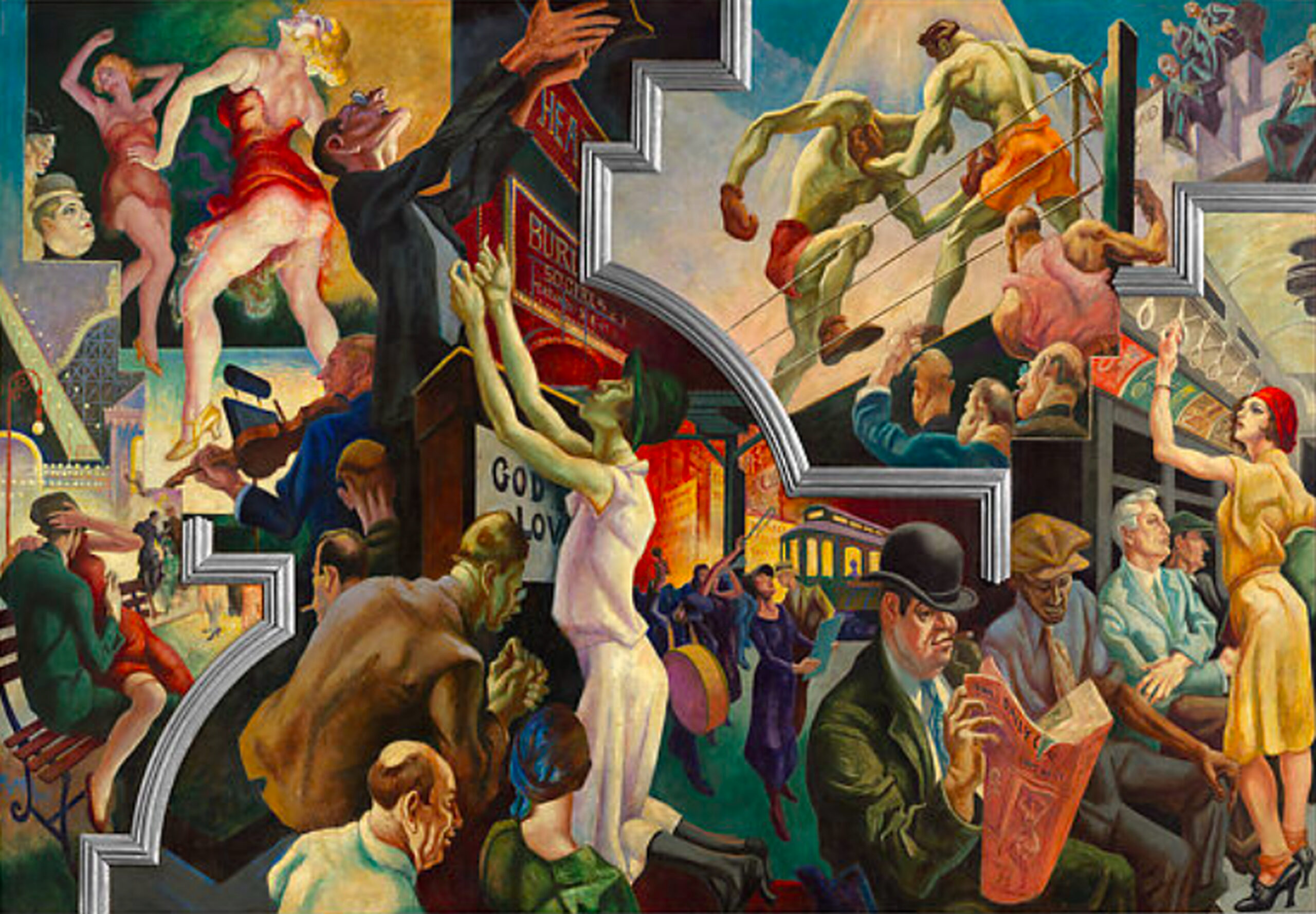
Thomas Hart Benton offered a more public answer to the question of national art. Benton taught at the Art Students League and became a leader of American Scene painting and Regionalism. These movements favored recognizable scenes of American places, history, and everyday life. His mural cycle America Today, created for the New School, presents the United States through industry, transportation, entertainment, agriculture, and labor. In City Activities with Subway, passengers, dancers, workers, signs, and machines are compressed into a restless urban rhythm. The mural treats modern city life as part of a national story. Yet Benton’s vision was only one version of America. The country represented by its artists was more culturally and racially diverse than many surveys of American art acknowledged.2


Hideo Noda and the Meaning of Citizenship

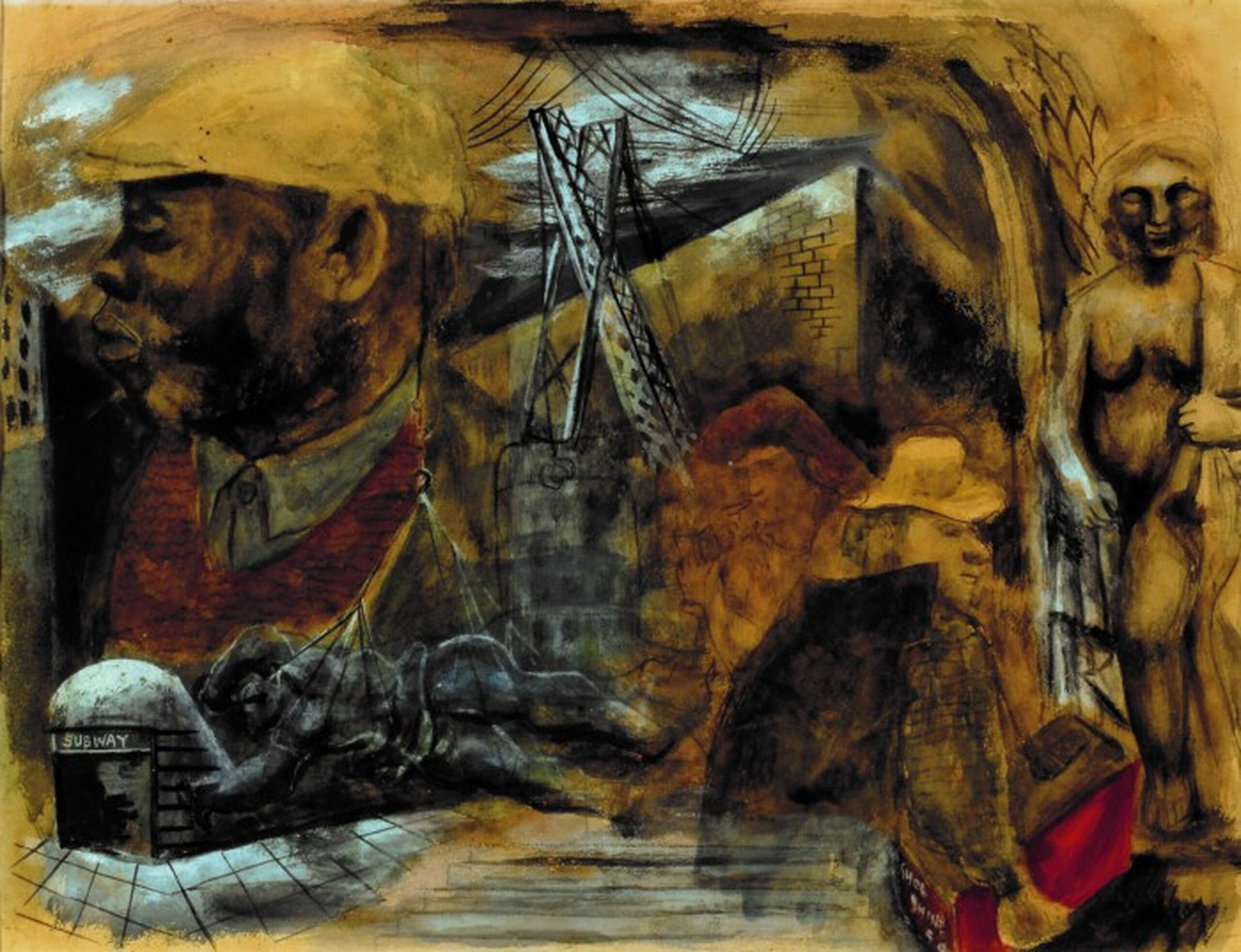
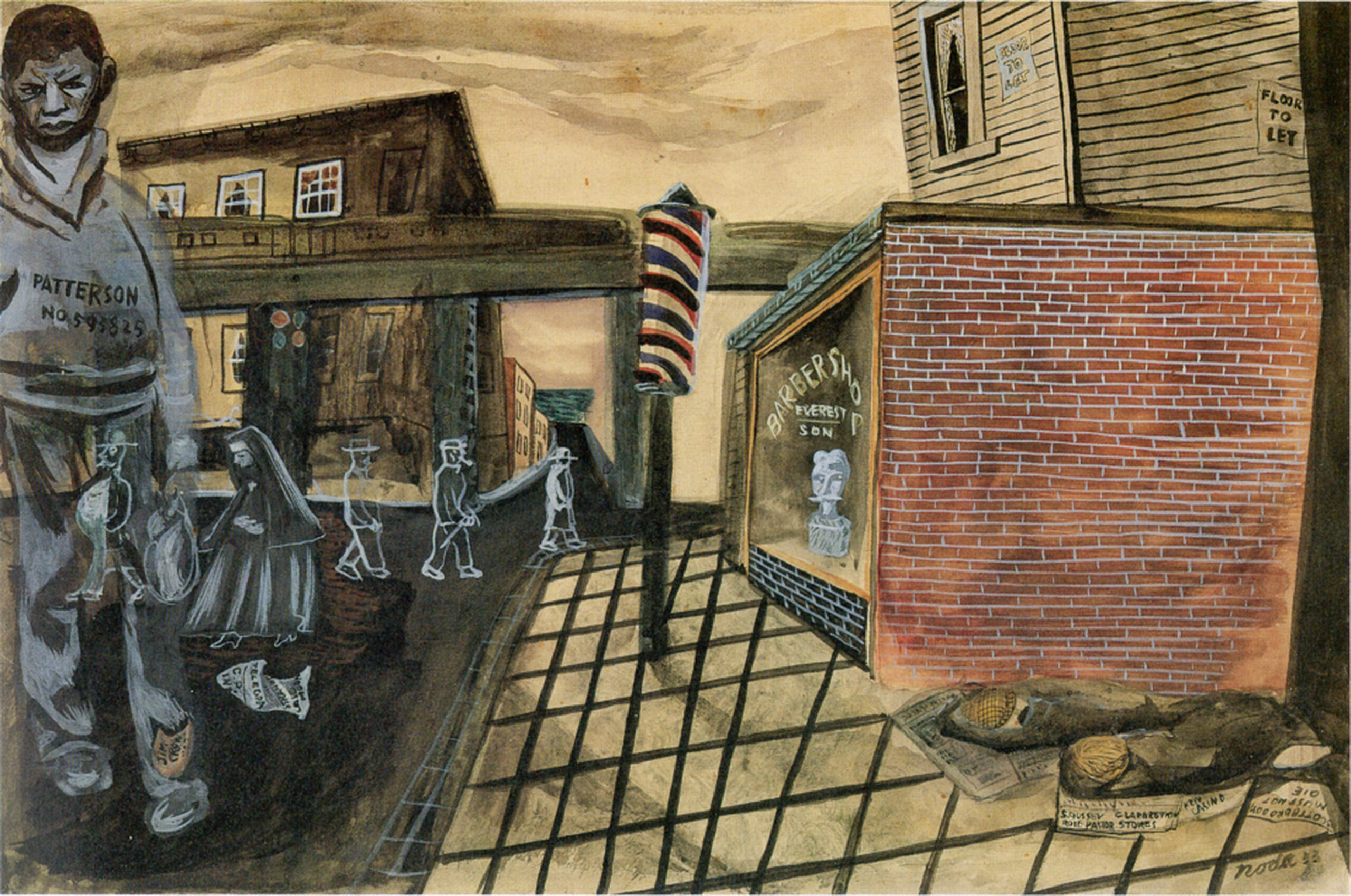
Hideo Noda entered this debate from a different position. Born in California in 1908, he was a Nisei, or second-generation Japanese American, and a United States citizen. After spending part of his childhood in Japan, he returned to the United States and studied art in California before working in New York and Woodstock. His city scenes, landscapes, and figure studies drew from both American Scene painting and modern art from abroad. In 1934, the Whitney Museum included Noda in its Second Biennial Exhibition of Contemporary American Painting. His participation is significant. The museum presented his work within an exhibition of contemporary American art, but racial assumptions could still cause a Nisei artist to be treated as foreign. Citizenship established a legal difference between Noda and Issei, or first-generation Japanese immigrant, artists such as Kuniyoshi, but it did not determine how viewers understood them.3 Noda’s Entrance to Subway at Dusk returns us to a subject familiar from Benton and the New York realists. The subway entrance is not simply a symbol of modern technology. It is a place where bodies, schedules, work, and the changing light of the city meet. Viewed beside Benton, Noda’s work shows that urban American art was produced from more than one social or racial position.


Isamu Noguchi Across Art Forms

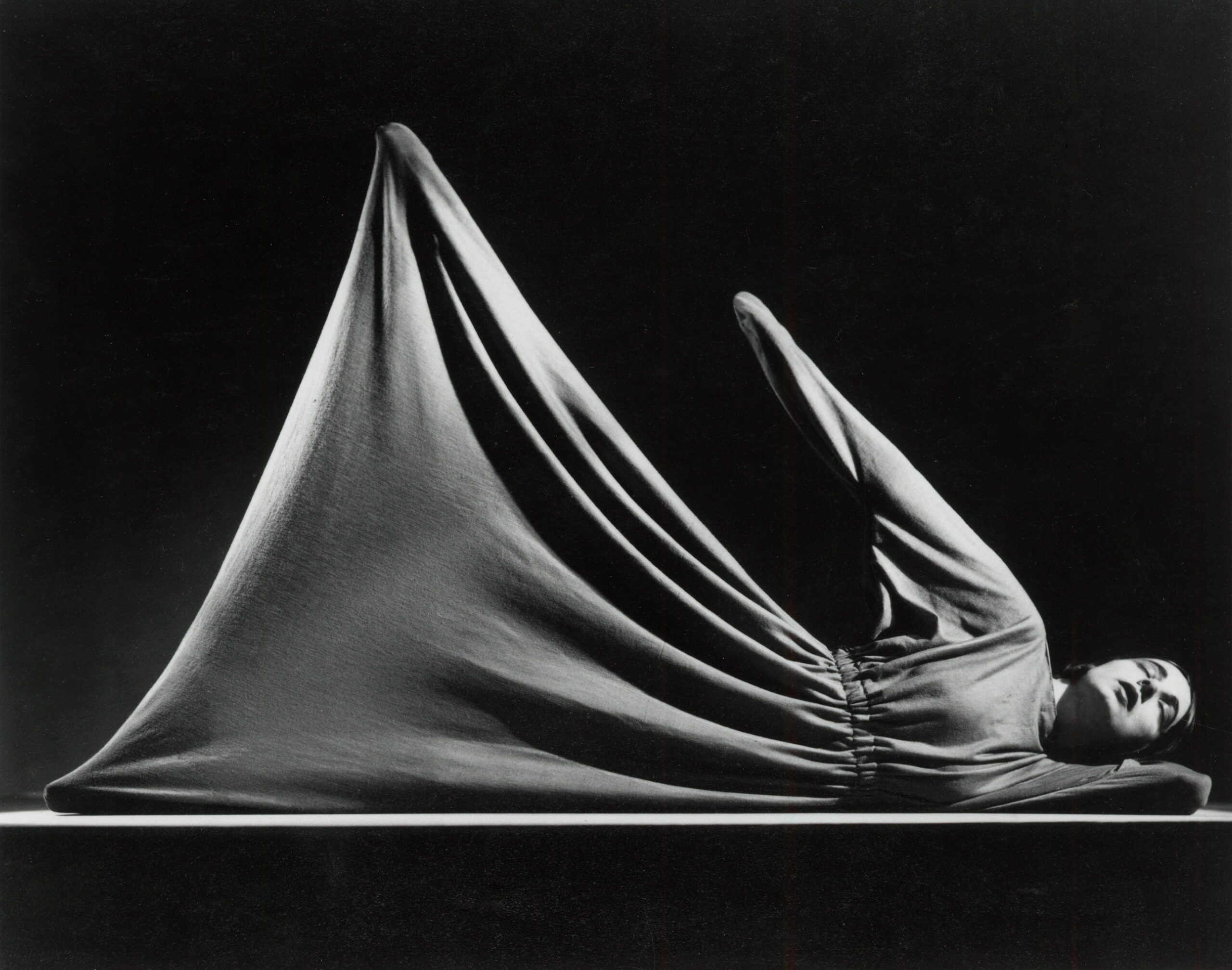
Isamu Noguchi unsettled these categories further. Born in Los Angeles to an American mother and Japanese father, he spent parts of his childhood in both countries. In New York, he worked across sculpture, portraiture, furniture, theater, and landscape design. Older Japanese artists, including Kuniyoshi, formed part of his early artistic community. His career also developed through modern art from abroad and New York’s experimental worlds of dance and design.4 Miss Expanding Universe grew from Noguchi’s collaboration with dancer Ruth Page. Its curved forms suggest a body opening, turning, or expanding through space. The sculpture moves this chapter beyond painting and beyond the search for a recognizable national subject. It asks whether American art might also be defined through experimentation, movement, collaboration, and exchange.


Recognition and Exclusion

By the middle of the 1930s, Japanese and Japanese American artists were exhibiting in major museums, teaching at influential schools, and participating in debates about modern art. Their careers reveal an important contradiction. Institutions could recognize their work as American while critics and audiences continued to treat the artists themselves as outsiders. The question was therefore no longer whether Japanese and Japanese American artists participated in American art. They clearly did. The harder question was whether American art history would recognize them as central participants rather than as exceptions to its story.

1. On Kuniyoshi’s inclusion in the Museum of Modern Art’s Nineteen Living Americans, his appointment to the Art Students League faculty, and the racialized reception of his work, see Digital Museum, “Yasuo Kuniyoshi”; ShiPu Wang, Becoming American? The Art and Identity Crisis of Yasuo Kuniyoshi (University of Hawai‘i Press, 2011); and Tom Wolf, The Artistic Journey of Yasuo Kuniyoshi (Smithsonian American Art Museum, 2015).

2. On Benton’s America Today and its representation of modern American labor, transportation, and entertainment, see the Metropolitan Museum of Art’s collection record.

3. For Noda’s participation in the 1934 Whitney Biennial, see the Whitney Museum artist record. On Noda’s work and the different legal and cultural positions occupied by Issei and Nisei artists, see ShiPu Wang, The Other American Moderns: Matsura, Ishigaki, Noda, Hayakawa (Penn State University Press, 2017). For Entrance to Subway at Dusk, see the Uki City Museum collection record.

4. On Noguchi’s upbringing, New York career, and relationships with Japanese artists, see Digital Museum, “Isamu Noguchi” and the Isamu Noguchi Foundation and Garden Museum chronology. For Miss Expanding Universe, see the Noguchi Archive object record.

 Art as Public Work

During the Great Depression, making art became a public question. As private sales and commissions declined, federal programs hired artists to create murals, paintings, prints, sculpture, posters, and community art centers. The government treated artistic practice as work and placed art in schools, hospitals, courthouses, and other public buildings.1 New York artists also debated what public art should do. Should it record everyday life, teach history, support political movements, or offer relief from hardship? These questions brought artists into contact with labor organizations, Communist and socialist groups, antifascist campaigns, and movements against racial injustice.


Mexican Muralism and the Power of Patrons

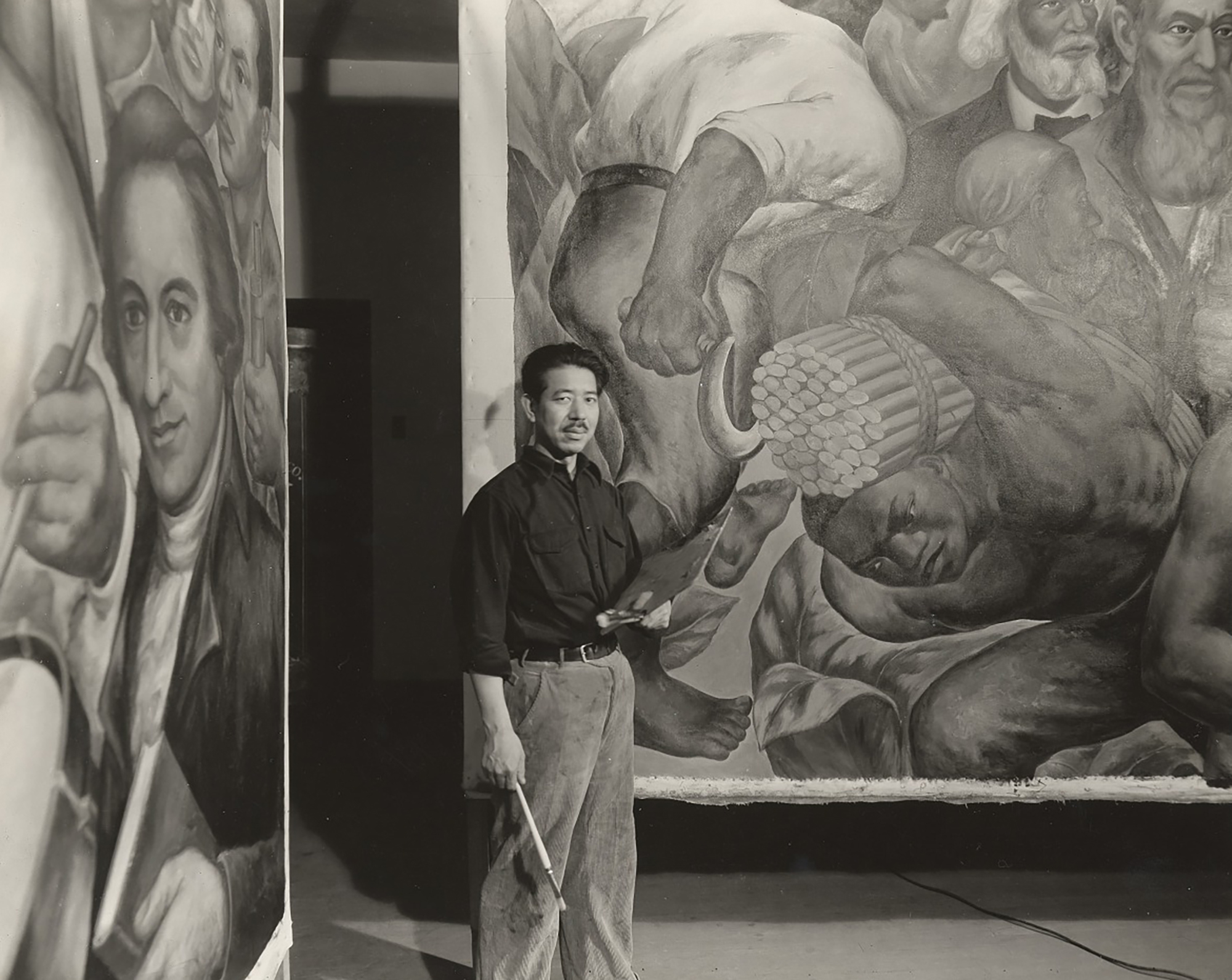
Mexican muralism provided an important model. Diego Rivera, José Clemente Orozco, and David Alfaro Siqueiros used large public images to connect history with revolution, industry, and collective struggle. Their work influenced artists of many nationalities in the United States. Hideo Noda assisted Rivera on Man at the Crossroads at Rockefeller Center in 1933. When Rivera refused to remove a portrait of Vladimir Lenin, the mural was covered and later destroyed. The controversy showed that a powerful patron could fund ambitious art and still control what the public was allowed to see.2


Art, Racial Injustice, and Solidarity

Noda’s own painting about the Scottsboro case belongs to this political culture. The case involved nine young Black men who were falsely accused of assaulting two white women in Alabama in 1931. Their trials became an international symbol of racial injustice. Noda’s painting does not illustrate a courtroom scene. It presents frightened and exhausted figures crowded together, turning a widely reported legal case into an image of vulnerability and collective fear.3 Noda was a Nisei artist interpreting violence directed at African Americans. Eitarō Ishigaki approached racial and economic injustice from the different position of a Japanese immigrant and socialist activist. Their works expressed solidarity, but solidarity did not make their experiences identical to those of the people they represented. These paintings should therefore be understood alongside the work of Black artists and organizations that were speaking from within Harlem and African American life.


Eitarō Ishigaki: Art, Migration, and Social Struggle

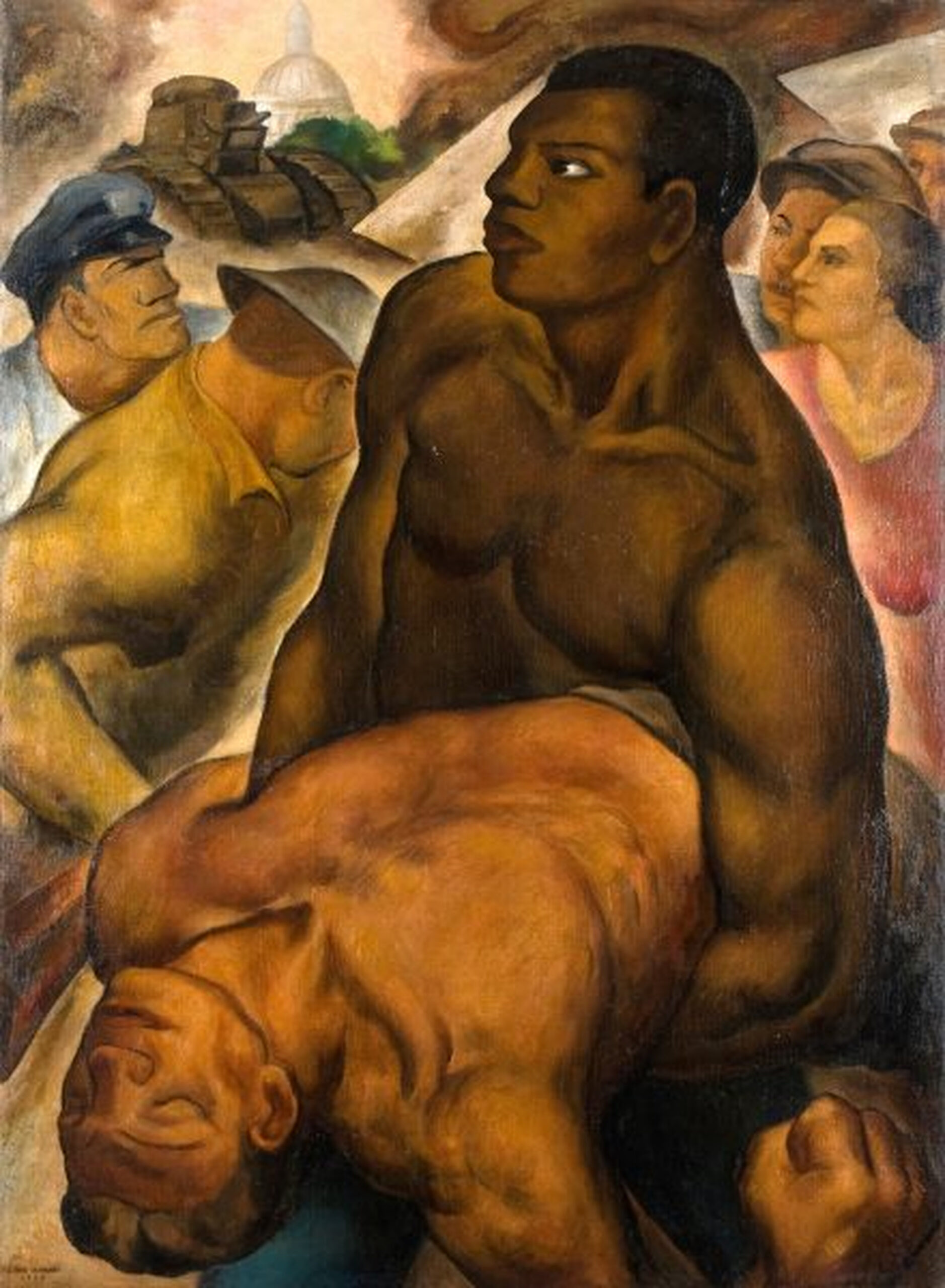
During the 1930s, Ishigaki increasingly turned to social and political subjects. In The Bonus March (1932), he depicted the protest of World War I veterans who marched on Washington to demand early payment of bonuses promised for their military service. At the center of the painting, a Black veteran carries an injured white veteran. Art historian ShiPu Wang has interpreted this reversal of familiar racial hierarchies as an image of interracial solidarity among workers and former soldiers.4

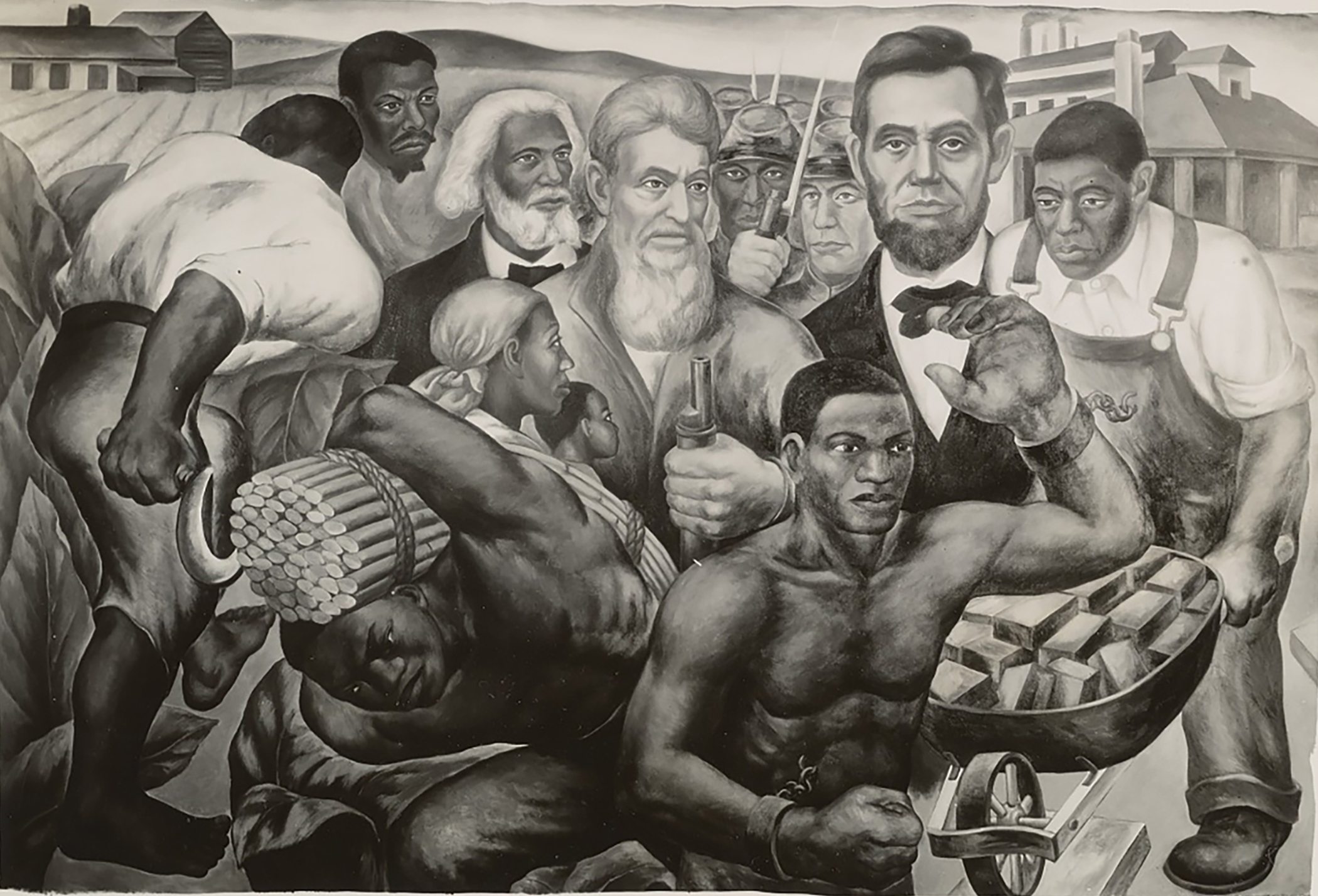
At the same time, the painting raises a larger question: how could an artist engage with the struggles of another community without claiming to speak for it? Ishigaki carried his socially engaged approach into the Federal Art Project. In the late 1930s, he designed murals for the Harlem Courthouse that drew upon episodes including the American Revolution, the Civil War, and emancipation.

These murals were created within a neighborhood that already had powerful Black artistic and political institutions. Artists including Augusta Savage, Charles Alston, Aaron Douglas, and Jacob Lawrence participated in Black-led schools, workshops, and organizations. The Harlem Artists Guild pressed federal art programs to employ more Black artists, while the Harlem Community Art Center made art instruction available to neighborhood residents. Ishigaki’s murals entered this larger cultural landscape; they did not represent Harlem by themselves.5

Ishigaki’s political engagement extended beyond American social struggles. Following the outbreak of the Sino-Japanese War and later the Pacific War, he produced numerous works opposing war and fascism. Seen across his career, his work in New York connected the experiences of migration with an increasingly international engagement with labor, racial injustice, war, and political oppression.5


Citizenship and Exclusion from Federal Employment

In 1937, relief legislation restricted WPA employment to U.S. citizens and certain noncitizens who had already declared their intention to become citizens. Because Japanese immigrants were legally barred from naturalization, Ishigaki, Chūzō Tamotzu, and other immigrant artists became ineligible for WPA employment.

The contradiction was severe. The government had hired Ishigaki to picture American history in a public courthouse, then declared him ineligible to complete the work because he was not a citizen. His murals were subsequently criticized for their treatment of national figures and racial history. They were later removed and are now considered destroyed. Federal photographs provide the principal visual record of the completed panels.6


Artists Respond Collectively

Artists responded collectively. The 1937 ACA Gallery exhibition Paintings by New York Chinese-Japanese Artists brought Chinese and Japanese artists together. It opened while Asian immigrants were being excluded from federal employment and Japan’s invasion of China was intensifying. Contemporary accounts presented the exhibition as a protest against racial discrimination in the United States and an expression of opposition to Japanese militarism.7


Everyday Subjects and the Conditions of Work

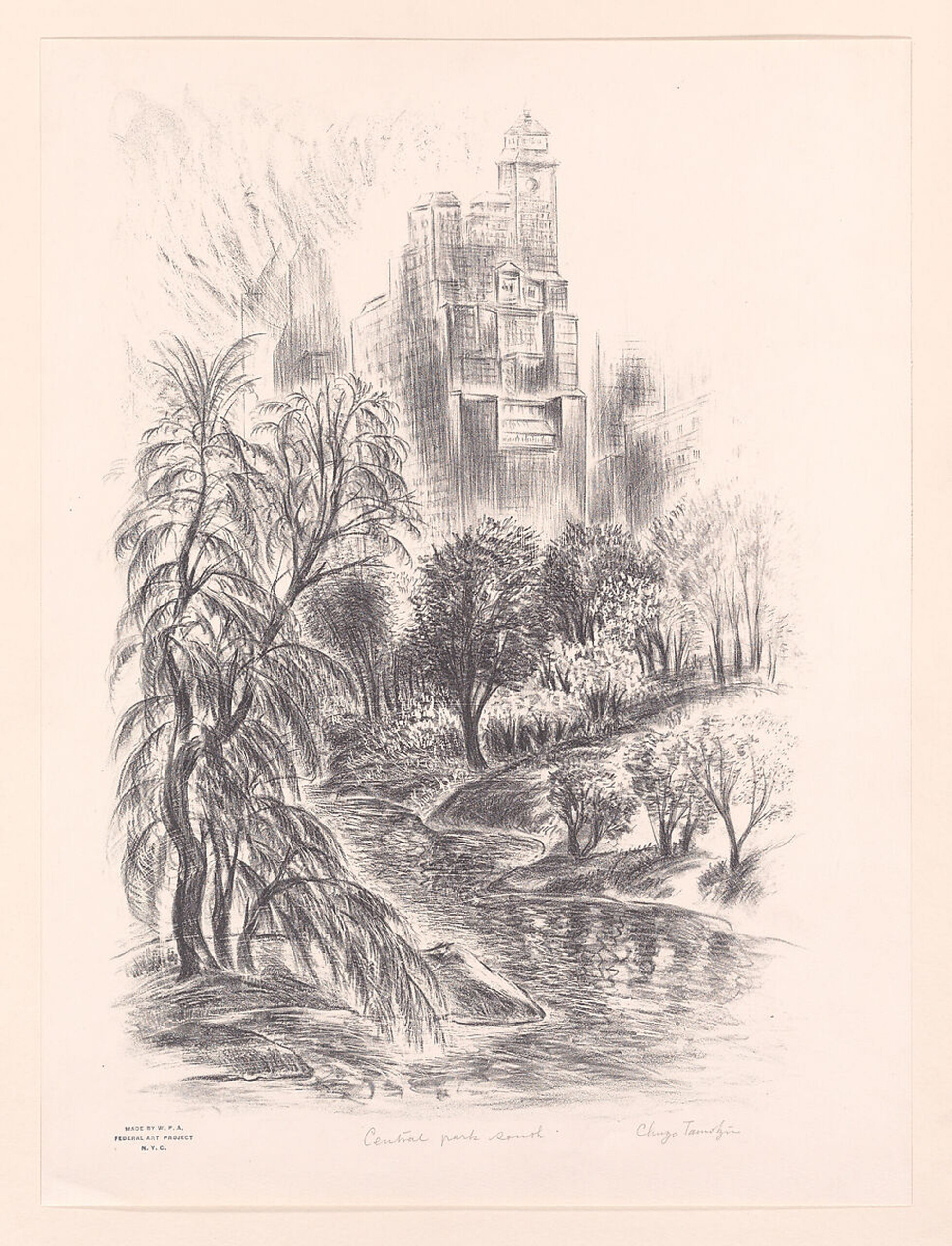
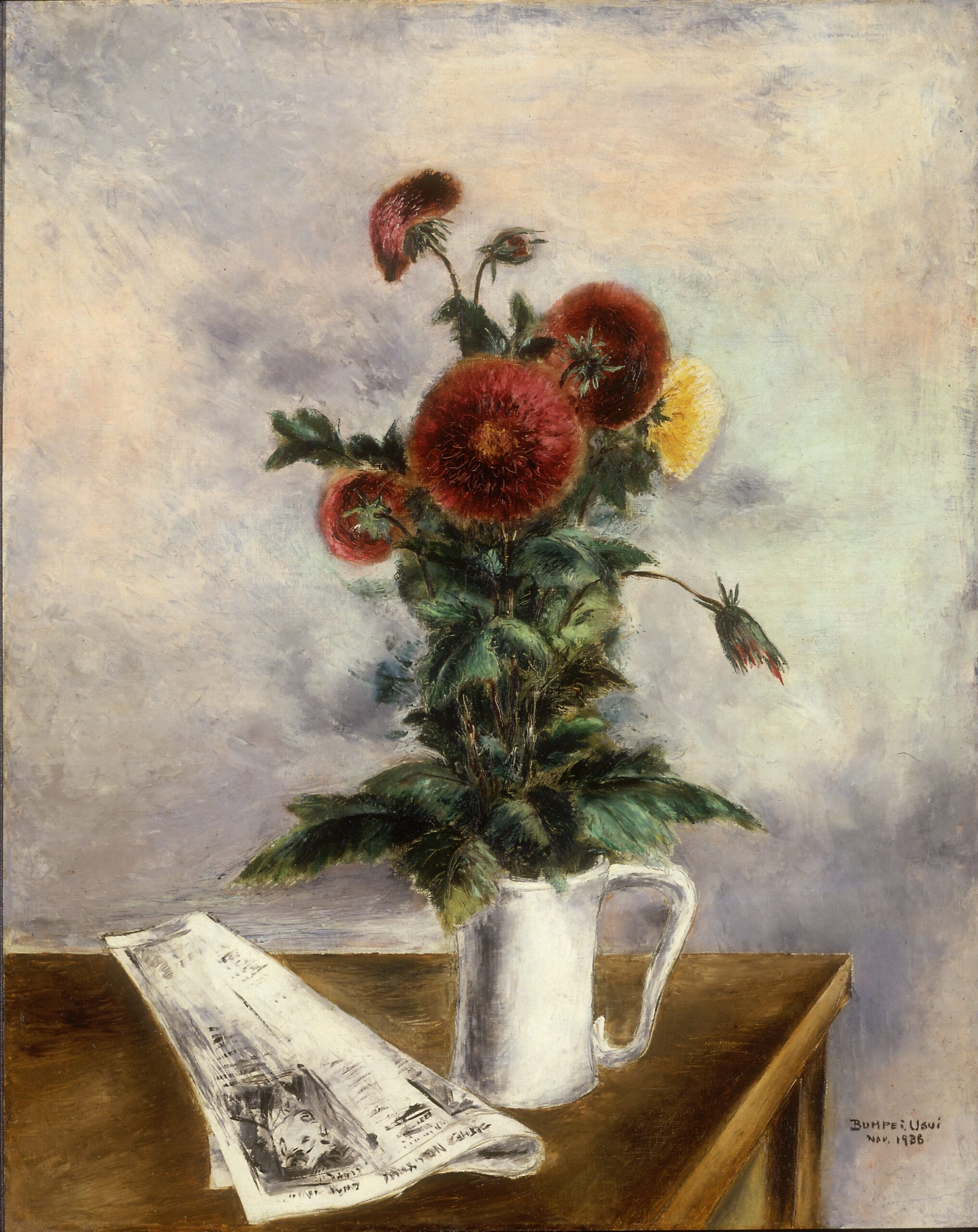
Not every work made under a federal program carried an obvious political message. Chūzō Tamotzu printed Manhattan buildings and trees. Bumpei Usui painted flowers arranged beside a newspaper. Other artists depicted harbors, gardens, construction sites, and patterned cloth. These works remind us that public employment supported observation and experimentation as well as protest.

Their political meaning also lies in the conditions under which they were made. Government employment provided wages, materials, equipment, and time. An administrative decision could then determine which artists continued working and whose participation disappeared from the public program.


From Depression to War

The political art of the 1930s did not develop outside New York’s museums and galleries. It developed inside the same city, but it asked more urgent questions about labor, racism, public responsibility, and government power. By the end of the decade, those questions were becoming inseparable from antifascism and the approach of war. Citizenship, already used to exclude immigrant artists from federal employment, would soon become part of a much harsher division between citizen, alien, and enemy.

1. On the Federal Art Project and the distinction among the New Deal art programs, see the U.S. Department of the Treasury’s overview of the WPA art collection and the Metropolitan Museum of Art, “The Art of the Great Depression”.

2. On Mexican muralism’s influence in the United States and Ishigaki’s place within that history, see the Whitney Museum of American Art, Vida Americana: Mexican Muralists Remake American Art, 1925–1945. On Rivera’s Rockefeller Center mural and the assistants working with him, including Noda, see Justin Akers Chacón Zumoff, “Diego Rivera’s Man at the Crossroads and the Left in the 1930s,” Anales del Instituto de Investigaciones Estéticas 44, no. 121 (2022).

3. On Noda’s painting and its relationship to New York political art, see ShiPu Wang, The Other American Moderns: Matsura, Ishigaki, Noda, Hayakawa (Penn State University Press, 2017), and the Archives of American Art’s Hideo Noda Papers.

4. On The Bonus March and Ishigaki’s representation of race and solidarity, see ShiPu Wang, “By Proxy of His Black Hero: ‘The Bonus March’ (1932) and Eitarō Ishigaki’s Critical Engagement in American Leftist Discourses”, American Studies 51, nos. 3–4 (2010): 7–30.

5. For Eitarō Ishigaki’s life and career in the United States, see Eitarō Ishigaki Retrospective: 120th Anniversary of His Birth, The Museum of Modern Art, Wakayama, 2013, including Ichiro Okumura, “What We Can Find from Eitaro Ishigaki’s Collection.” For Black artists’ organizing within federal art programs and the Harlem Artists Guild, see the Archives of American Art oral history interview with Charles Henry Alston; for the Harlem Community Art Center, see the Smithsonian American Art Museum’s civil-rights history resources.

6. On Ishigaki’s career and mural project, see Ramona Handel-Bajema, Art Across Borders: Japanese Artists in the United States before World War II (MerwinAsia, 2021); and Wang, The Other American Moderns.

7. Paintings by New York Chinese-Japanese Artists, ACA Gallery, September 12–26, 1937, exhibition pamphlet, ACA Galleries Records, Archives of American Art. See also ShiPu Wang’s discussion of the exhibition in The Other American Moderns.

Japanese Art Under Wartime Suspicion

During World War II, the word “Japanese” took on dangerous legal and political consequences in the United States. Wartime suspicion changed how New York treated Japanese artists, businesses, and artworks.

For decades, Yamanaka & Company had supplied Japanese and other Asian art to American collectors and museums. After the United States entered the war, the government seized the firm’s American shops as enemy property. Its New York holdings were sold at auction in 1944. The objects remained desirable, but the Japanese ownership of the business was now treated as a threat.1


Yasuo Kuniyoshi and the Enemy Alien Classification

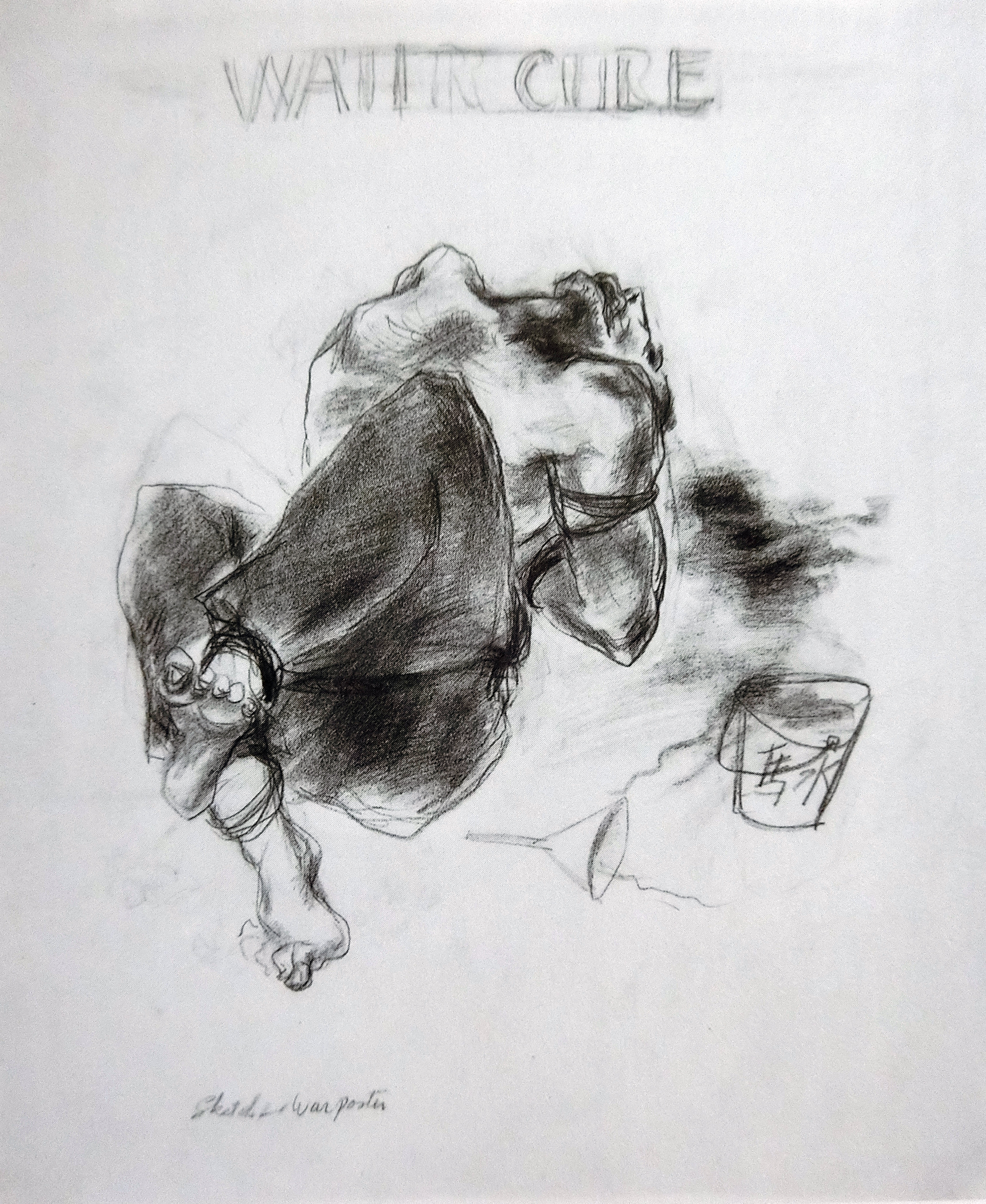
Japanese artists in New York faced related contradictions. Yasuo Kuniyoshi had lived in the United States for more than thirty years, but racial restrictions had prevented him from becoming a citizen. After Pearl Harbor, he was classified as an enemy alien. His bank account and travel were restricted, and his camera and binoculars were confiscated. Kuniyoshi nevertheless opposed Japanese militarism and contributed to the American war effort through exhibitions, radio broadcasts, fundraising, and antifascist images. Works such as Water Cure confronted wartime violence. They expressed his political convictions, but they were also made at a time when people of Japanese ancestry were repeatedly expected to demonstrate their loyalty.2


The Limits of Idealism at Poston

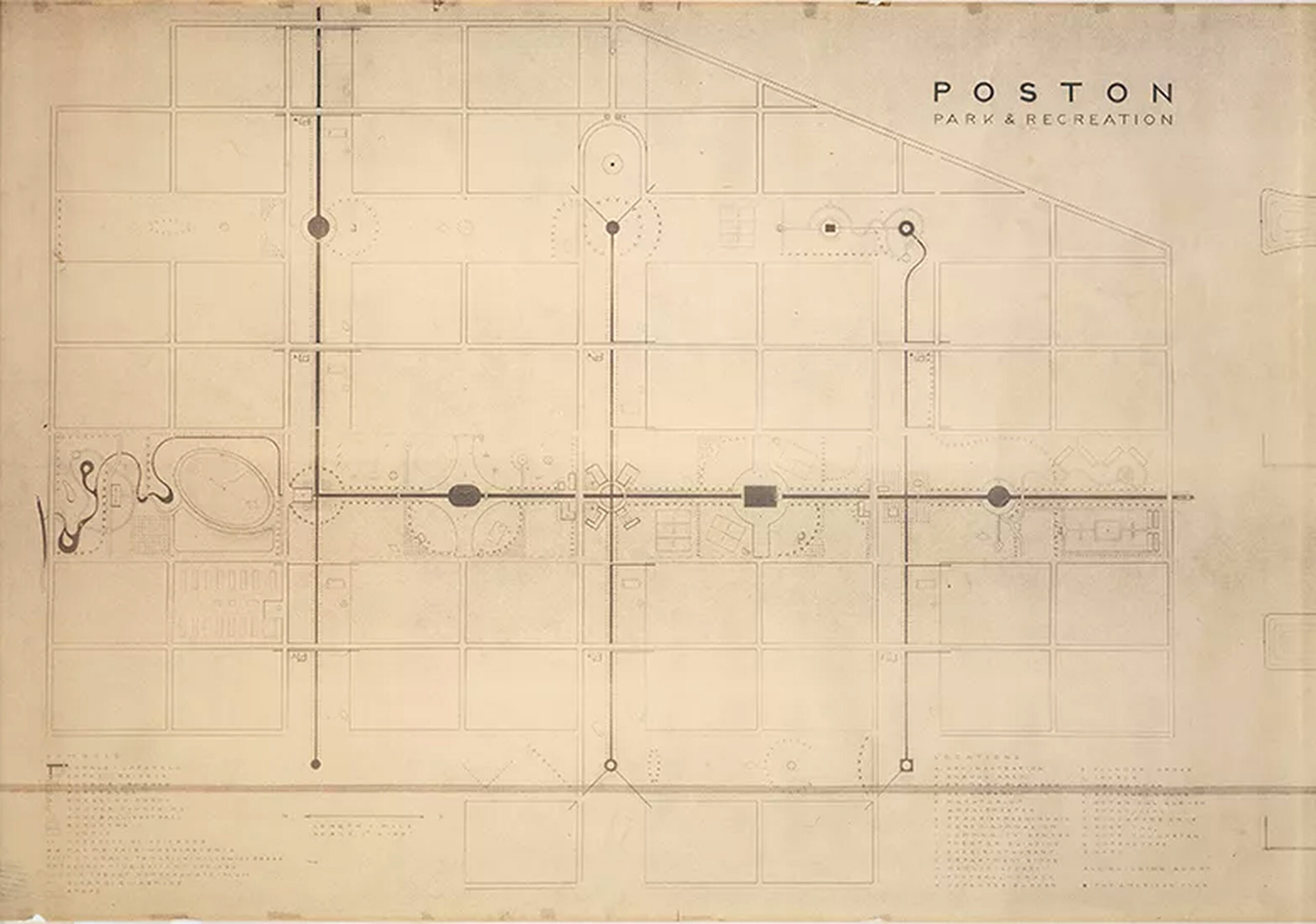
Noguchi’s decision to enter Poston was controversial. Unlike Japanese Americans forcibly removed from the West Coast, he came voluntarily from New York, believing that his artistic and design experience could improve camp life. Some incarcerated people, who had been given no choice, regarded him with suspicion and saw him as aligned with the authorities. His proposals for gardens, recreation areas, and arts facilities were sincere, but they also reflected his initially naïve belief that design could humanize a concentration camp created for confinement. Camp administrators gave the plans little support, and none were realized. When Noguchi sought to leave after two months, he was not released until several months later.


Detention in New York

For some Japanese immigrants, wartime restrictions led to imprisonment. Yosei Amemiya had lived and worked in New York since the 1910s. Following Pearl Harbor, federal agents detained him at Ellis Island under the Enemy Alien Control Program. Nelson Rockefeller wrote in support of his release, but the appeal was unsuccessful. Amemiya remained in federal custody for nearly four years.3

His detention was legally different from the mass removal of Japanese Americans from the West Coast. West Coast families were confined in camps run by the War Relocation Authority. Amemiya was held through the Justice Department’s system for people officially classified as enemy aliens. Together, these policies show that wartime confinement took different forms across the country.


Making Art Inside Incarceration

On the West Coast, approximately 120,000 people of Japanese ancestry were forcibly removed from their homes.

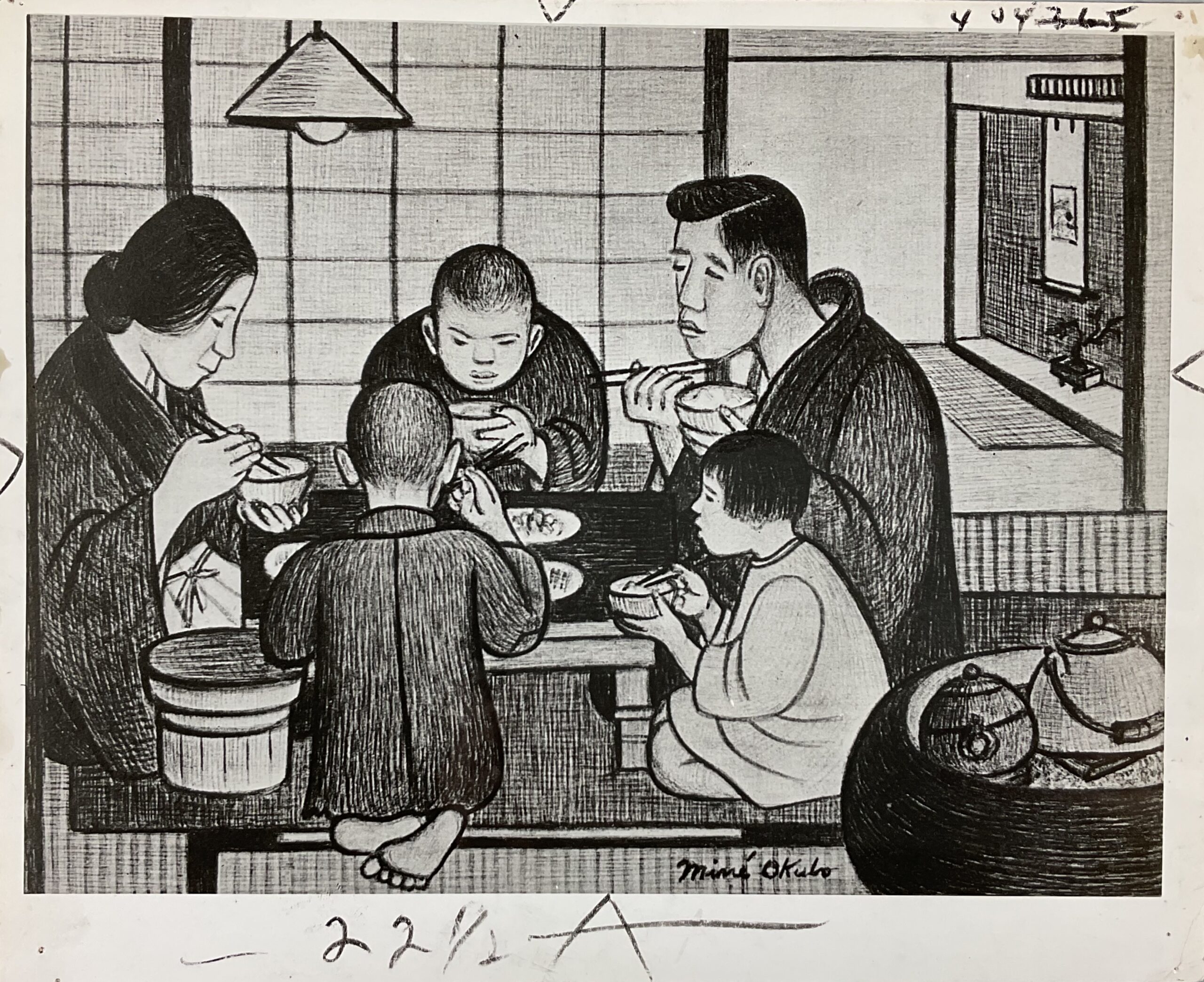
At Tanforan and Topaz, Chiura Obata, George Matsusaburo Hibi, Hisako Hibi, Miné Okubo, and other incarcerated artists organized classes in drawing, painting, sculpture, and Japanese brushwork.

Hisako Hibi taught while painting barracks, landscapes, children, and domestic labor. Okubo also taught and helped produce Trek, a literary and arts magazine. Because cameras were restricted, her drawings became an especially important record of meals, medical examinations, dust storms, work, boredom, and the loss of privacy.4

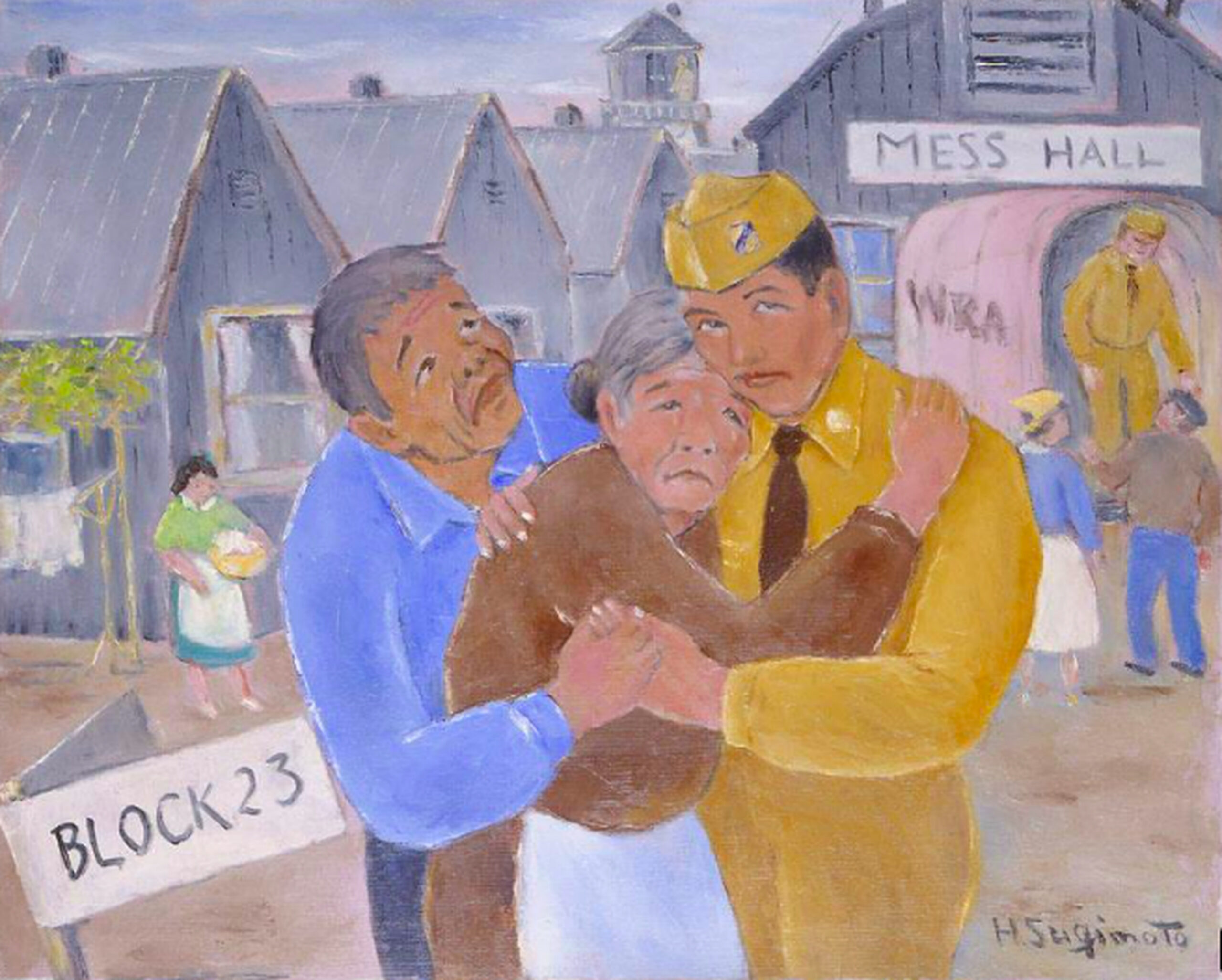
At Jerome in Arkansas, Henry Sugimoto taught art to high-school students and adults while documenting forced removal, family separation, guards, and camp life. After the camp closed, he and his family were transferred to Rohwer, where he continued making art. Before the war, he had been known primarily for landscapes and still lifes. In incarceration, his work became more openly concerned with injustice and survival.5

Teaching art did not make the camps humane. It gave incarcerated people a means to study, observe, and maintain professional identities inside institutions created to restrict their freedom.


From Topaz to New York

Okubo reached New York in January 1944, more than a year before the Hibi and Sugimoto families began rebuilding their lives there. Fortune had hired her to illustrate a special issue about Japan, and the position enabled her to leave Topaz. 

The assignment carried a striking contradiction. Okubo was a Nisei born in Riverside, California. She had studied at the University of California, Berkeley, and in Europe, but she had never visited Japan. Nevertheless, the magazine treated her ancestry as a qualification to picture a foreign country. The same ancestry had allowed the federal government to imprison her as a potential danger.6 The opportunity introduced Okubo to New York publishing, but she used that position to tell a history she knew firsthand. 

Her drawings of incarceration were exhibited in New York in 1945 and developed into Citizen 13660, published in 1946. By placing herself within its images, she appeared as both witness and participant. Hired to illustrate Japan, Okubo ultimately produced one of the most important accounts of an American injustice. 

Okubo also carried relationships formed during incarceration into her New York life. She remained in contact with Hisako Hibi, whom she had known through the art communities at Tanforan and Topaz. Their surviving correspondence continued after Okubo moved east. When the Hibi family relocated to New York in 1945, the two artists were again living in the same city. Their connection shows that resettlement was not simply an individual journey. Artists brought friendships and professional networks with them.7


Art Travels East

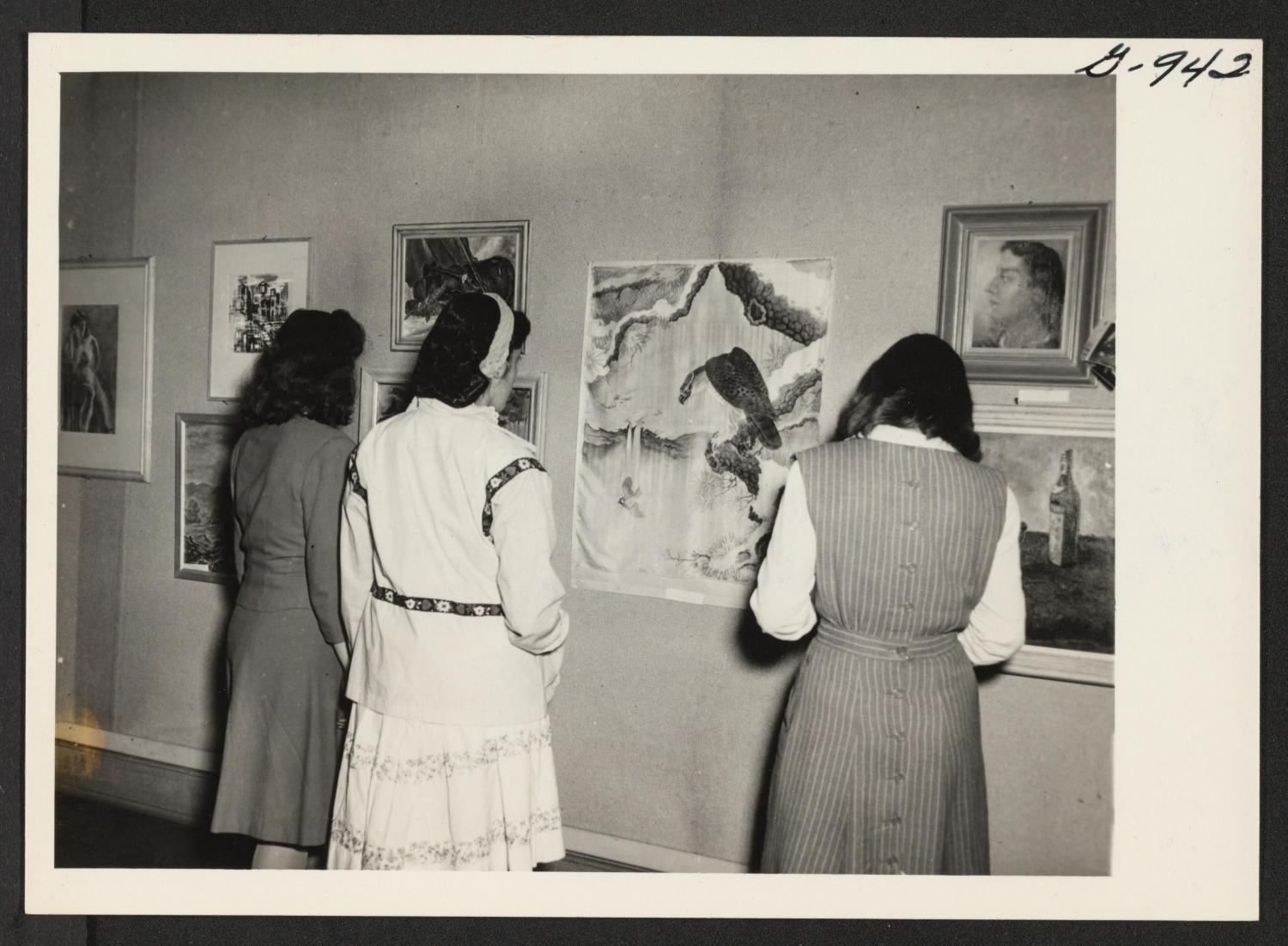
In May 1945, the New Jersey College for Women in New Brunswick presented paintings and sculpture by Issei and Nisei artists—first-generation Japanese immigrants and second-generation Japanese Americans. Arranged by the Newark office of the War Relocation Authority, the exhibition brought together works by ten artists then living in WRA incarceration camps and sixteen artists long established in New York and elsewhere in the East.

Installation photographs document the exhibition’s wide range of subjects and forms. Paintings associated with camp residents included landscapes, portraits, and scenes of everyday life, while the East Coast artists contributed cityscapes, still lifes, figurative works, and sculpture. Among the artists represented were Yasuo Kuniyoshi, Eitarō Ishigaki, Chūzō Tamotzu, Thomas Nagai, Corrine Dohi, Susumu Hirota, Kazumi Sonoda, Leo Amino, Masao Mori, Benji Okubo, Mrs. F. Kato, and Harry Yoshizumi. More than one thousand people attended the New Brunswick presentation before the exhibition traveled to other cities.8

The exhibition did not present a single account of incarceration or resettlement. Instead, it placed works by artists living under sharply different wartime circumstances in the same gallery. Some had remained in New York and other parts of the East, while others had been forcibly removed from the West Coast and confined in WRA camps. Their works did not necessarily address those experiences directly, but their presentation together documents how the art of Issei and Nisei artists was collected, displayed, and circulated during the final months of the war.

Henry Sugimoto’s work reached New York through a separate exhibition. After leaving Rohwer in the summer of 1945, Sugimoto and his family relocated to the city. In November and December, the Common Council for American Unity sponsored a solo exhibition of twenty-six of his oil paintings and watercolors. Nine depicted life in the incarceration camps, while the remainder represented a broader range of his work. Keeping Sugimoto’s solo exhibition separate from the New Brunswick group exhibition clarifies the different ways in which the work of formerly incarcerated artists entered New York’s cultural life.9


Beginning Again

The Hibi family moved from Topaz to New York in 1945. Hisako Hibi’s Frightful New York, painted the following year, refuses an easy story of liberation. Dark buildings surround small, unsettled figures. Freedom has arrived, but security has not. After George Hibi died in 1947, Hisako supported her children through garment work while continuing to paint. She also attended classes at the Museum of Modern Art. Sugimoto found employment designing textiles and continued making art. Okubo remained in Greenwich Village, building a career as an illustrator, author, and painter.9 In 1948, the Whitney Museum gave Kuniyoshi a major retrospective. It confirmed his central place in American modernism, yet he remained legally ineligible for citizenship. The racial restriction on his naturalization was not removed until 1952.10


Rethinking “Japanese Art”

“Japanese art” could describe objects sold by dealers, artists born in Japan, American citizens of Japanese ancestry, or work that viewers believed looked Japanese. During the war, the category could generate professional opportunity, cultural prestige, racial suspicion, or imprisonment. Japanese and Japanese American artists were not standing outside American art waiting to be admitted. They were already making it in schools and studios, restaurants and subways, political organizations and federal projects, camp art classes and small New York apartments. Their histories reveal American art as something formed through migration, labor, friendship, conflict, displacement, and survival.
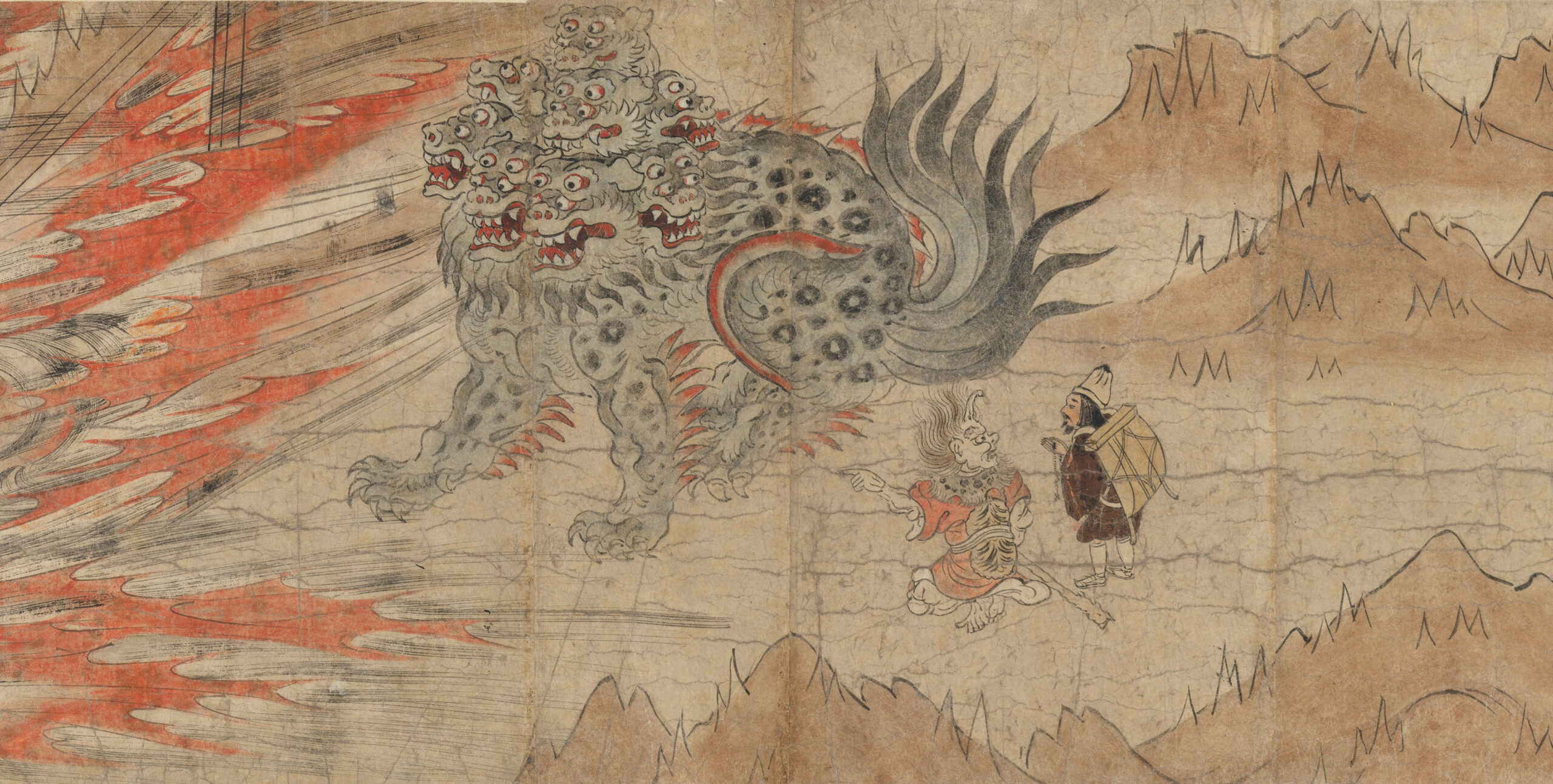
1. Smithsonian American Art Museum, Archives of American Art, Yatsuhashi family papers and records relating to Yamanaka & Company; Illustrated Catalogue of the Valuable Art Treasures and Antiquities Belonging to the New York Stores of Yamanaka & Company, Inc., Now in Process of Liquidation under the Supervision of the Alien Property Custodian of the United States of America (New York, 1944). 

2. ShiPu Wang, “Japan against Japan: U.S. Propaganda and Yasuo Kuniyoshi’s Identity Crisis,” American Art 22, no. 1 (Spring 2008): 28–51; Archives of American Art, The Artistic Journey of Yasuo Kuniyoshi.

3. Digital Museum of the History of Japanese in New York, “Yosei Amemiya” and “Issei and Internment at Ellis Island”; Anna Pegler-Gordon, Closing the Golden Door: Asian Migration and the Hidden History of Exclusion at Ellis Island (University of North Carolina Press, 2021).

4. Japanese American National Museum, Hisako Hibi Collection and Miné Okubo Collection; Densho Encyclopedia, “Trek”.

5. Japanese American National Museum, “Henry Sugimoto’s Artistic Evolution”.

6. Japanese American National Museum, “Miné Okubo’s Masterpiece: The Art of Citizen 13660; Archives of American Art, Miné Okubo Papers

7. Archives of American Art, Smithsonian Institution, Hisako Hibi and Matsusaburo “George” Hibi Papers, circa 1906–1983, Series 2, correspondence file “Okubo, Mine, 1944–”. A letter from this correspondence was displayed in Pictures of Belonging: Miki Hayakawa, Hisako Hibi, and Miné Okubo at the Smithsonian American Art Museum, 2024–25. 

8. Digital Museum of the History of Japanese in New York, Unforgotten Stories; Densho Encyclopedia, “Museum Exhibitions on Incarceration”; War Relocation Authority installation photograph, Bancroft Library via Calisphere

9. Smithsonian American Art Museum, “Hisako Hibi”; Japanese American National Museum, Sugimoto timeline, Exhibition of Paintings by Henry Sugimoto, and Okubo exhibition history.

10. Whitney Museum of American Art, “Yasuo Kuniyoshi”; Immigration and Nationality Act of 1952, which removed racial restrictions on naturalization while establishing other restrictive immigration policies.

About this Exhibit

THE FLOATING WORLD OF NEW YORK: Japanese Art, Community, and Politics in the First Half of the Twentieth Century was presented by the Digital Museum of the History of Japanese in New York. The exhibition examines how artists of Japanese heritage participated in the artistic, social, and political life of New York during the first half of the twentieth century. Moving between art and commerce, immigration and citizenship, artistic communities and political engagement, and the upheavals of World War II, it considers how changing ideas of Japaneseness and Americanness shaped the lives and work of these artists.

The exhibition draws on primary sources, museum and archival collections, and a broad body of art-historical and historical scholarship, as documented in the notes to each chapter. Research consulted in its development includes the work of Ramona Handel-Bajema, ShiPu Wang, Tom Wolf, and Midori Yamamura; research by Ichiro Okumura at the Museum of Modern Art, Wakayama; and research on Yasuo Kuniyoshi by Shun Ito and Shinji Saishi at Okayama University. Together, these sources provided important frameworks for examining the artists within the intersecting histories of immigration, citizenship, race, artistic communities, political engagement, and American art, while recognizing the different legal, social, and cultural positions occupied by individual artists.

The exhibition also benefited from review by Professor Carol Gluck, a board member of the Digital Museum. Additional comments, corrections, and source information received from scholars and museum professionals were considered and incorporated as appropriate.

The Museum also acknowledges Mai Sato, author of Nyūyōku no Nihonjin Gakatachi: Senzenki ni okeru Geijutsu Katsudō no Sokuseki (Japanese Artists Who Worked in New York City: Artistic Traces from the 1910s to the 1940s; Rikka Shuppan, 2021). Sato provided information and materials, helped identify the locations of several artworks, and facilitated connections with museums and other institutions holding relevant materials. The Museum is grateful for her assistance.

The Museum is also grateful to Nancy Kitchen, granddaughter of artist Jisaburo Sugimori, for generously sharing her grandfather’s work and a family photograph with the Museum. Her contribution has helped us document Sugimori’s life and artistic community in New York and has brought an important perspective to the exhibition.

The Museum is also deeply grateful to Michiyo Noda, Executive Director of the Japanese American Association of New York, for her longstanding support of the Digital Museum and its work. Her firsthand knowledge of the Japanese and Japanese American community in New York, her deep familiarity with its people and history, and her support for archival research and community partnerships have been invaluable to this exhibition and to the Museum’s broader work.


Selected Bibliography

  • Chang, Gordon H., Mark Dean Johnson, and Paul J. Karlstrom, eds. Asian American Art: A History, 1850–1970. Stanford University Press, 2008.

  • Cornell, Daniell, and Mark Dean Johnson, eds. Asian/American/Modern Art: Shifting Currents, 1900–1970. Fine Arts Museums of San Francisco and University of California Press, 2008.

  • Handel-Bajema, Ramona. Art Across Borders: Japanese Artists in the United States before World War II. MerwinAsia, 2021.

  • Heap, Chad. Slumming: Sexual and Racial Encounters in American Nightlife, 1885–1940. University of Chicago Press, 2009.

  • Hemingway, Andrew. Artists on the Left: American Artists and the Communist Movement, 1926–1956. Yale University Press, 2002.

  • Hibi, Hisako. Peaceful Painter: Memoirs of an Issei Woman Artist. Edited by Ibuki H. Lee. Heyday Books, 2004.

  • Itō, Shun. “A Study of Changes in the Reception and Interpretation of Yasuo Kuniyoshi’s Work in Japan.” Bulletin of the Graduate School of Education, Okayama University, no. 188 (2025): 115–21.

  • Langa, Helen. Radical Art: Printmaking and the Left in 1930s New York. University of California Press, 2004.

  • Ngai, Mae M. Impossible Subjects: Illegal Aliens and the Making of Modern America. Princeton University Press, 2004.

  • Wang, ShiPu. “Japan against Japan: U.S. Propaganda and Yasuo Kuniyoshi’s Identity Crisis.” American Art 22, no. 1 (Spring 2008): 28–51.

  • Wang, ShiPu. Becoming American? The Art and Identity Crisis of Yasuo Kuniyoshi. University of Hawai‘i Press, 2011.

  • Wang, ShiPu. “By Proxy of His Black Hero: ‘The Bonus March’ (1932) and Eitarō Ishigaki’s Critical Engagement in American Leftist Discourses.” American Studies 51, nos. 3–4 (2010): 7–30. Published online 2012.

  • Wang, ShiPu. The Other American Moderns: Matsura, Ishigaki, Noda, Hayakawa. Penn State University Press, 2017.

  • Wang, ShiPu, ed. Pictures of Belonging: Miki Hayakawa, Hisako Hibi, and Miné Okubo. Japanese American National Museum and University of California Press, 2023.

  • Wolf, Tom. The Artistic Journey of Yasuo Kuniyoshi. Smithsonian American Art Museum and D Giles Limited, 2015.


Image and Rights Statement

The Digital Museum has made every reasonable effort to identify copyright holders, verify the rights status of materials, obtain required permissions, and provide accurate credits. Artwork and archival-image credits appear with each object. Copyright and reproduction status vary by work and collection, and an online image or collection record does not automatically grant permission to reproduce an image.

If you believe that any material has been used or credited incorrectly, or if you have additional information concerning its copyright or ownership, please contact us so that we may review the matter and make any necessary corrections.