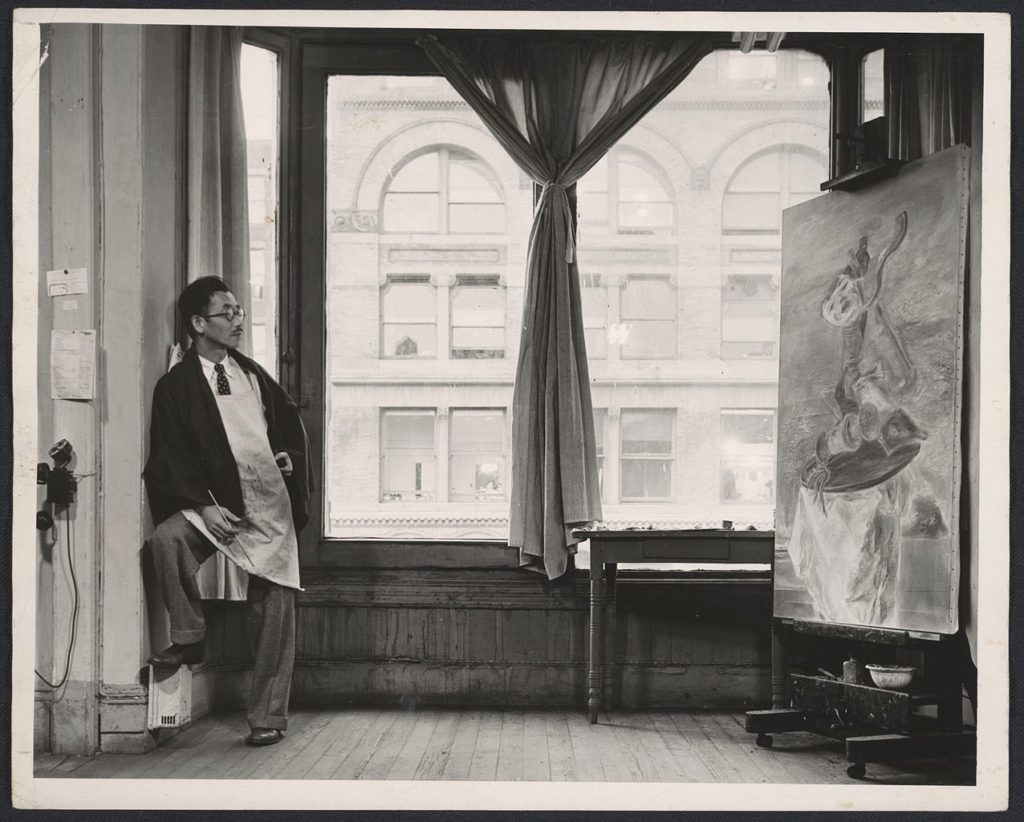
Yasuo Kuniyoshi was born in Okayama, Japan, in 1889. In 1906, shortly after the Russo-Japanese War, he traveled alone to the United States as a sixteen-year-old labor immigrant. He did not initially intend to become an artist. After difficult periods of manual labor in the western United States, his artistic ability was recognized through educational opportunities in Los Angeles. He later moved to New York, where he studied at the Robert Henri School, the Independent School of Art, and, beginning in 1916, the Art Students League of New York.
Kuniyoshi’s development was not simply the story of an isolated individual overcoming adversity. His career was made possible by educational institutions, social networks, patrons, fellow artists, and teachers. At the Art Students League, he studied with Kenneth Hayes Miller, whose teaching introduced him to European old masters and artists including Honoré Daumier and El Greco. The artist and patron Hamilton Easter Field also provided Kuniyoshi with studio space in Maine and helped introduce him to a wider artistic community. Through these relationships and the opportunities provided by the American art world, Kuniyoshi gradually established himself as one of the leading painters of his generation.
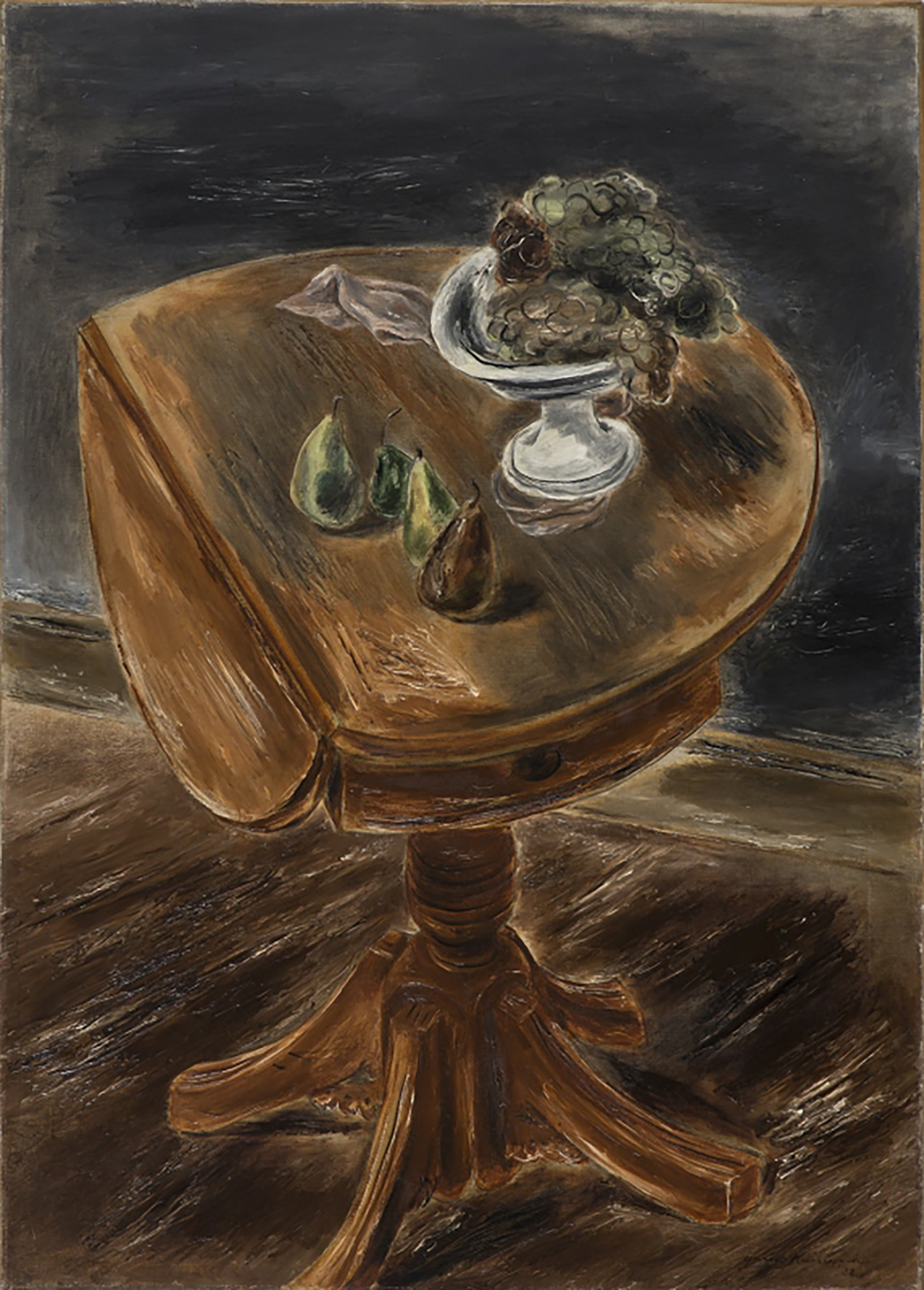
Kuniyoshi began exhibiting while still a student. By the 1920s, he had become a prominent figure in New York’s modern art movement. His paintings combined simplified forms, unusual spatial relationships, subtle color harmonies, humor, and visual ambiguity. His subjects changed considerably over the course of his career, from animals, landscapes, and imaginary scenes to still lifes, women, circus performers, masks, and symbolic postwar compositions. Although critics sometimes attempted to explain his work through either Japanese or European influences, Kuniyoshi resisted such classifications and described his art as “Kuniyoshism,” an individual expression formed through his experiences in the United States.
In 1929, the Museum of Modern Art selected Kuniyoshi for its influential exhibition Nineteen Living Americans. During the following decades, his work appeared in major national and international exhibitions. He received first prize at the Carnegie Institute’s international exhibition in 1944. In a 1948 survey of critics, curators, and museum directors conducted by Look magazine, Kuniyoshi was ranked among the leading painters in the United States. That same year, the Whitney Museum of American Art organized a major retrospective of his work, the first retrospective the museum presented for a living artist. In 1952, he was one of four artists, together with Alexander Calder, Stuart Davis, and Edward Hopper, selected to represent the United States at the Venice Biennale.
Kuniyoshi’s importance also extended beyond his paintings. In 1933, he joined the faculty of the Art Students League, becoming the first Japanese artist elected to teach there. He remained an influential teacher until his death in 1953. His students included artists from varied national, racial, and cultural backgrounds, among them the Japanese American painter Matsumi “Mike” Kanemitsu. Kuniyoshi believed that artistic education should help students develop their own visual language rather than reproduce the teacher’s style.
He was also deeply involved in the social and political organization of artists. Kuniyoshi helped establish the American Artists’ Congress during the 1930s and participated in discussions about fascism, war, artistic freedom, and the social responsibilities of artists. In 1946, approximately four hundred artists gathered at the Museum of Modern Art to establish Artists Equity Association, the first nationwide organization created to protect the economic and professional rights of visual artists. Kuniyoshi was elected its first president and served from 1947 to 1951. His work as a teacher and organizer demonstrates that his historical significance cannot be understood through his paintings alone.
The outbreak of war between Japan and the United States placed Kuniyoshi in an extraordinarily difficult position. Because racial restrictions in American naturalization law had prevented Japanese immigrants from becoming citizens, Kuniyoshi remained legally Japanese despite having lived in the United States since adolescence. Following the attack on Pearl Harbor in December 1941, the U.S. government classified him as an “enemy alien.” His bank account was impounded, his camera and binoculars were confiscated, and his travel outside New York City was restricted.
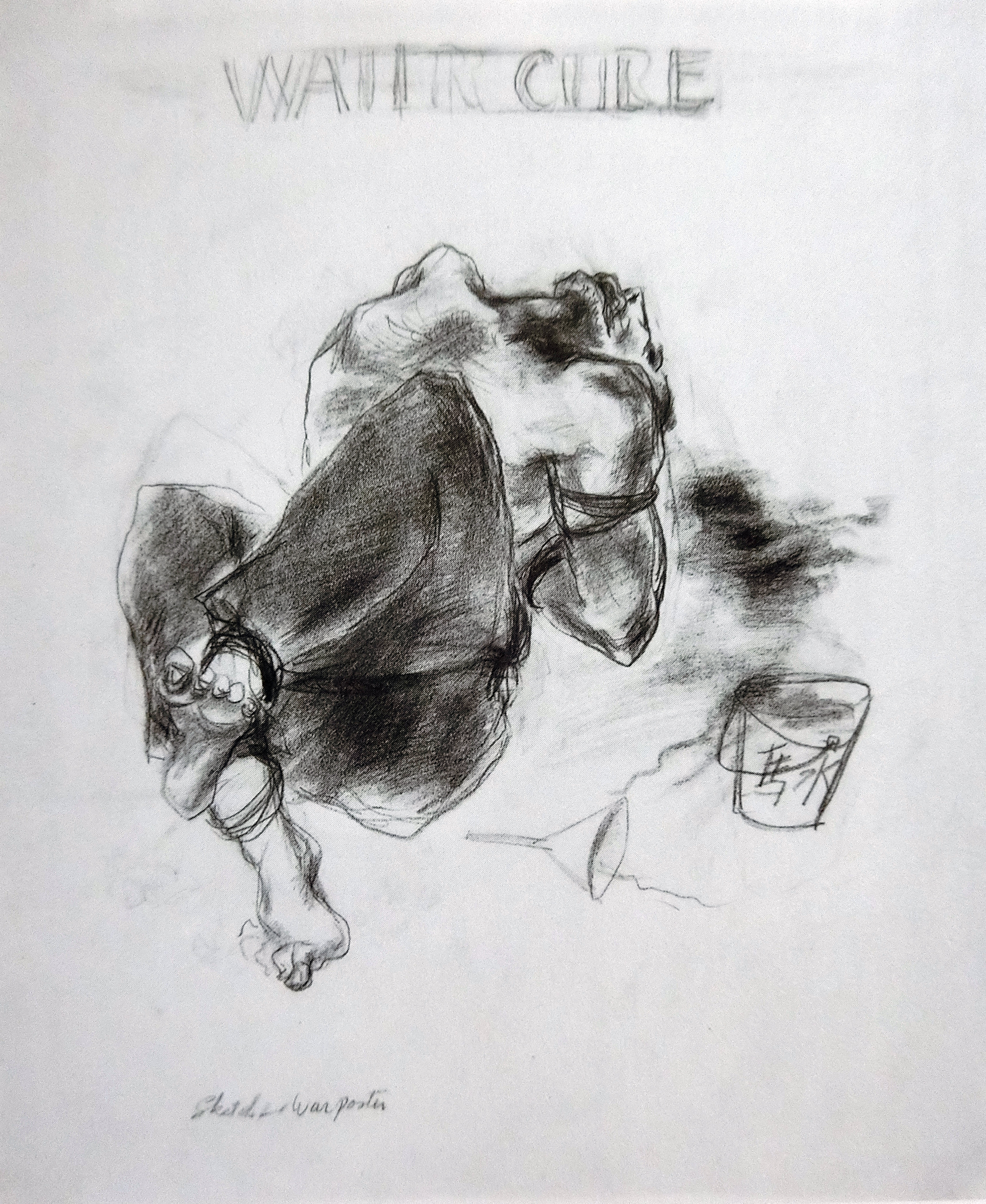
Nevertheless, Kuniyoshi publicly opposed Japanese militarism and supported the democratic principles of the United States. He produced drawings for the Office of War Information, made radio broadcasts directed toward listeners in Japan, and served as chairman of the Arts Council of Japanese Americans for Democracy in New York. His wartime drawings confronted violence and military brutality, while his political activities connected him with Japanese and Japanese American artists, writers, journalists, and activists working against fascism.
His position, however, should not be simplified as a choice between loyalty to Japan and loyalty to the United States. Kuniyoshi condemned the actions of Japan’s military government, but he also understood the discrimination experienced by Japanese immigrants and Japanese Americans. After the war, he felt sympathy for those who had been incarcerated and for civilians who had suffered in Japan. He was also troubled by the political repression of the early Cold War and the investigations directed at artists and labor organizers. His decisions and actions therefore reflected a sustained engagement with democracy, civil rights, artistic freedom, and the responsibilities of individuals living within unequal social systems.
Despite his extraordinary reputation during his lifetime, Kuniyoshi gradually receded from public awareness after his death. In the United States, the dominant account of postwar American art increasingly centered on Abstract Expressionism and, later, Pop art. Kuniyoshi continued to work with recognizable figures and objects, even as his compositions and use of color became increasingly complex. Because he did not abandon figurative painting, his work did not fit comfortably within the new narrative of American modernism.
Japan also lacked an established framework through which to evaluate him. The Japanese artists of Kuniyoshi’s generation who received the greatest recognition had generally studied at the Tokyo School of Fine Arts and later traveled to Paris. Kuniyoshi had no comparable Japanese academic background. His education, professional career, and artistic reputation had been formed in the United States, at a time when many Japanese critics continued to regard Paris as the center of modern art.
During Kuniyoshi’s only return to Japan in 1931, some Japanese critics described his work as essentially French rather than American. Later interpretations frequently presented his paintings through words such as “melancholy,” “sorrow,” “nostalgia,” and “isolation.” Following the 1954 posthumous exhibition at Japan’s National Museum of Modern Art, critics increasingly interpreted his figures, masks, circus performers, and brilliant late colors as expressions of personal tragedy. Over time, the story of a man “torn between his native Japan and the United States” became the dominant framework through which his life and work were understood.
This narrative helped maintain interest in Kuniyoshi, but it also became restrictive. Details of his artistic decisions, teaching, political commitments, professional relationships, and social activities gradually disappeared behind a generalized story of divided identity. Because Kuniyoshi seldom provided explicit explanations of his paintings, later writers often projected presumed feelings of sadness or cultural conflict onto individual works.
Beginning with later exhibitions and research, scholars and curators began to reconsider these inherited interpretations. The 2004 exhibition Yasuo Kuniyoshi: Between Two Worlds examined his changing visual language, recurring motifs, distorted spaces, and relationship to American society without treating “sorrow” as the automatic meaning of his work. The 2013 exhibition at Benesse Art Site Naoshima and the Smithsonian American Art Museum’s 2015 retrospective further renewed attention to his paintings, photographs, teaching, political activities, and organizational leadership.
Kuniyoshi should therefore be understood neither solely as a heroic immigrant success story nor as a tragic figure suspended between two nations. He was an American-trained modern artist, an immigrant denied citizenship for most of his life, a respected educator, an advocate for artists’ rights, and an active participant in the political and cultural debates of twentieth-century New York. Reconsidering his life through these interconnected roles allows us to move beyond the familiar mythology and recognize the full complexity of his artistic and social contributions.
References and Related Materials
No results found.