
Wataru “Wat” Misaka was a Nisei basketball player whose brief career in New York marked an important turning point in American professional sports. In 1947, he became the first non-white player to appear in the Basketball Association of America, the predecessor of today’s NBA, and the first player of Asian descent in league history. Although he played only three professional games, his journey to Madison Square Garden reveals a larger story of race, wartime citizenship, and belonging in the United States.
Misaka was born on December 21, 1923, in Ogden, Utah, to Fusaichi and Tatsuyo Misaka, Japanese immigrants from Hiroshima Prefecture. His family lived beneath the barbershop operated by his parents on Ogden’s 25th Street. Growing up as one of the few Japanese Americans in the area, Misaka experienced racial discrimination, including exclusion from restaurants and anti-Japanese hostility. Basketball nevertheless provided a place where his speed, discipline, and determination could be recognized.
At five feet seven inches tall, Misaka became known as a quick and tenacious defensive guard. After playing at Weber College, he joined the University of Utah basketball team. In 1944, while more than 120,000 Japanese Americans were being forcibly removed and incarcerated, Misaka helped Utah win the NCAA championship at Madison Square Garden. Misaka was not incarcerated because his family lived outside the West Coast exclusion zone, but the experience remained close to him. His teammate Mas Tatsuno’s family was imprisoned at the Topaz concentration camp in Utah, and Misaka personally delivered Tatsuno’s championship blanket to the family.
Soon after the 1944 championship, Misaka was drafted into the U.S. Army. He trained in the Military Intelligence Service and served as a staff sergeant during the American occupation of Japan. As part of the United States Strategic Bombing Survey, he interviewed Japanese civilians about the effects of wartime bombing, including people in Hiroshima, where members of his own extended family lived.
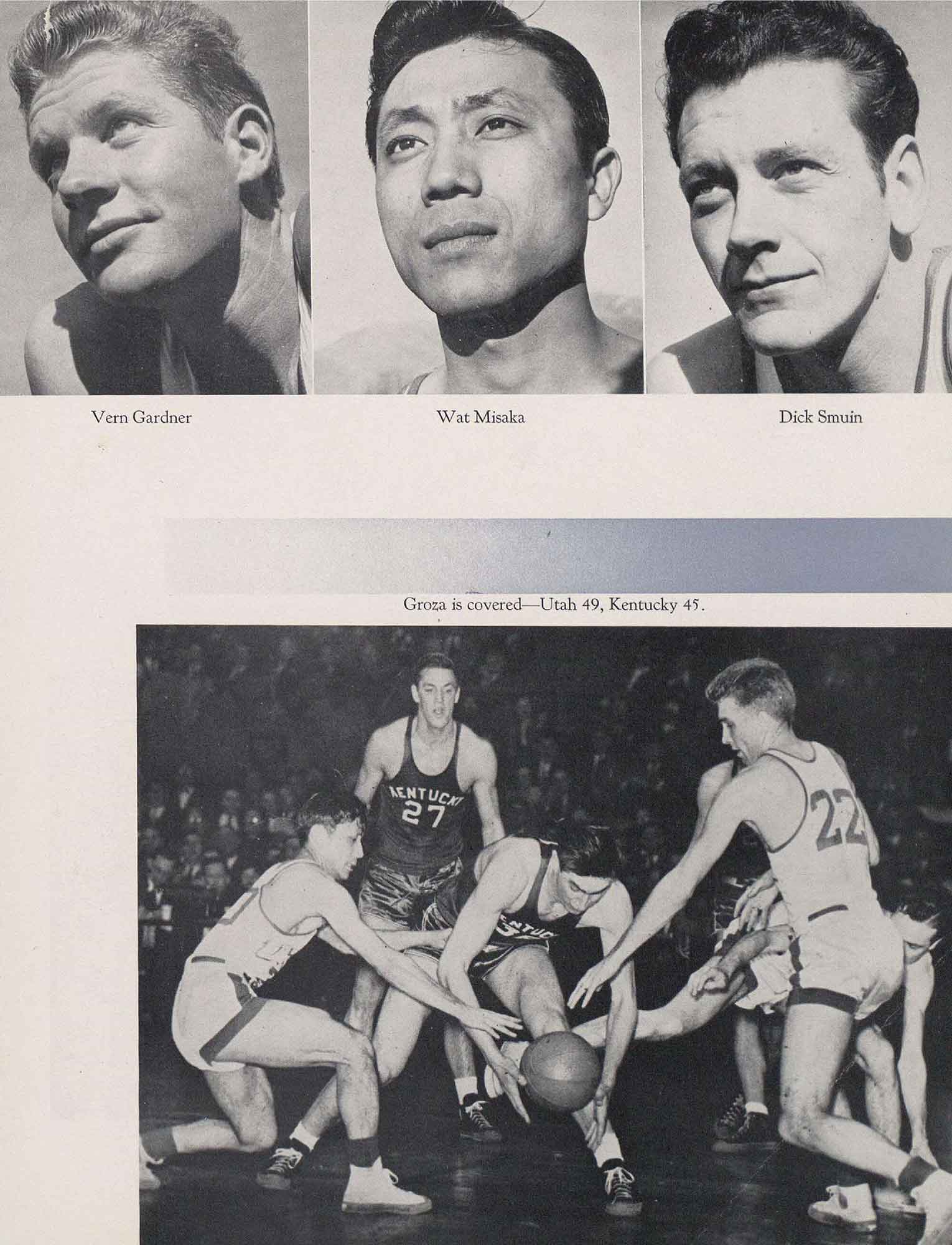
After returning to the University of Utah, Misaka again came to New York in 1947 for the National Invitation Tournament. In the championship game at Madison Square Garden, he held Kentucky star Ralph Beard to a single point, helping Utah defeat Kentucky 49–45. His defensive performance made him a favorite with the New York crowd.
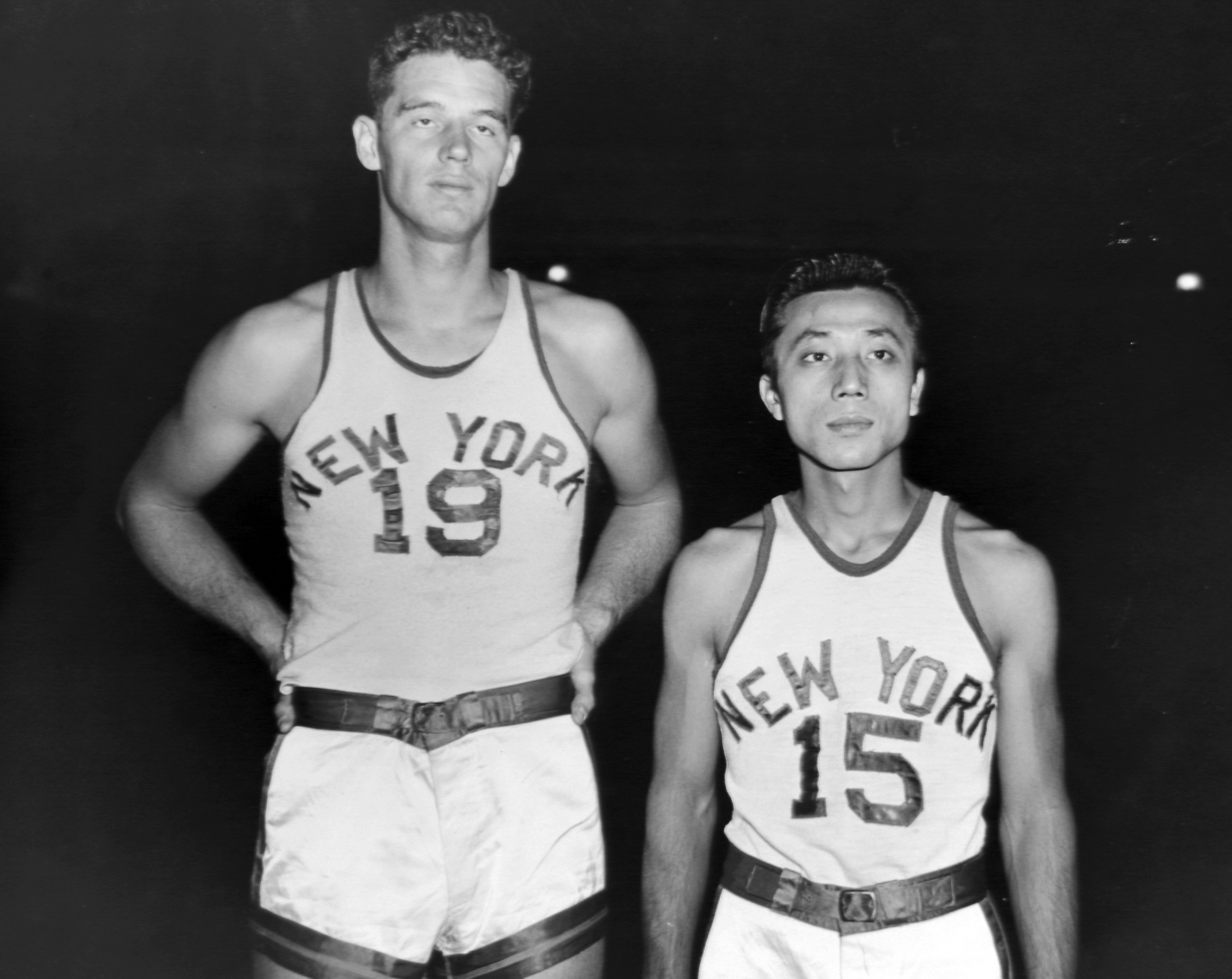
Later that year, the New York Knicks selected Misaka in the BAA draft. He appeared in three games during the 1947–48 season and scored seven points before being released. His professional career was short, and his achievement received little public recognition at the time. It would be three more years before the first Black players entered the NBA.
After leaving the Knicks, Misaka declined an offer to join the Harlem Globetrotters and returned to Utah. He completed a degree in mechanical engineering in 1948 and built a long career as an electrical engineer. He was inducted into the Utah Sports Hall of Fame in 1999, and later generations came to recognize his place in basketball history. The Japanese American National Museum featured his story in its 2000 exhibition More Than a Game, and the NBA subsequently acknowledged him as an important pioneer.
Misaka never set out to become a symbol. He considered himself a basketball player who wanted to contribute to his team. Yet his appearance with the Knicks, during a period of intense anti-Japanese prejudice, opened a previously closed space in American professional sports. Wataru Misaka died in Salt Lake City on November 20, 2019, at the age of ninety-five.
No results found.
No results found.