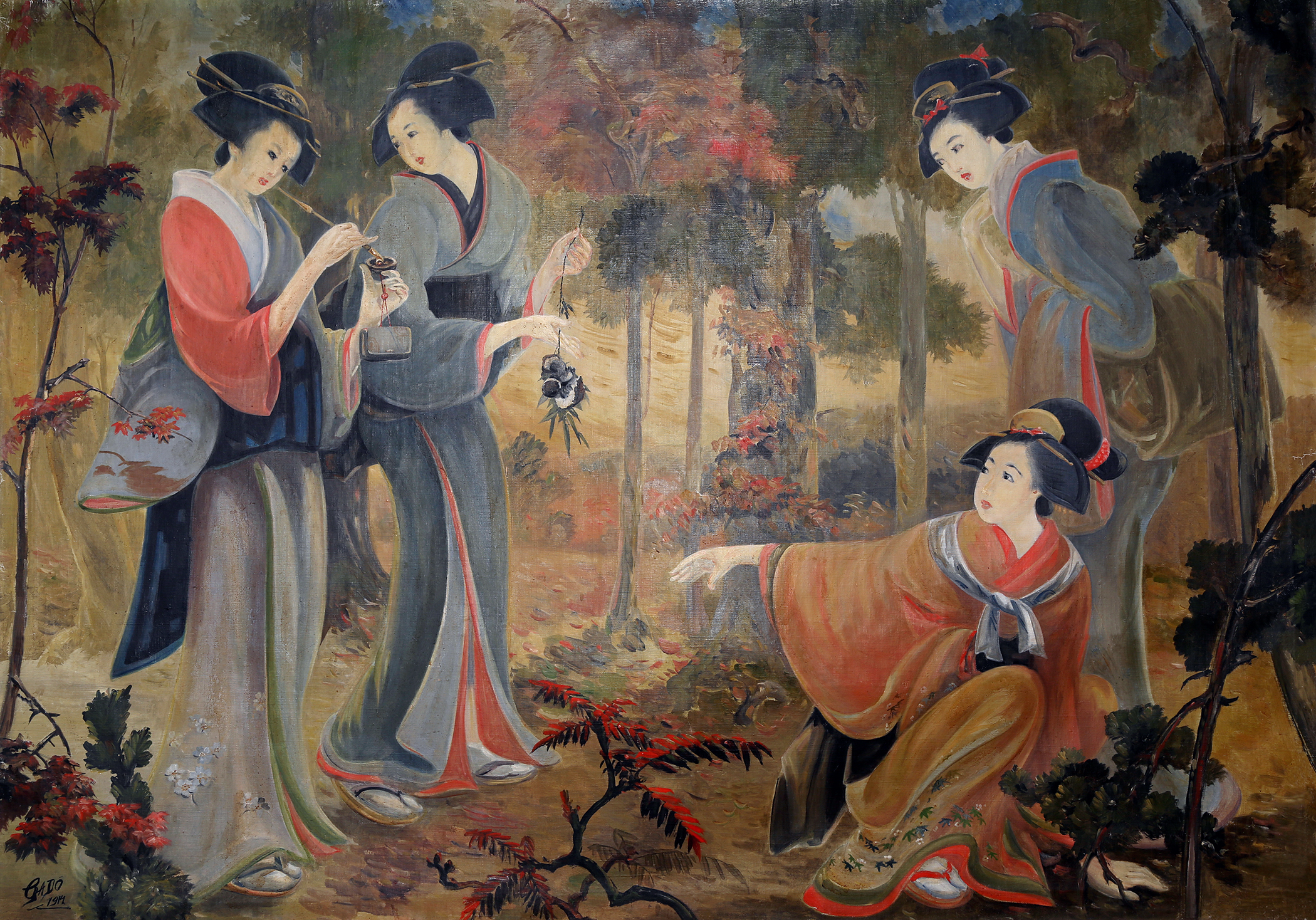
Kotato Gado, whose Japanese name was Gado Kotato (古田土雅堂) and whose given name was Teiji (貞治), was a Japanese painter and ceramic designer active in the United States during the early twentieth century. His work at Shōfūden, Dr. Jokichi Takamine’s country residence in Forestburgh, New York, forms an important early chapter in his American career.
Gado was born in 1880 in Nakagawa Village, Haga District, Tochigi Prefecture, now part of Motegi Town. Records from the Tokyo Fine Arts School, now Tokyo University of the Arts, show that he entered its preparatory course in 1897 and graduated from the Japanese Painting Department in July 1902. He traveled to the United States in 1906, initially spending time in Chicago before continuing to New York State.
Soon after his arrival, Gado became involved in the interior decoration of Shōfūden. The Kyoto-style building had originally been constructed for the 1904 Louisiana Purchase Exposition in St. Louis and was subsequently moved to Dr. Takamine’s summer estate at Merrywood Park in Forestburgh.
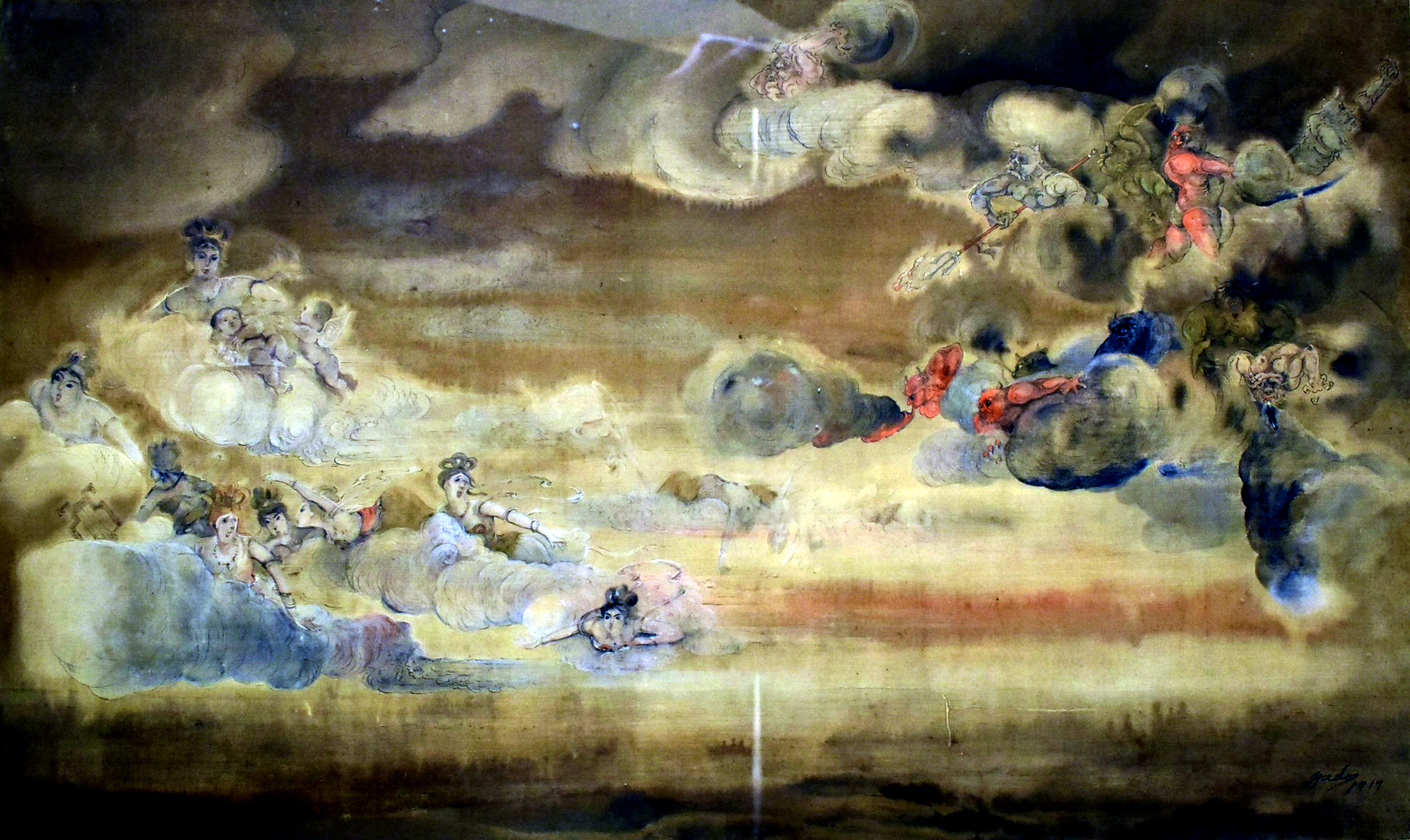
The full extent of Gado’s contribution became clearer through materials introduced by the Takaoka Municipal Museum in 2022 and featured in the 2024 Fuminomori Motegi exhibition, “Kotato Gado and Dr. Takamine: The Shōfūden Ceiling Paintings and the Road to America.” Shōfūden’s 35 dining-room ceiling paintings, whose artist had previously been unidentified, were determined to be works by Gado.
This attribution is supported by a photograph preserved by Gado’s family showing him painting the ceiling panels, as well as by a copy of his 1907 résumé. In the résumé, Gado recorded that in 1906 he was engaged in the interior decoration of Dr. Takamine’s villa and was then still working on the project. A letter sent to Gado at Merrywood Park in September 1906 provides additional evidence that he was staying at Shōfūden while performing this work.
The surviving ceiling paintings depict birds, animals, fruit, and other natural subjects, including pigeons, chickens, pheasants, swans, shrimp, and grapes. Although the paintings were executed on canvas, Gado incorporated ink and design elements associated with his training in Japanese painting. The resulting images combine traditional technique with lively and approachable forms suited to the dining room.
Gado’s contribution should be distinguished from that of Kyoto painter and designer Makino Katsuji. Gado worked principally on the Shōfūden dining room in 1906 and 1907. Makino subsequently created paintings and decorative designs for the main reception room known as the Shōfū-no-ma, with surviving signed work dating from 1909. Together, their work demonstrates that Shōfūden’s interior developed through the contributions of several Japanese artists and craftspeople over multiple years.
In February 1907, Gado joined Morimura Brothers in New York. He created designs for ceramics manufactured in Japan and exported to the American and European markets. In 1910, the company sent him to Britain, Germany, and France to study European art and design. His employment at Morimura provided professional stability while allowing him to continue developing his independent work as a painter.
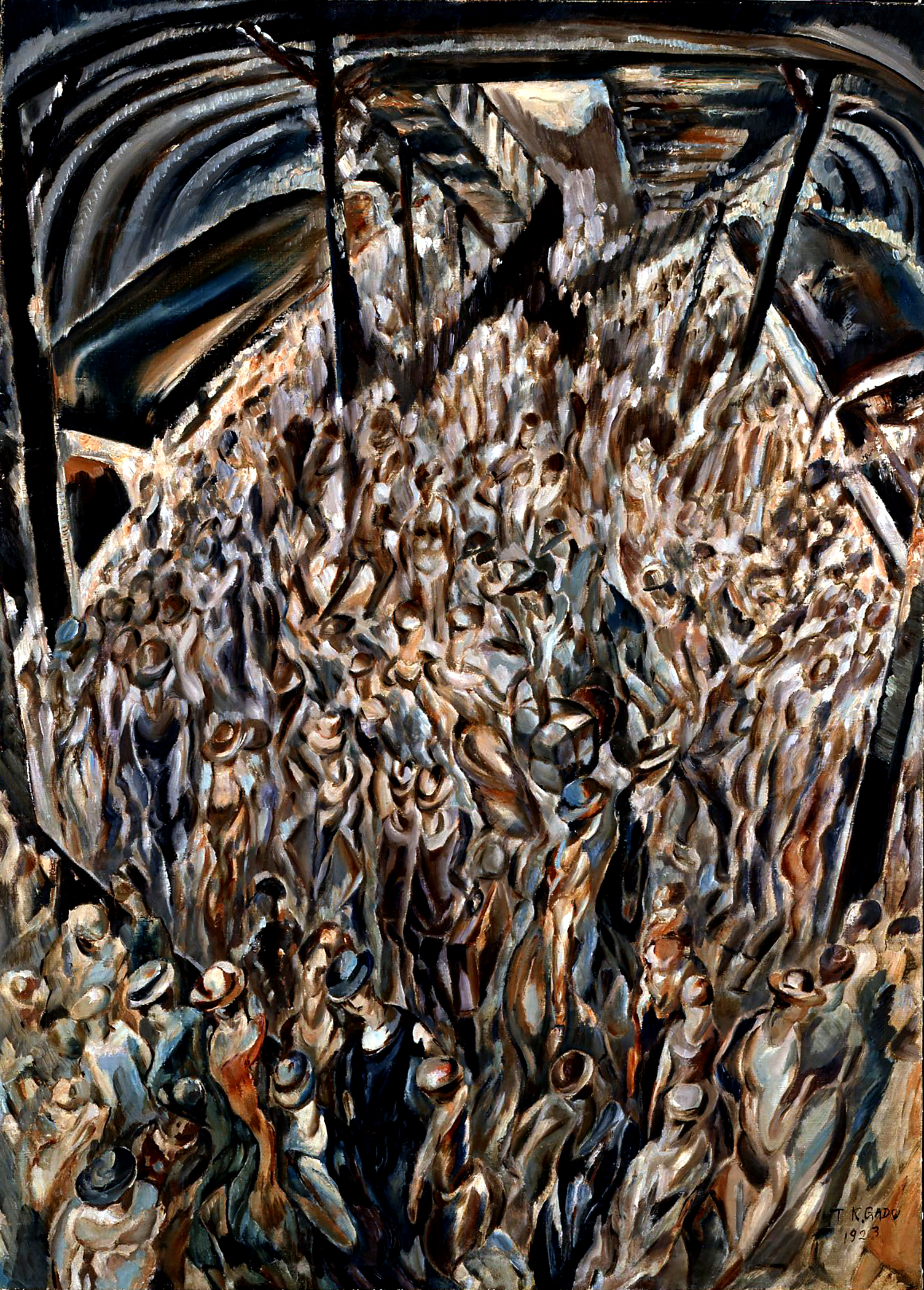
Gado participated actively in New York’s Japanese and American art communities. He exhibited with the New York Japanese Art Association in 1917 and 1918, the Society of Independent Artists from 1919 through 1924, the Salons of America in 1922 and 1923, and the Gachō Kai in 1922. He was also among the organizers of the Japanese Artists Association established in New York in 1920. His paintings addressed modern urban subjects, including traffic, crowded subways, family interiors, and life in New York.
Gado returned to Japan in 1924. Having heard that lumber was difficult to obtain following the Great Kantō Earthquake, he brought an American prefabricated house back with him and erected it in Utsunomiya. The house was later relocated to Motegi and preserved as a local cultural property. Gado died at his home in Utsunomiya in 1954.
The rediscovery of his role at Shōfūden significantly expands our understanding of Gado’s career. He was not only a painter of modern New York and a designer for Morimura Brothers. He also participated directly in creating one of the most important Japanese cultural interiors established in early twentieth-century New York State.
References
No results found.
No results found.