In 1919, Mitsubishi Goshi Kaisha, the Mitsubishi group’s holding company, established a New York branch. In 1921, the branch was transferred to Mitsubishi Shoji Kaisha, the group’s newly independent trading company. New York became an important base for Mitsubishi’s trade between Japan and the United States, including the export of Japanese products and the import of American industrial materials.
Mitsubishi’s American operations were disrupted by World War II. After the war, the former Mitsubishi organization was dissolved under the Allied occupation, and Mitsubishi Shoji was divided into numerous independent companies.
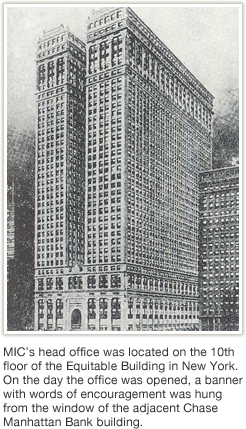
In 1954, several of these companies reunited to form a new Mitsubishi Shoji in Japan. That same year, the company established Mitsubishi International Corporation, known as MIC, as its American subsidiary. MIC located its head office on the tenth floor of the Equitable Building in New York and also opened a branch office in San Francisco. On the day the New York office opened, a banner bearing words of encouragement was displayed from a neighboring building.
The establishment of MIC in 1954 did not mark Mitsubishi’s first arrival in New York. Rather, it represented the company’s postwar return and the rebuilding of a commercial presence that had begun in 1919. From its New York headquarters, MIC worked to expand Japanese exports, import American goods and industrial resources, and reconnect Japan’s recovering economy with international markets.
By the early 1960s, Mitsubishi’s operations had expanded across the United States, with New York continuing to serve as the center of its American business. In 1971, Mitsubishi Shoji officially adopted the English name Mitsubishi Corporation.
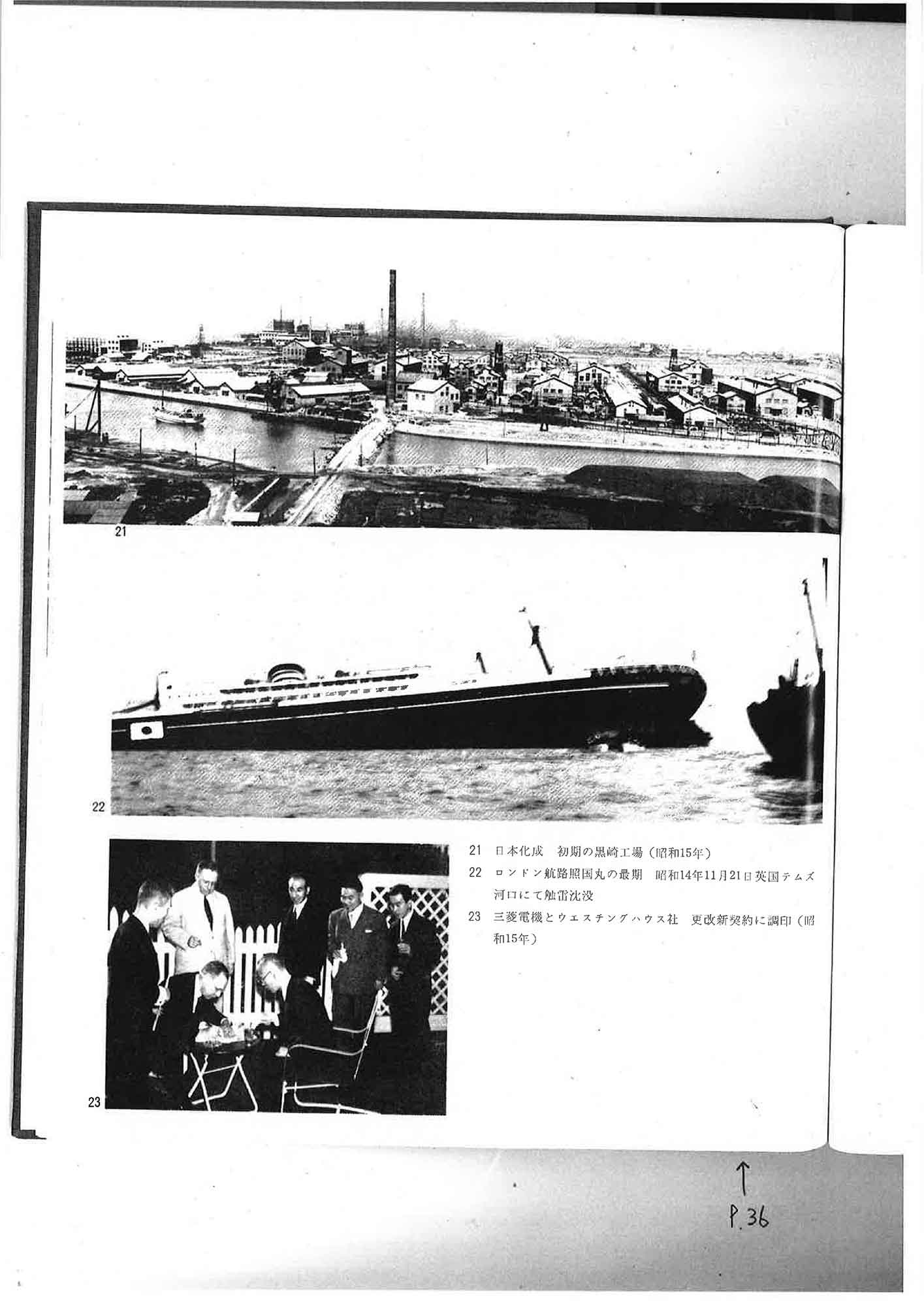
The archival materials presented here include a photograph of MIC’s New York office in the Equitable Building and pages from Mitsubishi no Hyakunen (One Hundred Years of Mitsubishi), a commemorative company history. The selected pages document Mitsubishi’s broader prewar activities, including industrial production, international shipping, and cooperation with American companies. Together, these materials place the establishment of MIC within the longer history of Mitsubishi’s commercial relationship with New York and the United States.