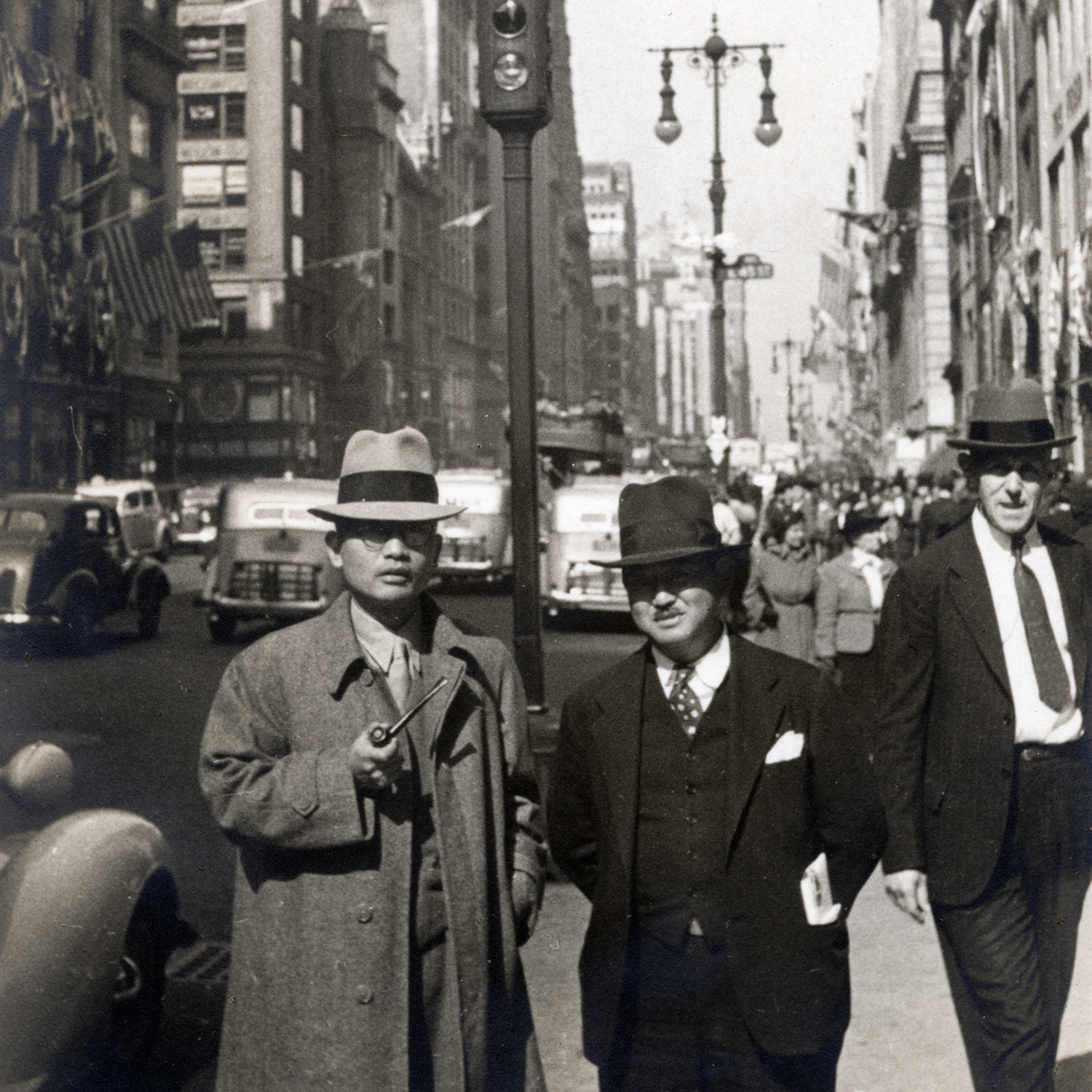
Jiro Kozai was a journalist, editor, publisher, and community leader whose life illuminates both the development of New York’s Japanese immigrant community before World War II and its disruption during the war. Born Jiro Matsui in Tottori Prefecture, he immigrated to the United States in 1911 and established a professional and family life in New York. His surviving correspondence, photographs, postcards, account books, publications, and scrapbooks reveal a figure deeply involved in the city’s Japanese institutions and in a wider network connecting New York, Japan, and Japanese communities throughout the Americas.
By the 1920s, Kozai had become the owner, editor, and publisher of The Japanese-American, one of New York’s longest-running Japanese-language newspapers. The publication reported on business, diplomacy, culture, community affairs, and the changing political conditions faced by Japanese immigrants. It offered Japanese New Yorkers a forum for exchanging information, discussing public issues, and maintaining connections across geographic and linguistic boundaries. Its pages also addressed anti-Japanese discrimination, including the consequences of the Immigration Act of 1924, which excluded immigrants from Japan.
Kozai’s influence extended beyond journalism. He served as president of the Japanese Association of New York, one of the principal organizations representing Japanese residents in the city. Through the association and his newspaper, he worked among journalists, businesspeople, diplomats, artists, religious leaders, and visiting officials. His extensive postcard collection from the 1920s and 1930s demonstrates the breadth of his international relationships, while family photographs and personal papers document the life he built in New York with his wife, Fumiyo, and their daughters.
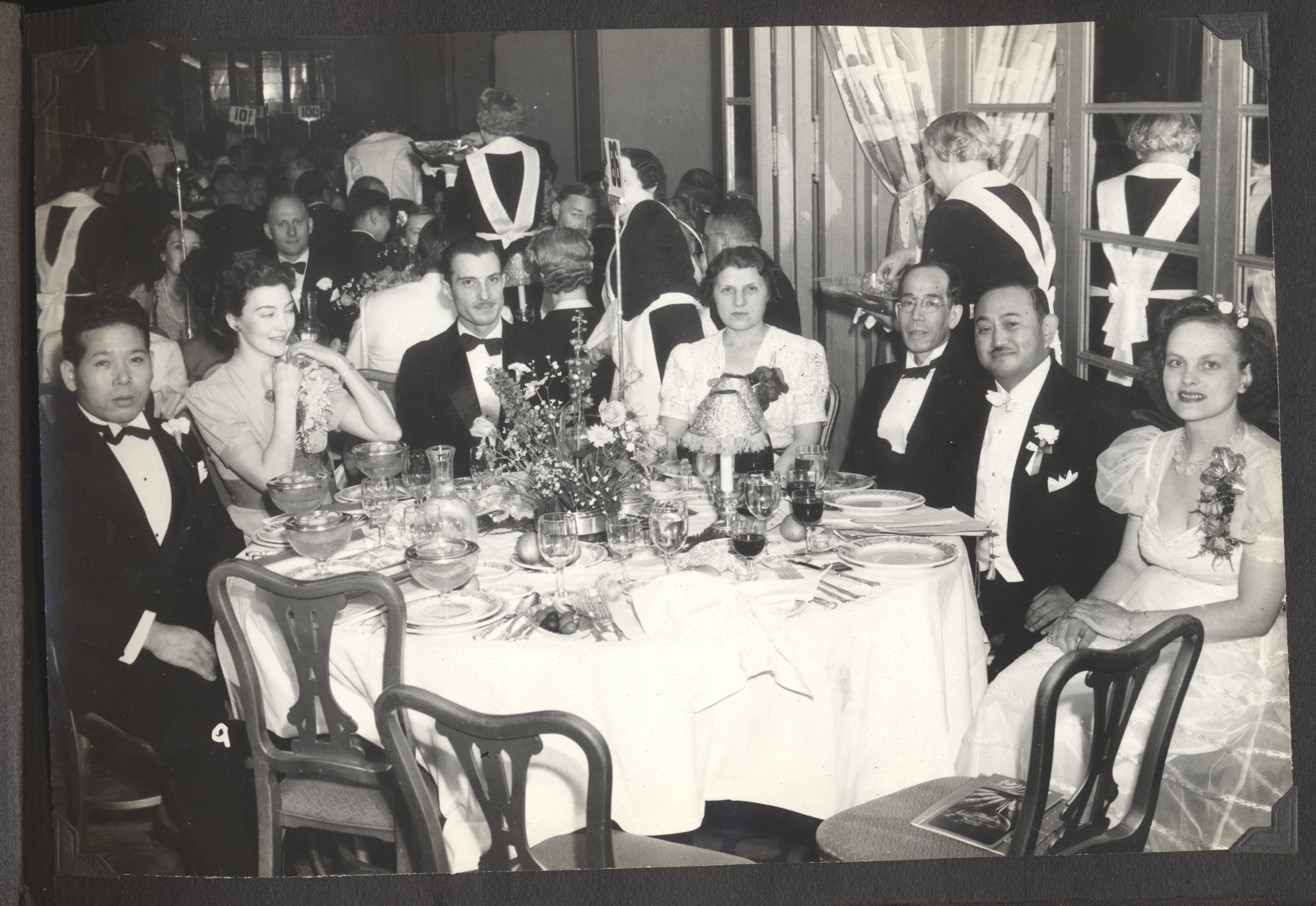
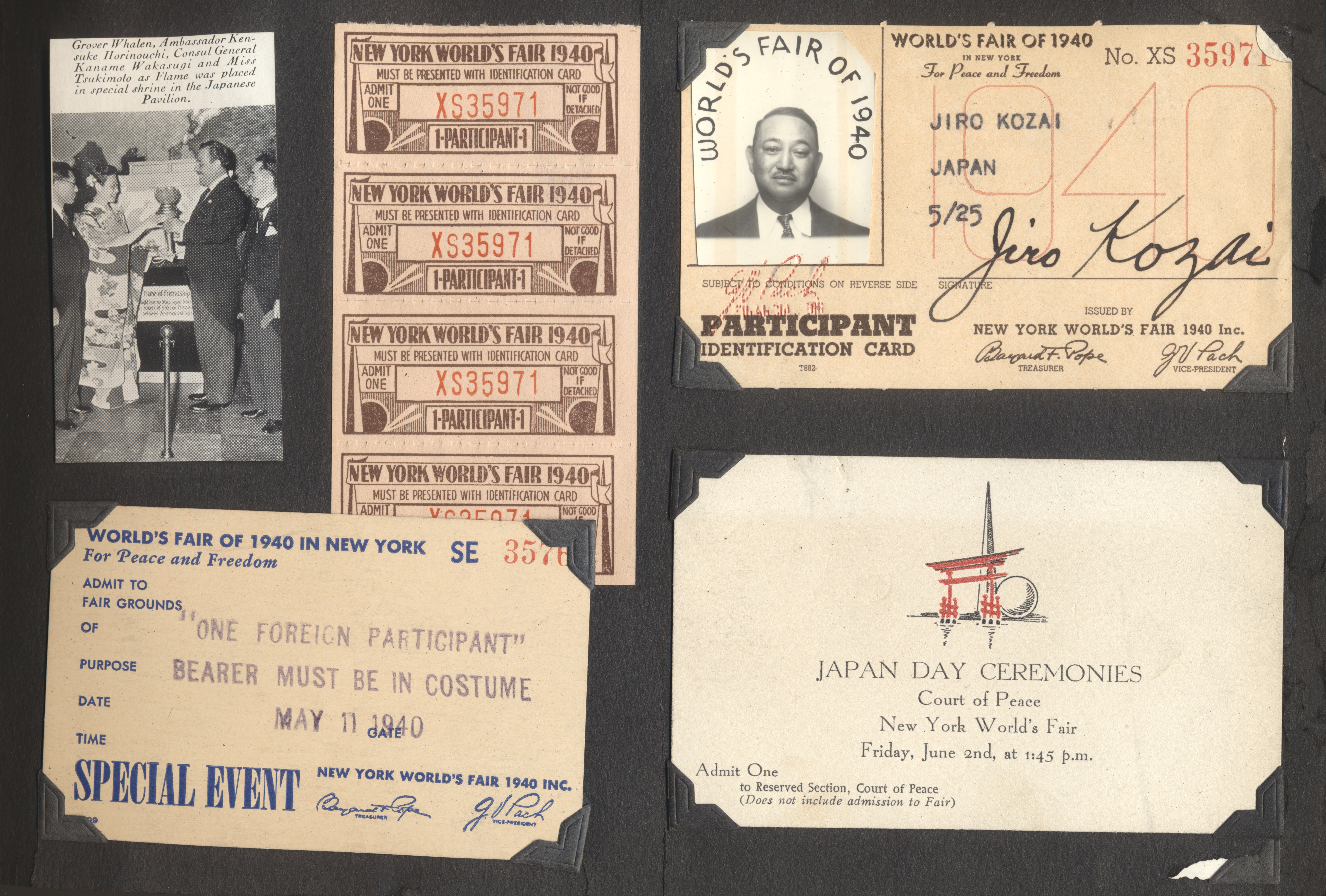
The 1939 New York World’s Fair became one of the most visible expressions of Kozai’s public role. He supported the Japanese Pavilion, helped organize community participation, and assisted in securing financial contributions from New York’s Japanese residents. A photograph album preserved by his family records the fair from the perspective of a local participant. These materials document both the public spectacle of Japan’s presence at the fair and the less visible community labor that sustained it.
Only a few years later, the world Kozai had helped build was shattered. Following the attack on Pearl Harbor, the United States government arrested Japanese nationals under wartime enemy-alien regulations. Kozai was detained at Ellis Island and later held at Camp Upton. His prominence as a newspaper publisher and Japanese community leader, which had previously made him a respected figure in New York, placed him under particular suspicion during the war.
His detention affected his entire family. A farewell letter written by Fumiyo before the family left New York preserves the personal cost of wartime separation and removal. Kozai eventually returned to Japan with his wife and daughters, bringing approximately three decades of professional work, civic leadership, and community life in New York to an abrupt end.
After returning to Japan, Kozai continued his work in journalism and international publishing under his original family name, Matsui. A publication preserved in the Kozai Family Collection, The International Man / Kokusai-jin, identifies G. J. Matsui as publisher and Jiro Matsui as editor. Published in Tokyo, the magazine maintained representatives in New York, Washington, Chicago, Seattle, Los Angeles, San Francisco, Honolulu, São Paulo, and Buenos Aires. New York appears first in the list, reflecting the city’s continuing importance within Kozai’s international network.
A surviving English-language editorial from the magazine reflects the political climate of the early Cold War. It strongly supports the United States and American assistance to postwar Japan while criticizing communism and anti-American political movements. Through The International Man, Kozai continued the international journalism he had practiced in New York, linking postwar Japan with Japanese and Japanese American communities across the Americas.
The Kozai Family Collection preserves both his public career and his family’s private experience. Through journalism, civic leadership, participation in the 1939 World’s Fair, wartime detention, and postwar publishing, Jiro Kozai’s life provides an unusually intimate view of Japanese New York and of the transpacific relationships that endured even after war and forced departure.