Kunio Mayekawa was one of the leading architects of modern Japan. After graduating from Tokyo Imperial University in 1928, he began his career at the office of Antonin Raymond in Tokyo, where he worked until 1930. There he collaborated with contemporaries such as Junzo Yoshimura and George Nakashima, gaining early exposure to a circle of designers who were synthesizing Western modernist ideas with Japanese traditions. This experience provided Mayekawa with both practical training and an awareness of the challenges of adapting imported philosophies to Japanese contexts.
In 1930 he left Japan for Paris, where he spent two years as a draughtsman in Le Corbusier’s atelier. Working directly under one of the pioneers of modern architecture, Mayekawa absorbed lessons in rational planning, structural clarity, and the expressive potential of reinforced concrete. Returning to Japan in 1932, he briefly rejoined Raymond before establishing his own office in 1935. From that point forward, Maekawa sought to translate the principles of international modernism into a distinctly Japanese architectural language.
His postwar works reflected this vision. The Tokyo Bunka Kaikan (1961) became a landmark of cultural life in Ueno, combining modernist rationalism with a sensitivity to public space. Equally significant was his role in the National Museum of Western Art in Tokyo, designed by Le Corbusier and inaugurated in 1959, for which Maekawa and Junzo Sakakura served as local collaborators. The museum has since been inscribed on the UNESCO World Heritage List as part of Le Corbusier’s works. Through these projects, Maekawa secured his position as a central figure in Japan’s architectural modernization.
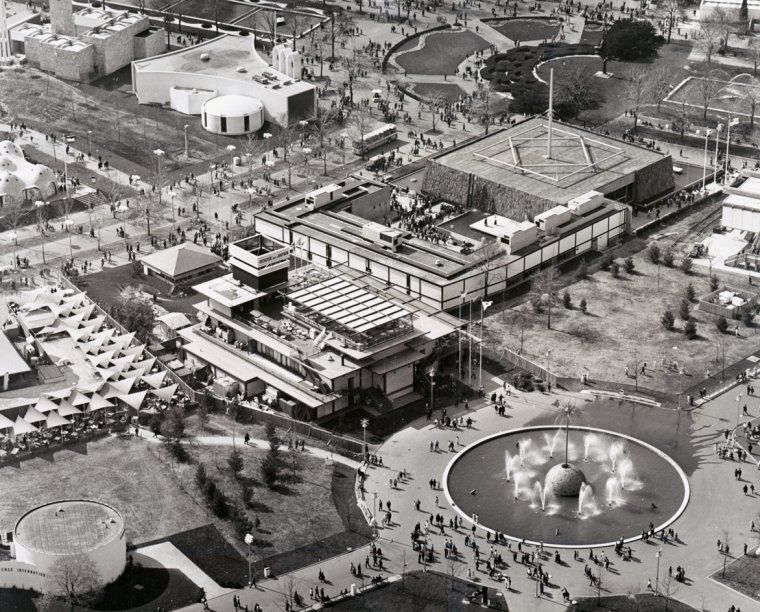
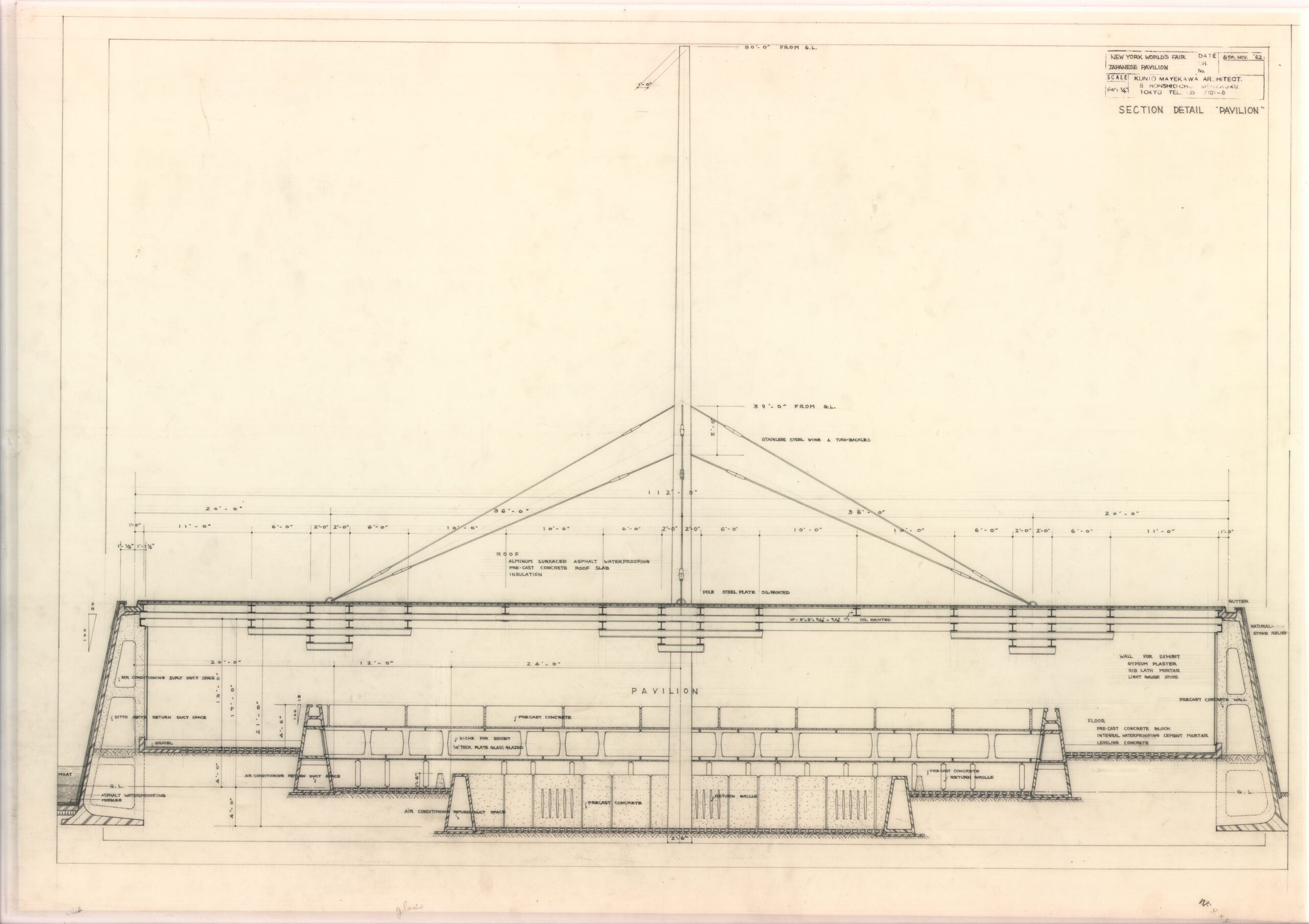
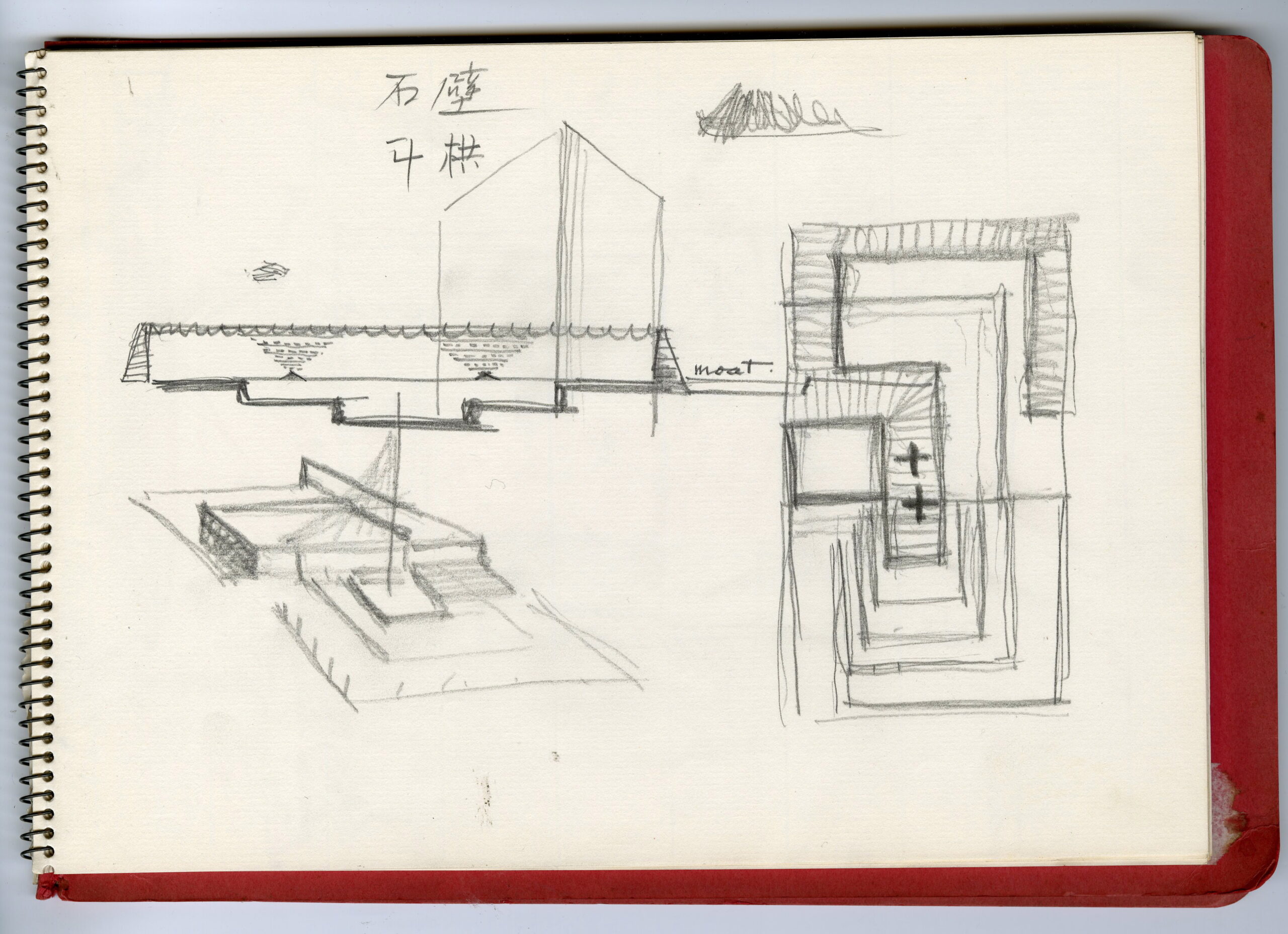
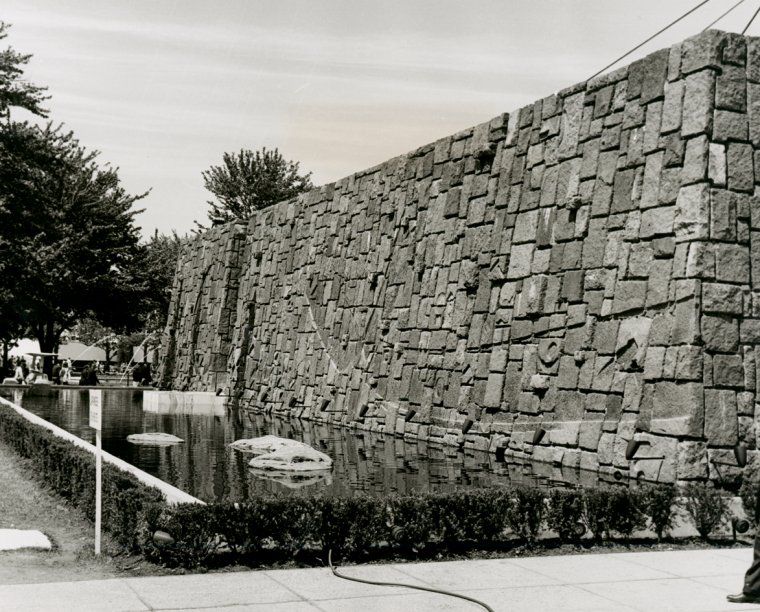
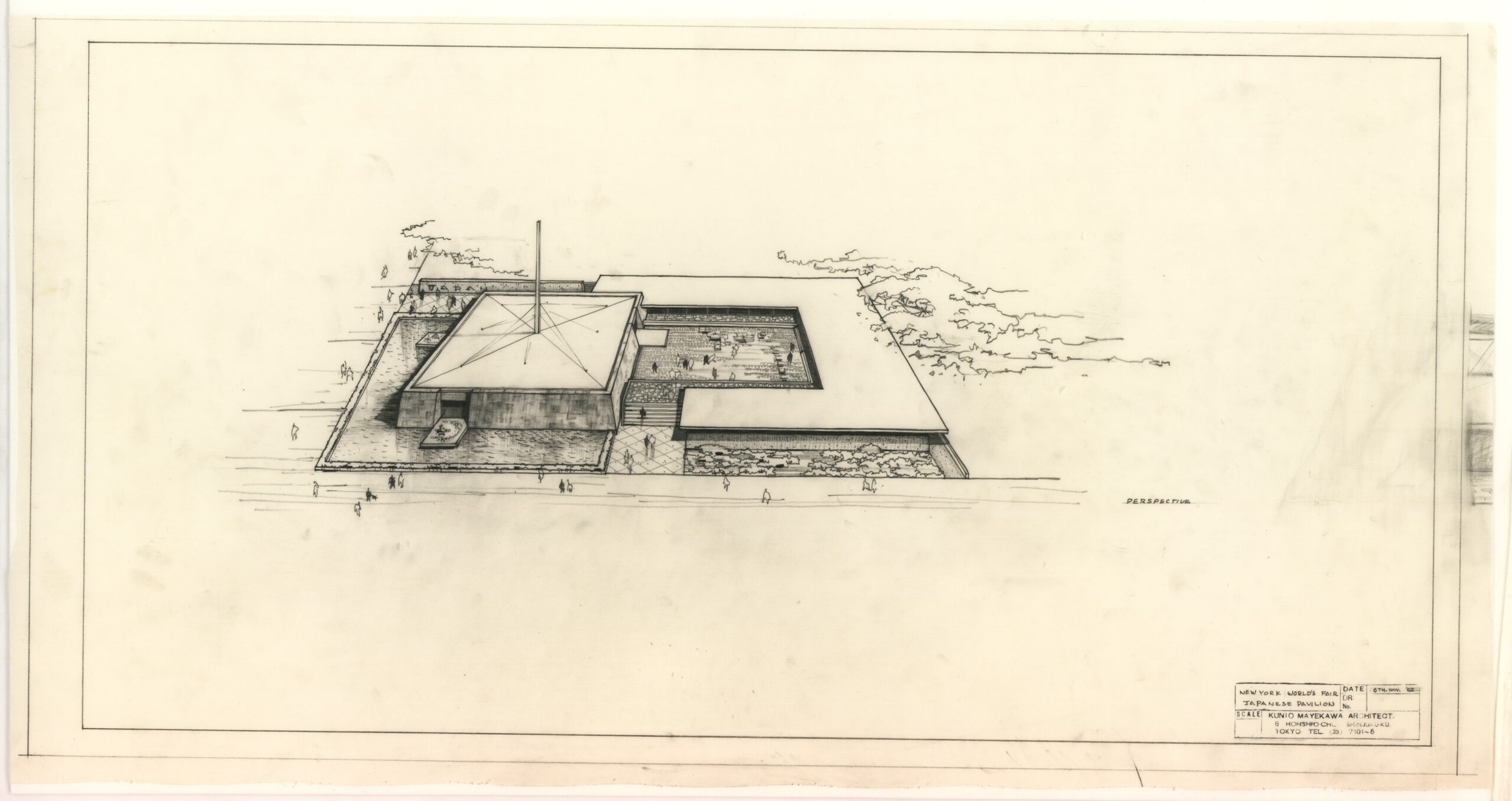
One of his most internationally visible commissions was the Japan Pavilion at the 1964–65 New York World’s Fair. Following the success of his award-winning pavilion at Expo 1958 in Brussels, this project reflected both Maekawa’s stature and Japan’s Cold War ambitions. The pavilion consisted of two main structures: a square reinforced-concrete hall encircled by stone walls carved with reliefs by sculptor Masayuki Nagare, and a steel-framed, U-shaped building surrounding a central courtyard. The design created a continuous “one-stroke” spatial sequence uniting interior and exterior. Its suspended roof structure and stonework, recalling Japanese castles, fused modern engineering with traditional imagery.
The pavilion was highly praised, with one American review declaring it “No. 1 from an artistic standpoint.” Visitors were struck by the moats, massive stone walls, and innovative structure, which together conveyed cultural depth and technological achievement. Yet Maekawa himself expressed unease. In his essay In Search of the True Japan Pavilion, he warned that the building risked presenting only a triumphalist narrative of progress—“from feudal times to the edge of space in one hundred years”—without deeper reflection on humanity’s broader responsibilities. He was strongly influenced by Rachel Carson’s Silent Spring (1962) and Jane Jacobs’s The Death and Life of Great American Cities (1961), which alerted him to the dangers of environmental destruction and over-urbanization. He criticized the way architecture could become subordinated to “the pursuit of capital profit” or the bureaucratic logic of the modern state, thereby losing touch with human needs. For Maekawa, architecture was never merely about technology or form: its essential mission was to improve living conditions and nurture human spontaneity.
The New York Pavilion thus marked a turning point. It embodied Maekawa’s pursuit of what he described as a “universalism rooted in regional identity,” uniting international modernism with Japanese spatial sensibilities. At the same time, it anticipated debates that would shape his later career, including the balance between technology, environment, and human needs. The pavilion stands not only as a showcase of Japanese achievement but also as a deeply reflective work, symbolizing the tensions of its time: between tradition and modernity, optimism and anxiety, national pride and global responsibility.
References
Hiroshi Matsukuma, The Eve of Architecture: A Study of Kunio Maekawa, Misuzu Shobo, 2016.
Hiroshi Matsukuma, Unfinished Architecture: Kunio Maekawa, Postwar Period, Misuzu Shobo, 2024.
Japan External Trade Organization, Report on Japan’s Participation in the New York World’s Fair 1964/1965, 1966.
MAYEKAWA ASSOCIATES, ARCHITECTS & ENGINEERS
Manuscripts and Archives Division, The New York Public Library.